
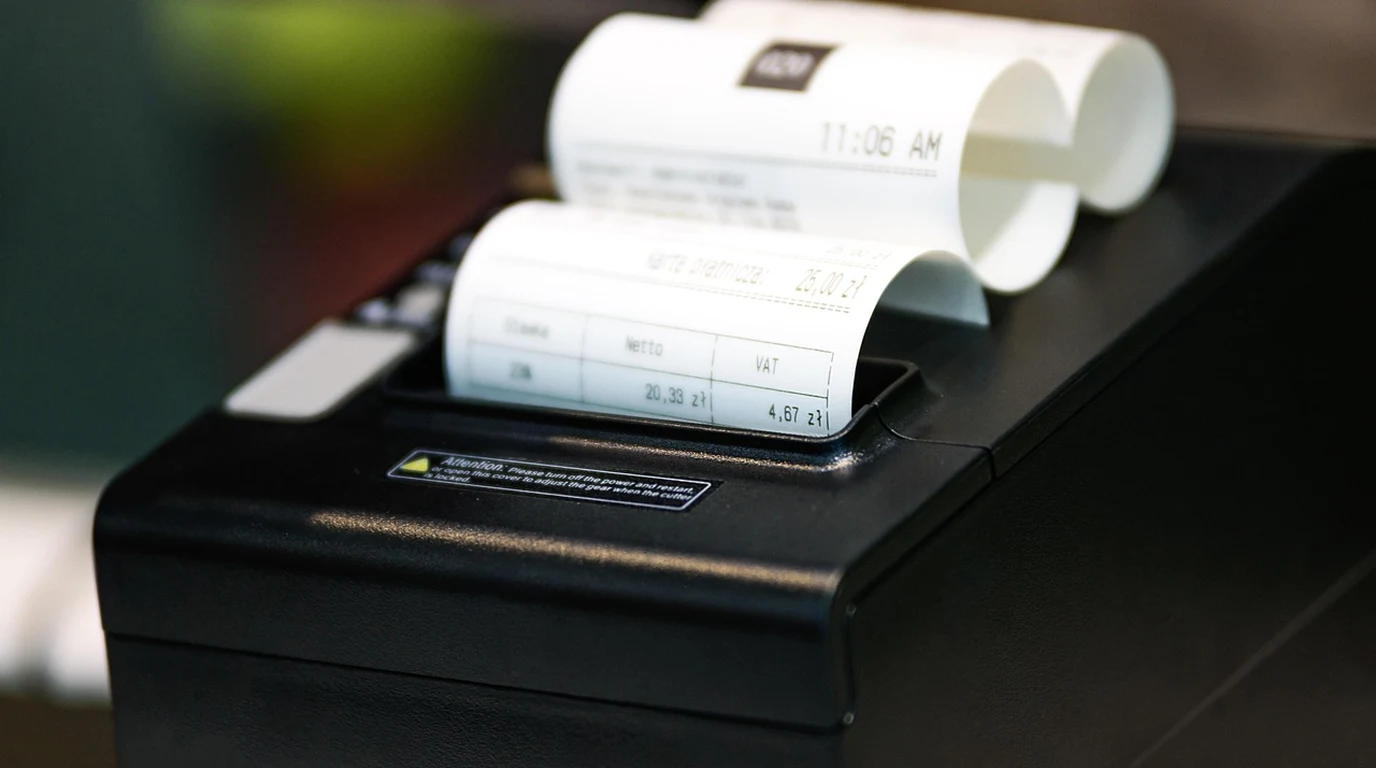
You are standing at the checkout lane of a major Canadian supermarket. You loaded your cart believing a bottle of extra virgin olive oil was marked down to $8.99 on the shelf display. But as the cashier glides the bottle across the optical laser scanner, the electronic register beeps and displays $12.49. If you are like millions of Canadian shoppers, your default reaction might be to politely point out the discrepancy, wait for a price override down to $8.99, pay your bill, and walk away. By doing so, you have just left money on the table that is legally and contractually yours under a nationwide consumer policy.
Most shoppers view scanner overcharges as minor software hiccups. In reality, pricing errors silently drain household budgets across Canada, particularly during periods of volatile food inflation when stores frequently adjust thousands of stock-keeping units (SKUs) overnight. To hold retailers accountable for point-of-sale accuracy, Canada established a voluntary policy known as the Scanner Price Accuracy Code. Under this mechanism, an incorrectly scanned price does not merely entitle you to the listed price—it entitles you to get the item completely free, or to receive a flat $10.00 cash discount off the corrected price.
The Scanner Price Accuracy Code dictates that if an item’s scanned price higher than the displayed shelf price at a participating store, the customer receives the item free if it costs under $10.00. For items priced over $10.00, the customer receives a $10.00 discount off the corrected lower shelf price.
What Is Canada’s Scanner Price Accuracy Code and How Does It Work?
Endorsed by the Competition Bureau of Canada in 2002 and managed directly by the Retail Council of Canada (RCC), the Scanner Price Accuracy Code (SPAC) was established to give consumers total confidence in automated price look-up technology. When optical scanners began replacing manual sticker pricing in Canadian grocery, drug, and department stores, public anxiety grew over whether registers were accurately reflecting posted shelf tags. The code was crafted as a self-regulatory policy that imposes immediate financial penalties on retailers whenever their scanning systems fail to match their physical shelf advertising.
The code applies exclusively to items displaying a Universal Product Code (UPC), bar code, or electronic price tag that scans at a price higher than the shelf tag or advertised shelf label. It is vital to understand the precise arithmetic of how compensation is applied at the point of sale:
- Items Displayed at $10.00 or Under: If the correct shelf price of the item is $10.00 or less, the participating retailer must give you the item for FREE ($0.00). For example, if a box of cereal is tagged on the shelf at $4.99 but scans at $6.49, you do not pay $4.99; you walk out of the store paying zero dollars for that box.
- Items Displayed Above $10.00: If the correct shelf price of the item is higher than $10.00, the participating retailer must adjust the item to the lower shelf price and then deduct an additional $10.00 from that price. For instance, if an air fryer is tagged on the shelf at $45.00 but scans at $55.00, the store must lower the starting point to $45.00 and apply the $10.00 code discount, making your final price $35.00.
- The Multiple Identical Items Rule: If you purchase four identical cans of coffee that are tagged at $8.00 but all scan at $9.50, the $10 Free Rule applies only to the first item scanned. You receive the first can for free ($0.00), and the remaining three identical cans must be corrected down to the proper shelf price of $8.00 each. You do not receive four free cans.
It is important to emphasize that this policy applies to scanning errors where the register charges more than the advertised price. If an item scans lower than the shelf tag, the retailer is under no obligation to correct it upward, and the code does not come into play.
Which Major Canadian Retailers Actually Honor the $10 Rule?
The Scanner Price Accuracy Code is voluntary, but virtually all major national grocery, drug, and big-box store chains in Canada have formally adopted it. Once a corporate retailer signs onto the code, all of its participating store locations are bound by its rules. Participating retailers display a official yellow, white, and blue sticker or decal at their entrance doors or right beside cash register customer display screens reading: “Scanner Price Accuracy Code: If the scanned price of an item is higher than the shelf price…”
The core participating corporate groups and banners in Canada include:
- Loblaw Companies Limited: Loblaws, Real Canadian Superstore, No Frills, Shoppers Drug Mart, Zehrs, Fortinos, Maxi, Extra Foods, Valu-Mart, and Independent Grocer.
- Sobeys Inc. (Empire Company Limited): Sobeys, Safeway, FreshCo, Foodland, Thrifty Foods, IGA (in Western Canada and select Atlantic markets), and Lawtons Drugs.
- Metro Inc.: Metro stores, Food Basics, and Jean Coutu pharmacies.
- Walmart Canada: All Supercentres and traditional retail locations across Canadian provinces.
- Canadian Tire Corporation: Canadian Tire retail stores and Mark’s / L’Équipeur locations.
- Costco Wholesale Canada: Warehouse locations nationwide.
- Giant Tiger: Corporate and franchise stores across Canada.
- Home Hardware & RONA: Participating home improvement locations carrying standard consumer retail lines.
If you shop at independent corner bodegas, specialized boutique retailers, or local farm markets, they may not be signatories to the Retail Council of Canada’s code. However, any store that displays the official SPAC decal is legally obligated under consumer contract standards to execute the rule upon demand.
What Are the Legal Exemptions to the Scanner Accuracy Code?
Understanding where the code does not apply is just as critical as knowing your rights when it does. Retailers are legally permitted to decline the $10 discount under specific operational exemptions built directly into the official code framework. Misunderstanding these exemptions is the primary reason valid claims fail or turn into unnecessary disputes at customer service desks.
The official code explicitly excludes six primary categories of goods and pricing situations:
- Prescription Drugs and Behind-the-Counter Healthcare Items: Products dispensed by a licensed pharmacist or items controlled under provincial drug scheduling acts are exempt from scanner code discounts due to strict healthcare regulatory oversight.
- Individually Price-Ticketed Clearance Goods: If a price sticker is attached directly to the physical product (such as a pink clearance sticker reading “$3.49” placed over a box’s original packaging) rather than being represented by a shelf tag, the scanner code does not apply. The physical item sticker takes precedence.
- Alcoholic Beverages: Provincial liquor board regulations in provinces such as Ontario (LCBO), Quebec (SAQ), and British Columbia impose legal minimum pricing mandates. Retailers cannot issue free or discounted alcohol below statutory price floors, rendering beer, wine, and spirits exempt from SPAC discount enforcement.
- Items Sold by Weight or Volume (Variable Measure Goods): Produce, deli meats, or bulk foods priced per 100 grams or per pound are exempt from the code. Because human error in weighing scale calibration differs from automated barcode database errors, these are handled under separate weights-and-measures legislation.
- Expired Promotional Shelf Tags: If a shelf tag clearly lists a specific date range (e.g., “Sale Price $4.99 — Effective Oct 1 to Oct 7”) and you attempt to buy the item on October 8th, the store is not obligated to give you the item for free under SPAC. While the store must remove expired tags under general Competition Act misleading advertising rules, SPAC specifically governs active, valid shelf pricing discrepancies.
- Customer Tampering or Misplaced Items: If a shopper leaves a $50 blender on a shelf bracket labeled $12.99 for toaster pastries, the code does not apply. The item’s barcode must match the descriptions, SKU digits, or unit details printed on the underlying shelf tag.
| Product & Scenario | Shelf Tag vs. Scanner | SPAC Eligible? | Correct Financial Outcome | Retailer Friction Point / Note |
|---|---|---|---|---|
| Pasta Sauce ($4.50 Tag) | Shelf: $4.50 Scanner: $5.99 |
YES | Item is FREE ($0.00) | Cashiers often try to just lower price to $4.50. Firmly cite SPAC $10 rule. |
| Coffee Maker ($49.99 Tag) | Shelf: $49.99 Scanner: $59.99 |
YES | Price is $39.99 ($49.99 – $10 discount) | Discount comes off the shelf tag price, not the higher scanner price. |
| 3x Olive Oils ($12.00 Tag) | Shelf: $12.00 Scanner: $14.50 |
YES (Item 1) | Item 1: $2.00 ($12 – $10) Items 2 & 3: $12.00 each |
Multiple identical items only get one $10 discount; rest default to shelf price. |
| Clearance Shirt ($8.00 Sticker) | Physical Sticker: $8.00 Scanner: $12.00 |
NO | Price adjusted to $8.00 (No free item) | Individually stickered goods are exempt from SPAC. Price override only. |
| Ribeye Steak (By Weight) | Scale Tag: $22.00/kg Scanner: $26.00/kg |
NO | Corrected to $22.00/kg rate | Variable weight/volume goods are exempt under Section 3 of Code guidelines. |
| Prescription Antibiotics | Quoted: $15.00 System: $22.00 |
NO | Corrected to Quoted Price | Pharmacy-dispensed regulated items are strictly excluded from code penalties. |
Why Do Cashiers Reject the Code and How Should You Handle Friction?
The vast majority of friction surrounding the Scanner Price Accuracy Code occurs not at corporate headquarters, but directly at the cash register. Retail employee turnover is exceptionally high, and front-line cashiers receive minimal, if any, training on national pricing accuracy agreements. When you bring a pricing discrepancy to a cashier’s attention, you will frequently encounter one of three standard pushback myths:
- “I can change the price to match the shelf tag for you, but we don’t give items away for free.”
- “That $10 free policy was cancelled back during COVID.”
- “That rule only applies if you have our store loyalty card / price matching app.”
None of these statements are true. The Scanner Price Accuracy Code has remained continuously active since 2002, requires no loyalty card membership, and explicitly requires the item to be free (under $10) or discounted by $10 (over $10). Cashiers often panic because they confuse the SPAC policy with standard “price matching” against competitor ads, or they worry that granting a free item will trigger a manual audit red flag on their cash drawer.
When executing your rights, maintain an empathetic, calm tone. Avoid arguing with a young or inexperienced clerk. Instead, use clear, precise terminology that references the corporate policy posted at the front of the store.
What Step-by-Step Playbook Ensures You Get Your $10 Free Rule Applied?
To avoid standing at customer service for twenty minutes over a $6 bottle of salad dressing, follow this exact tactical checklist whenever you spot a pricing discrepancy on Canadian store shelves.
Step 1: Document the Shelf Tag Immediately
Before pulling the item off the shelf or heading to the cash register, take out your smartphone and capture a clean, crisp photograph of the shelf label. Ensure the photo clearly shows three key elements: the advertised price figure, the product description/name, and the small 12-digit UPC or SKU code located on the corner of the tag. If a store clerk goes to check the aisle, this photo eliminates any delay or claims that “the tag was already changed.”
Step 2: Monitor the POS Monitor in Real-Time
As items pass over the optical scanner, watch the customer-facing display screen carefully. Note any item that scans higher than the shelf tag you documented. Do not stop the cashier mid-scan for every single item; allow them to finish scanning your total basket so you have a complete picture of errors.
Step 3: Point Out the Error Before Payment
Once scanning is complete—but before tapping your credit card or handing over cash—address the cashier calmly using the exact verbatim script below:
“Excuse me, this jar of pasta sauce scanned at $6.49, but the shelf tag is clearly marked $4.50. Since this store participates in the Scanner Price Accuracy Code, I would like to apply the code rule to this item, please.”
Step 4: Escalate to the Customer Service Manager
If the cashier claims they are only authorized to change the price to $4.50, respond politely: “Could you please call the Front-End Manager or Customer Service Lead? I know store policy follows the Retail Council of Canada’s code, and they can process the code override.” Point directly to the official Scanner Price Accuracy decal posted on the register or near the customer service desk.
Step 5: File a Formal Complaint If Denied
If a store manager stubbornly refuses to honor the code despite valid evidence (a clear photo matching the barcode of an un-expired tag at a participating chain), do not engage in a heated shouting match. Pay for your groceries, save your receipt, retain the photo of the shelf tag, and report the retailer immediately to the governing committee.
You can lodge an official infraction complaint directly with the Scanner Price Accuracy Committee by calling toll-free at 1-866-499-4599 or filing online via the Retail Council of Canada portal. Participating chains take committee complaints extremely seriously, as repeated infractions put corporate accreditation and compliance standing at risk. In most cases, corporate customer service will follow up by mailing you store gift cards far exceeding the original $10 value.
Frequently Asked Questions
Is the Scanner Price Accuracy Code a mandatory government law in Canada?
No. The Scanner Price Accuracy Code is a voluntary self-regulatory code created by retail associations and endorsed by the Federal Competition Bureau. However, once a retail chain voluntarily signs onto the code and displays the official SPAC decal in its stores, it creates a binding customer policy that corporate management mandates store locations to honor.
What happens if I buy three identical items that all scan at the wrong price?
Under Section 1.3 of the official code, the $10 Free Rule applies strictly to the first item scanned. The first item is provided for free (if $10 or under) or discounted by $10 (if over $10). The second and third identical items are adjusted down to the correct shelf tag price, but you do not receive multiple free items for identical SKUs in a single transaction.
Does Walmart Canada honor the $10 Scanner Price Accuracy Code?
Yes. Walmart Canada is a formal corporate signatory to the Retail Council of Canada’s Scanner Price Accuracy Code across all participating Canadian locations. If an item scans higher than the shelf price at Walmart, you are entitled to the $10 free rule at the register or customer service desk.
What should I do if a store manager refuses to honor the code?
If a store manager refuses to honor the code for an eligible, non-exempt item, keep your detailed sales receipt and take a photo of the shelf price tag. Contact the Scanner Price Accuracy Secretariat at 1-866-499-4599 or file a formal complaint through the Retail Council of Canada website. Corporate headquarters will review the incident and resolve the violation.
Store return policies and pricing accuracy rules are legally codified across Canadian retail chains. For your $10 free item rights under SCOP, see Home Depot Canada Return Policy: Opened Box Rules.