
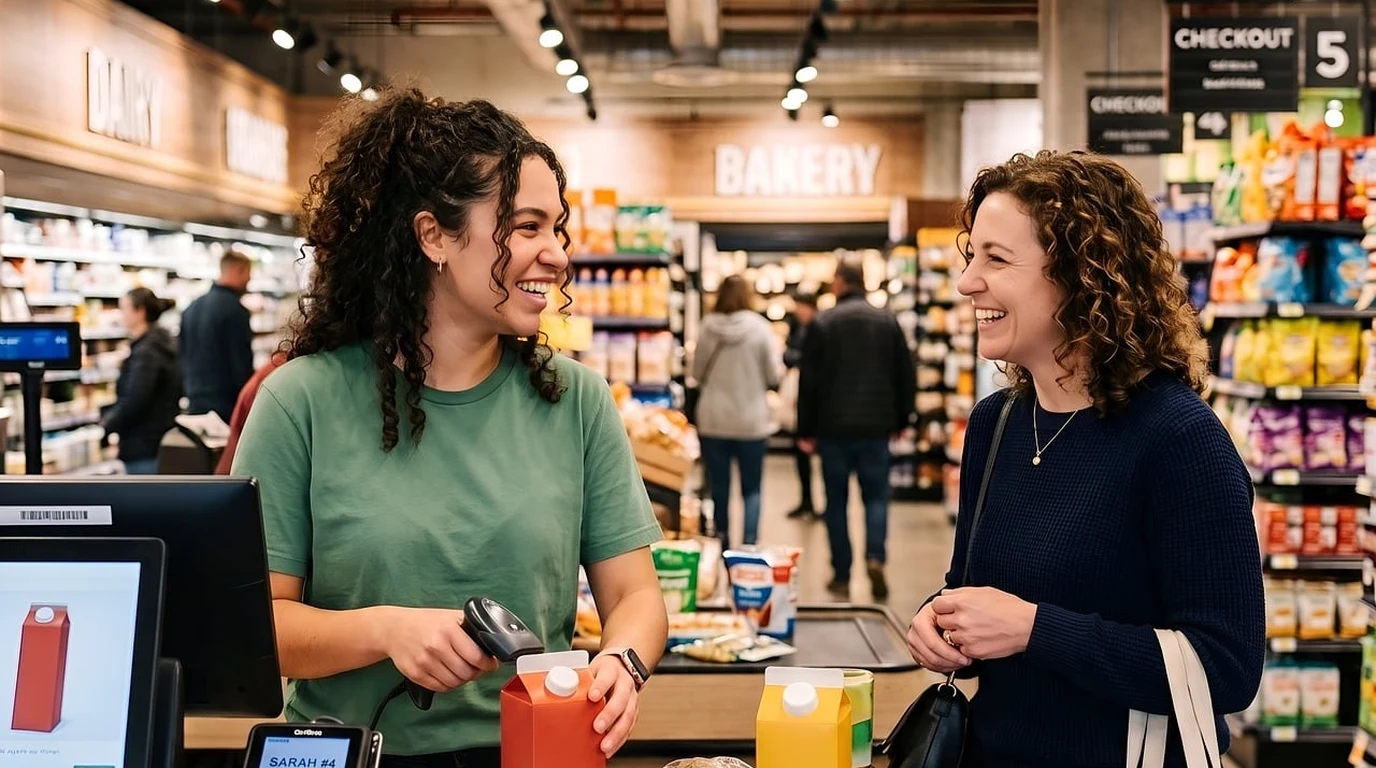
We’ve all been there. You’re standing in the checkout line at your local grocery store, watching the items fly across the scanner. You’ve done the mental math, you’ve checked the flyers, and you know exactly what your bill should look like. Then, it happens. A bag of coffee you saw marked for $12.99 on the shelf flashes onto the screen at $15.49.
You point it out to the cashier. They offer a quick, “Oh, sorry about that,” and manually override the price to $12.99. Most Canadians would take that win, offer a polite smile, and keep moving. But here is the reality: by accepting that simple price correction, you just left $10 on the table. In a world where grocery margins are tightening and your household budget is under siege by inflation, leaving that money behind isn’t just a missed opportunity—it’s a failure to hold multi-billion dollar retailers to the promises they made to the Canadian public.
The frustration you feel when the “system” fails is valid. It’s not about the two dollars; it’s about the trust we place in automated systems. We assume the shelf tag is the truth. When the scanner says otherwise, the power dynamic shifts. You shouldn’t feel like a “difficult customer” for asking for what you’re legally and contractually owed. You are simply enforcing a standard that these retailers voluntarily agreed to maintain.
Direct Practical Verdict:
Under the Scanner Price Accuracy Code, if an item scans higher than the shelf price, you get it free (if under $10) or receive $10 off the correct price (if over $10). This applies at major retailers like Walmart, Loblaws, and Sobeys for items without individual price stickers.
Why does the price at the shelf never seem to match the register?
It’s easy to assume there’s a conspiracy afoot, but the reality is usually more mundane: human error and technical lag. In a massive retail environment like a Real Canadian Superstore or a Walmart, thousands of price changes occur weekly. Staff members are tasked with swapping out hundreds of paper tags overnight. If a tag is missed, or if a “sale ends” date passes but the tag remains, the central computer system will always default to the higher, non-sale price. However, the “why” doesn’t actually matter to your wallet. What matters is the Scanner Price Accuracy Code (SPAC). This isn’t just a suggestion; it’s a formal agreement endorsed by the Competition Bureau of Canada and managed by the Retail Council of Canada (RCC). It was created to give consumers confidence in scanning technology. If a store wants to use scanners instead of putting a price sticker on every single apple and box of cereal, they must adhere to this code to ensure accuracy. The “voluntary” nature of the code is often misunderstood. While a retailer isn’t forced by law to join the code, once they have joined and displayed the Scanner Price Accuracy sticker at their entrance or checkout, they are contractually bound to honor it. It becomes a part of their terms of service with you, the consumer.The “Costly Trap” most Canadian shoppers fall into
The biggest mistake shoppers make is allowing the cashier to simply “fix” the price. When you say, “That was supposed to be $8.99,” and the cashier changes it from $10.99 to $8.99, you have technically been “corrected,” but you haven’t been “compensated.” The Code is designed to be a penalty for the retailer. It’s an incentive for them to keep their shelves accurate. If the item is $9.99 and it scans at $11.00, the item should be free. If you let them charge you $9.99, you’ve just let the store off the hook for their mistake. Another nuance that catches people off guard is the “Individual Price Tag” loophole. The Code specifically applies to items that do not have a price tag affixed to the item itself. If a store still uses a pricing gun to put a sticker on every jar of jam, the Code does not apply. It is strictly for shelf-labeled, barcoded merchandise.| Retailer Group | Participating Brands | What You Get | Key Exclusions | Resistance Level |
|---|---|---|---|---|
| Loblaw Companies | Loblaws, No Frills, Zehrs, Superstore, Shoppers Drug Mart | Free (<$10) or $10 Off (>$10) | Prescriptions, Alcohol, Tobacco | Moderate (Requires Supervisor) |
| Sobeys Inc. | Sobeys, Safeway, Thrifty Foods, Foodland, FreshCo | Free (<$10) or $10 Off (>$10) | Milk (NB/NL/NS), Pharmacy | Low (Well-trained staff) |
| Walmart Canada | All Walmart Supercentres and Discount Stores | Free (<$10) or $10 Off (>$10) | Clearance with stickers, Tobacco | High (Often requires policy lookup) |
| Metro Inc. | Metro, Food Basics (Ontario) | Free (<$10) or $10 Off (>$10) | Regulated products, Alcohol | Moderate |
| Costco Wholesale | All Canadian Warehouses | Free (<$10) or $10 Off (>$10) | Membership fees, Pharmacy | Very Low (Excellent compliance) |
What happens when the cashier says “We don’t do that here”?
This is the most common point of friction. You invoke the Code, and the cashier looks at you like you’re speaking a foreign language. Or worse, they tell you that the policy changed or that it only applies to certain items. Here is the mentor-to-student truth: The cashier is not the enemy, but they are often undertrained. Retail turnover is high. Many employees have never been briefed on the Scanner Price Accuracy Code because, frankly, it costs the store money. When you encounter resistance, your tone is your greatest weapon. You aren’t “complaining”; you are “notifying.” If the cashier refuses, politely ask for the front-end supervisor or the duty manager. Use the phrase: *”I’m referring to the Retail Council of Canada’s Scanner Price Accuracy Code. I believe there’s a sticker at the entrance confirming this store participates.”* Ninety percent of the time, the manager will recognize the term and immediately process the discount. They know that if you take this to the Retail Council of Canada, the store faces an audit and potential fines. It is much cheaper for them to give you a $10 discount than to deal with a formal complaint.The “Multiple Items” Rule: Don’t get greedy
One area where consumers often get tripped up is when they buy five of the same item, all of which are mispriced. If you have five boxes of crackers that scan at $5.00 instead of $4.00, you do not get all five for free. The Code is very specific: the discount or free item applies only to the first unique UPC. For the remaining four boxes, the retailer is only required to correct the price to the shelf price ($4.00). You get the first one free as a “reward” for catching the error, but the rest are simply sold at the correct price.Your 3-Step Playbook for invoking the Code effectively
To ensure you actually get your $10 off without a headache, follow this sequence every time you hit the checkout.Step 1: The “Stop and Scan” Verification
Don’t wait until the receipt is printed. Watch the monitor as the items are scanned. If you see a discrepancy, stop the cashier immediately. Say: *”Wait, that item scanned at [Price A], but the shelf tag said [Price B].”* If you are at a self-checkout, do not pay. Hit the “Help” button and wait for an attendant. Once you pay, the transaction is finalized, and while you can still get your money back at Customer Service, it takes twice as long.Step 2: Use the “Magic Words”
Once the error is confirmed (often the cashier will have to go check the shelf or send a “runner”), do not wait for them to offer a correction. Be proactive. The Script: *”Since that scanned higher than the shelf price, I’d like to apply the Scanner Price Accuracy Code to this item, please.”* By naming the Code specifically, you signal that you are an informed consumer who knows the industry standards. This usually bypasses the “I’ll just change the price” phase.Step 3: The Escalation (If Necessary)
If the store refuses to honor the code despite being a participant, do not argue with the staff. Take your receipt, take a photo of the shelf tag, and leave. Your next step is to contact the Retail Council of Canada at 1-800-361-5477. They take these complaints seriously. You will need the store location, the date, the item details, and the names of the staff you spoke with. Usually, a single phone call from the RCC to the store manager results in a very apologetic gift card being sent to your home.Is the Code still relevant in the age of Digital Tags?
You may have noticed some stores (like Best Buy or some Sobeys locations) moving toward digital shelf tags—small LCD screens that update prices automatically. Retailers love these because they virtually eliminate the “lag” between the register and the shelf. However, technology still fails. Batteries die, screens freeze, or the signal to update a specific aisle might drop. The Scanner Price Accuracy Code applies regardless of whether the tag is paper or digital. If the screen says $10 and the register says $12, the Code is triggered. In fact, as stores move toward more “dynamic pricing” (changing prices based on time of day or demand), your vigilance as a consumer becomes even more critical.Frequently Asked Questions
Does the Scanner Price Accuracy Code apply to sale items? Yes. If a sale tag is still on the shelf and the item scans at the regular price, the Code applies. It does not matter if the sale technically ended yesterday; if the tag is visible to the consumer, the store must honor the lower price and apply the SPAC discount. What if I already left the store and noticed the error on my receipt? You can return to the store with your receipt. Most participating retailers will honor the Code retroactively at the Customer Service desk. However, it is always easier to handle it during the initial transaction. Are “Limit 2 per customer” items covered? Yes, but the Code only applies to the first item. If the item scans higher than the advertised “limit” price, you get the first one free (if under $10) or $10 off. Does this apply to online orders or grocery pickup? Generally, no. The Scanner Price Accuracy Code is specifically designed for “point-of-sale” scanning in physical retail environments. Online pricing is governed by different terms of service, though most retailers will still price-match their own website if you point out a discrepancy.
Scanner Price Accuracy & Checkout Consumer Codes
Consumer protection laws governing loyalty rewards align with voluntary retail price accuracy standards. For claiming $10 checkout discounts on pricing errors, review our guide on Canada Loyalty Program Expiry: Legal Points Rights.