
Canadian ATM Fees: How to Avoid Out-of-Network Costs
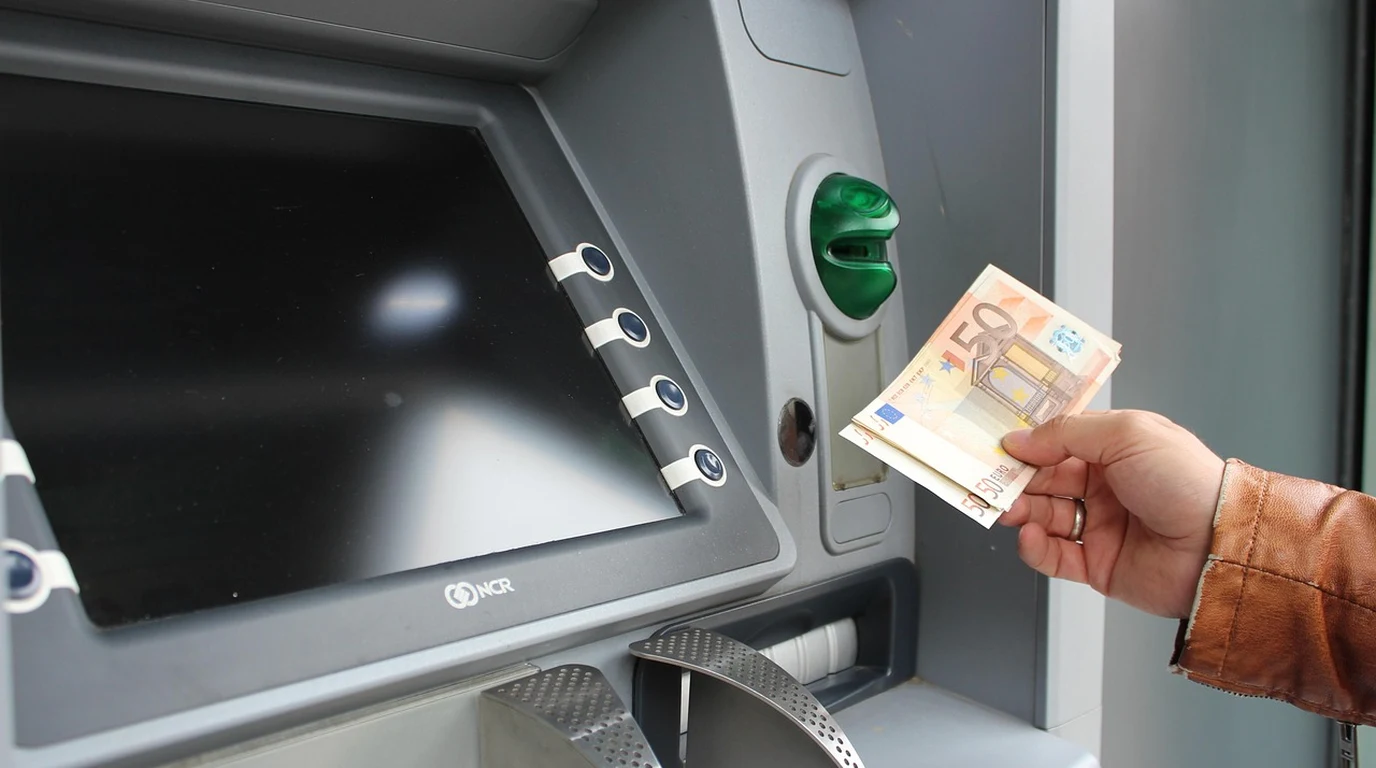
You’ve likely been there: standing in a dimly lit convenience store or a bustling festival grounds, staring at a pixelated screen that informs you a $4.50 “convenience fee” will be added to your withdrawal. You need the cash, so you hit “Accept.” But what you might not realize is that the $4.50 is only the first bite of the apple. By the time you check your statement the next morning, that $20 withdrawal has cost you nearly $30. It feels like a small-scale robbery, and in a way, it is. It’s a tax on your own liquidity, designed to punish you for the “crime” of not being near your home branch.
In Canada, the ATM landscape is a complex web of legacy networks, “white-label” independent machines, and digital disruptors. For the average consumer, navigating this without a map means losing hundreds of dollars a year to what I call the “Triple-Dip” fee mechanism. We are going to fix that today. I’ve spent years deconstructing the fee schedules of the Big Five and the fine print of the digital challengers. This isn’t just about saving a few loonies; it’s about reclaiming control over how you access your own hard-earned money.
To eliminate Canadian ATM fees entirely, use a digital bank like EQ Bank that reimburses all domestic surcharges, or leverage THE EXCHANGE Network via a Credit Union or National Bank account. Avoid “white-label” machines in convenience stores, which trigger “triple-dip” fees totaling up to $9.00 by combining host, network, and home-bank charges.
What is the “Triple-Dip” fee structure in Canada?
Most Canadians believe that the fee they see on the ATM screen is the only price they are paying. This is a costly misconception. When you use an out-of-network ATM—meaning a machine not owned by your specific bank—you are often triggering three distinct charges that happen simultaneously behind the scenes.
First, there is the Convenience Fee (or Surcharge). This is the amount shown on the screen, usually ranging from $2.00 to $5.00. This money goes directly to the owner of the ATM, whether that’s another bank or a private company like Cardtronics. Second, there is the Non-Network Fee charged by your own bank. If you have a standard account with a Big Five bank (RBC, TD, BMO, CIBC, or Scotiabank), they will often charge you between $2.00 and $3.50 simply for the “service” of communicating with another bank’s machine. Finally, there is the Network Access Fee, a smaller but annoying charge often baked into the transaction for using the Interac network itself.
When you add these up, a single withdrawal at a “white-label” machine (those unbranded ATMs in bars or gas stations) can cost you $8.00 or more. If you withdraw $20, you are paying a 40% tax for the privilege. This is the “Triple-Dip,” and it is the primary way traditional banks profit from your lack of proximity to their infrastructure.
Why are “white-label” ATMs so much more expensive?
You’ve seen them everywhere: the generic grey boxes in the back of a pizza shop or a bowling alley. These are known as “white-label” or Independent Sales Organization (ISO) ATMs. Unlike bank-owned machines, these are purely profit-driven assets. The owner of the establishment usually gets a “kickback” or a cut of every transaction fee, which incentivizes them to set the surcharge as high as the local market will bear.
Because these machines are not part of a major banking network’s reciprocal agreement, they almost always trigger the maximum “Non-Network” fee from your home bank. Furthermore, these machines often have lower security standards and higher rates of “skimming” devices. From a financial health perspective, these should be your absolute last resort. They represent the peak of the predatory fee ecosystem in Canada.
| Institution / Network | In-Network Fee | Out-of-Network Fee | ATM Fee Rebates? | Network Size |
|---|---|---|---|---|
| Big Five Banks (RBC, TD, etc.) | $0.00 | $2.00 – $3.50 + Surcharge | Rarely (Premium accounts only) | 2,500 – 4,000 each |
| EQ Bank | $0.00 | $0.00 (Reimbursed) | Yes (All Canadian ATMs) | Universal (Any ATM) |
| THE EXCHANGE Network | $0.00 | $0.00 (at member ATMs) | N/A (Network Agreement) | 3,300+ Locations |
| Tangerine | $0.00 (Scotiabank) | $1.50 – $2.50 + Surcharge | No | 3,500+ (Scotiabank) |
| Wealthsimple | $0.00 | Host Surcharge Only | No | Universal |
How does THE EXCHANGE Network save you money?
If you aren’t using one of the Big Five banks, you likely have access to one of the most powerful financial tools in Canada without even knowing it: THE EXCHANGE Network. This is a massive partnership between hundreds of credit unions and several mid-sized banks (like National Bank, Canadian Western Bank, and Laurentian Bank).
The beauty of THE EXCHANGE is its reciprocity. If you are a member of a local credit union in British Columbia, you can walk up to a National Bank ATM in Montreal and withdraw cash with zero surcharges and zero non-network fees. It treats every ATM in the network as if it were your “home” branch. With over 3,300 machines across the country, it is often larger than the individual networks of TD or RBC.
The mistake most people make is assuming that because they don’t see their specific credit union’s logo on a machine, they will be charged. Look for the small “EXCHANGE” logo on the machine or the back of your card. If both have it, the transaction is free. This is the single best way for traditional banking users to avoid the “Triple-Dip.”
Which Canadian banks offer the best ATM fee rebates?
In the last few years, a new breed of digital-first banks has entered the Canadian market with a radical proposition: they will pay your ATM fees for you. This is a game-changer for anyone living in a “banking desert” or someone who frequently finds themselves needing cash in inconvenient places.
EQ Bank is currently the gold standard in this category. When you use their Card at any ATM in Canada, EQ Bank does not charge a fee. More importantly, if the ATM owner charges you a surcharge (that $3.00 or $4.50 we discussed earlier), EQ Bank will reimburse that fee to your account within a few business days. This effectively makes every single ATM in Canada a free machine for EQ Bank customers. It is the most comprehensive solution to the ATM fee problem currently available.
Wealthsimple offers a similar, though slightly less comprehensive, benefit. They do not charge any fees on their end for using an ATM, but they do not currently reimburse the surcharge charged by the machine owner. So, while you avoid the “Triple-Dip,” you still pay the “Single-Dip” to the host.
Tangerine, being owned by Scotiabank, allows its customers to use any Scotiabank ATM for free. This gives them a massive footprint of over 3,500 machines, but if you step outside that network, the fees return with a vengeance. It’s a great “hybrid” model, but it lacks the universal freedom of the EQ Bank reimbursement policy.
The 4-Step Tactical Guide to Zero-Cost Cash Access
If you want to stop bleeding money to ATM fees today, follow this implementation playbook. This is the exact strategy I use to ensure I haven’t paid an ATM fee in over five years.
- Audit Your Current “Home” Network: Open your banking app and find the “ATM Locator.” Many people pay fees simply because they don’t realize their bank has a partner machine two blocks away. If you are with a Credit Union or National Bank, download THE EXCHANGE Network locator app immediately.
- The “Cash Back” Maneuver: This is the most underutilized trick in the book. If you are at a grocery store or a major pharmacy (like Rexall or Shoppers Drug Mart), buy a small item—a pack of gum or a bottle of water—and ask for “cash back” at the register. There is zero fee for this. You are essentially getting the store to act as your ATM, and the “fee” is just the price of a snack you probably wanted anyway.
- Open a “Liquidity” Account: You don’t have to move your entire financial life to a new bank. Open an EQ Bank account or a similar digital account specifically for your “walking around money.” Keep a few hundred dollars there and use their card for all ATM withdrawals. The fee reimbursements will happen automatically, and you’ll never have to hunt for a specific logo again.
- Set a “Buffer” in Your Wallet: ATM fees are almost always a “tax on the unprepared.” If you know you are going to a farmers’ market, a bar, or a festival, withdraw the cash the day before at your home branch. Setting a recurring calendar reminder for “Friday Cash” can save you $200 a year in convenience fees alone.
Is the “Death of Cash” making fees worse?
There is a paradoxical trend happening in Canada. As we move toward a cashless society, the cost of accessing cash is actually increasing. Because fewer people are using ATMs, the cost of maintaining those machines (security, armored car refills, electricity) is being spread across fewer transactions. To maintain profit margins, banks and ISOs are raising their surcharges.
This means that if you don’t have a strategy, you will be hit harder in the coming years. We are seeing more “premium” ATMs in high-traffic areas like airports and casinos charging upwards of $10.00 per withdrawal. Understanding the mechanics of THE EXCHANGE and digital bank rebates isn’t just a “nice to have” anymore—it’s a necessary component of modern financial literacy in Canada.
Frequently Asked Questions
Can I use my US bank card in a Canadian ATM without fees?
Unlikely. You will almost certainly face a “Foreign Access Fee” from your US bank, a surcharge from the Canadian ATM owner, and a hidden 2.5% to 3% currency conversion spread. To avoid this, use a card like Charles Schwab (US) that offers global ATM fee rebates.
Does Scotiabank really allow Tangerine customers to use their ATMs for free?
Yes. Because Tangerine is a wholly-owned subsidiary of Scotiabank, Tangerine clients can use any Scotiabank-branded ATM for deposits and withdrawals without incurring any fees. However, this does not extend to other Big Five banks.
What happens if an ATM doesn’t disclose the fee before the withdrawal?
In Canada, Interac regulations require that all surcharges be disclosed on-screen with an option to cancel the transaction before the fee is applied. If you were charged a fee that wasn’t disclosed, you should contact your bank to dispute the charge immediately.
Is there a limit to how much EQ Bank will reimburse in ATM fees?
Currently, EQ Bank does not set a hard monthly cap on domestic ATM fee reimbursements for their cardholders, though they monitor for “unreasonable” use. For the vast majority of consumers, all Canadian surcharges will be covered.
Understanding specific chartered bank transaction charges is vital to avoiding cumulative retail banking fees. For full network fee structures and THE EXCHANGE alternatives, read our guide on TD Bank Interac ABM Fees: Avoid Double Surcharges.