
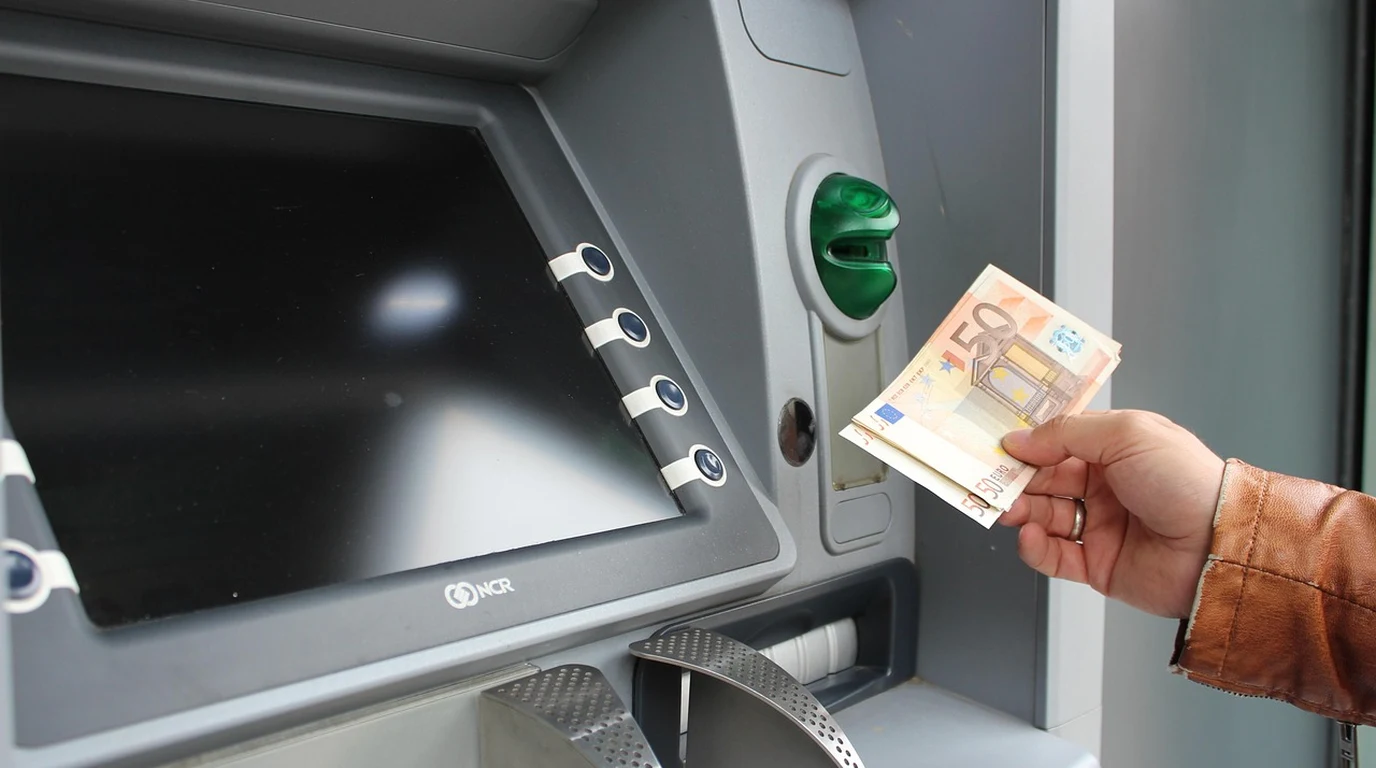
We’ve all been there. You’re standing in a dimly lit convenience store or a busy shopping mall, and you realize you need cash—fast. Maybe the parking lot is “cash only,” or you’re splitting a bill at a restaurant that hasn’t joined the 21st century. You spot a generic, white-label ATM in the corner or perhaps a glowing green sign for a competitor like RBC or Scotiabank. You insert your TD Access Card, agree to the $3.00 “convenience fee” flashing on the screen, and grab your twenty-dollar bill.
You think you’ve paid $3.00 for the privilege. But a few days later, you log into your TD EasyWeb portal and see a second, quieter charge: another $2.00 labeled “Non-TD ATM Fee.” Suddenly, that $20 withdrawal has cost you $25. You’ve just been hit by the “Double Surcharge,” a banking reality that drains millions of dollars from Canadian pockets every year.
It feels like a betrayal. After all, it’s your money. Why should you pay twice to access it? As your mentor in the often-confusing world of Canadian personal finance, I want to pull back the curtain on how TD Bank structures these fees and, more importantly, how you can ensure you never pay them again.
Direct Practical Verdict:
Yes, TD Bank charges a $2.00 fee for using non-TD ATMs in Canada on most standard accounts. This is separate from the $3.00–$5.00 fee charged by the ATM owner. Only the TD All-Inclusive Banking Plan waives TD’s portion of this fee at all Canadian ATMs, though the third-party surcharge may still apply.
Why does TD charge me for using another bank’s ATM?
To understand the fee, you have to understand the plumbing of the Canadian financial system. When you use your TD card at a non-TD machine, you are utilizing the Interac Shared Cash Service. This network allows different financial institutions to talk to one another. The fee structure is broken into two distinct parts: 1. The Convenience Fee (The Surcharge): This is the fee you see on the ATM screen. It is collected by the owner of the machine (e.g., a gas station, a private ATM provider, or another bank like CIBC). They are charging you for the maintenance, electricity, and “convenience” of having cash available in that specific location. 2. The Network Access Fee (The TD Fee): This is the fee TD charges you for processing a transaction that originated outside their own network. Because TD has to pay Interac a small fee to facilitate this connection, they pass that cost—and a healthy profit margin—onto you. Most Canadians assume that the “OK” they click on the ATM screen covers the entire cost of the transaction. It doesn’t. TD’s fee is invisible at the point of sale; it only appears later on your bank statement. If you are on a “Minimum” or “Every Day” chequing plan, you are almost certainly paying this $2.00 “hidden” fee every single time you step outside the TD ecosystem.How much does a non-TD ATM withdrawal actually cost?
Let’s look at the math, because the percentages are staggering. If you withdraw $20 from a private ATM at a local pub, the owner might charge you $3.50. TD then adds their $2.00 fee. You have spent $5.50 to get $20.00. That is a 27.5% “tax” on your own money. Even if you use a “Big Five” competitor’s ATM (like an RBC machine), the cost remains high. While you might expect a “buddy system” between the major banks, no such alliance exists for ATM fees in Canada. Unless you are part of a specific network like The Exchange (which TD is not), you are considered an “outsider” the moment you use a competitor’s machine.The TD Account Tier Matrix: Who pays and who stays free?
Not all TD customers are treated equally when it comes to the Interac network. Your specific account tier determines whether TD will waive their portion of the double surcharge. Note that even if TD waives their fee, the third-party machine owner will still likely charge you their fee.| TD Account Type | TD Fee (Non-TD ATM) | Third-Party Fee | Monthly Cost | The “Catch” |
|---|---|---|---|---|
| TD Minimum | $2.00 | $3.00 – $5.00 | $3.95 | Only 12 free transactions total. |
| TD Every Day | $2.00 | $3.00 – $5.00 | $10.95 | Fee waived with $3k balance. |
| TD Unlimited | $0.00 (In Canada) | $3.00 – $5.00 | $16.95 | TD waives their fee, but ATM owner doesn’t. |
| TD All-Inclusive | $0.00 (Global) | $3.00 – $5.00 | $29.95 | Fee waived with $5k balance. |
Can I use an RBC or Scotiabank ATM with my TD card for free?
This is one of the most common questions I hear. People see the “Big Five” banks and assume there is some level of cooperation. Unfortunately, the answer is a resounding no. If you take your TD card to an RBC machine, RBC views you as a “non-client.” They will charge you their standard convenience fee (usually $3.00 or more). Simultaneously, TD will see that you used a non-TD machine and, unless you are on the Unlimited or All-Inclusive plans, they will tack on their $2.00 fee. There is no “shared network” among the big Canadian banks that waives these fees. This is a sharp contrast to credit unions in Canada, many of which belong to The Exchange Network, allowing their members to use thousands of ATMs across the country without any surcharges. TD has chosen not to participate in this network, preferring to keep customers within their own “Green Machine” ecosystem.The Actionable Playbook: How to get cash for free today
You shouldn’t have to pay a premium to access your own hard-earned money. If you find yourself frequently paying these fees, follow this 4-step playbook to shut down the “Double Surcharge” for good.1. Master the “Cash Back” Hack
This is the single most effective way to bypass both the TD fee and the ATM owner fee. When you are at a major grocery store (Loblaws, Sobeys, Real Canadian Superstore) or a pharmacy like Rexall, pay for a small item with your TD debit card. Most of these retailers offer a “Cash Back” option at the terminal. Because this is processed as a Point of Sale (POS) transaction rather than an ATM withdrawal, TD does not charge the $2.00 non-TD ATM fee. Furthermore, the retailer does not charge a convenience fee. You can get $40 or $60 in cash while buying a pack of gum, and it costs you exactly $0.00 in fees.2. Use the TD App’s “ATM Locator” Before You Leave
It sounds simple, but most people only look for an ATM when they are already in a “cash-desperate” situation. The TD mobile app has a robust GPS-based locator. Before you head to a venue that might be cash-only, take 30 seconds to find the nearest Green Machine. Walking two blocks could save you $5.00—which, if you do it once a week, is $260 a year.3. Strategic Account Upgrading (The $5,000 Rule)
If you can maintain a minimum monthly balance of $5,000, the TD All-Inclusive Banking Plan is a powerhouse. Not only does it waive the $29.95 monthly fee, but it also waives TD’s fee for using any ATM in Canada and even internationally. While you will still have to pay the fee that the third-party ATM owner charges, you eliminate TD’s $2.00 cut. If you travel frequently or live in an area where TD machines are scarce, this upgrade is a mathematical “no-brainer.”4. The “Digital Buffer” Strategy
Consider opening a secondary account with a digital-first bank like EQ Bank or Wealthsimple. For example, the EQ Bank Card allows you to withdraw cash from any ATM in Canada, and they will actually reimburse you for the fees charged by the ATM owner. By e-Transferring yourself $100 from TD to your digital account, you can use that card at the nearest “convenience store” ATM and pay zero fees. The digital bank eats the cost to win your business. It’s a sophisticated way to use the system to your advantage.Is it different for TD ATMs in the United States?
If you are traveling south of the border, the rules change slightly. TD Bank N.A. (the US arm) and TD Canada Trust are technically separate entities, but they do have a “Cross-Border Banking” agreement. If you use a TD Bank ATM in the US with your Canadian TD card, TD Canada Trust usually waives the $3.00 or $5.00 international ATM fee, depending on your account type. However, you are still subject to the foreign exchange conversion rate, which typically includes a 2.5% markup. Always check your specific plan details before crossing the border, as the “Minimum” plan offers very little protection here.The Final Word from Connor
Banking fees are often described as “death by a thousand cuts.” A $2.00 fee here and a $3.00 fee there don’t seem like much in the moment, but they represent a significant erosion of your purchasing power over time. TD Bank provides an excellent infrastructure of “Green Machines,” but the moment you step outside that network, they treat you like a stranger. By using the “Cash Back” hack or maintaining a strategic balance in a premium account, you can keep that $5.00 to $8.00 in your own pocket. Remember: the bank already makes money on your deposits; they don’t need a bonus every time you need a twenty-dollar bill.Frequently Asked Questions
Does TD charge a fee for checking my balance at a non-TD ATM? Yes. Most TD accounts will charge a “Balance Inquiry” fee (usually around $0.75 to $1.00) if you check your balance at a non-TD machine. It is always free to check your balance via the TD EasyWeb portal or the mobile app. What is the maximum fee an ATM can charge me in Canada? There is no legal cap on “convenience fees” in Canada. While most major banks charge between $3.00 and $3.50, private ATMs in high-traffic areas like casinos or festivals can charge $5.00, $10.00, or even more. Does the TD Unlimited Plan cover the fees at RBC or CIBC machines? The TD Unlimited Plan waives the $2.00 fee that TD would normally charge you. However, RBC or CIBC will still charge you their own convenience fee (usually $3.00+). You will see the RBC fee added to your withdrawal amount, but you won’t see a separate $2.00 charge from TD.
Out-of-Network ATM Surcharges & Transaction Protections
Digital payment security complements physical cash transaction protections across retail banking channels. For avoiding duplicate ATM surcharges, read our analysis on Interac e-Transfer Scams: Canadian Bank Liability Guide.