
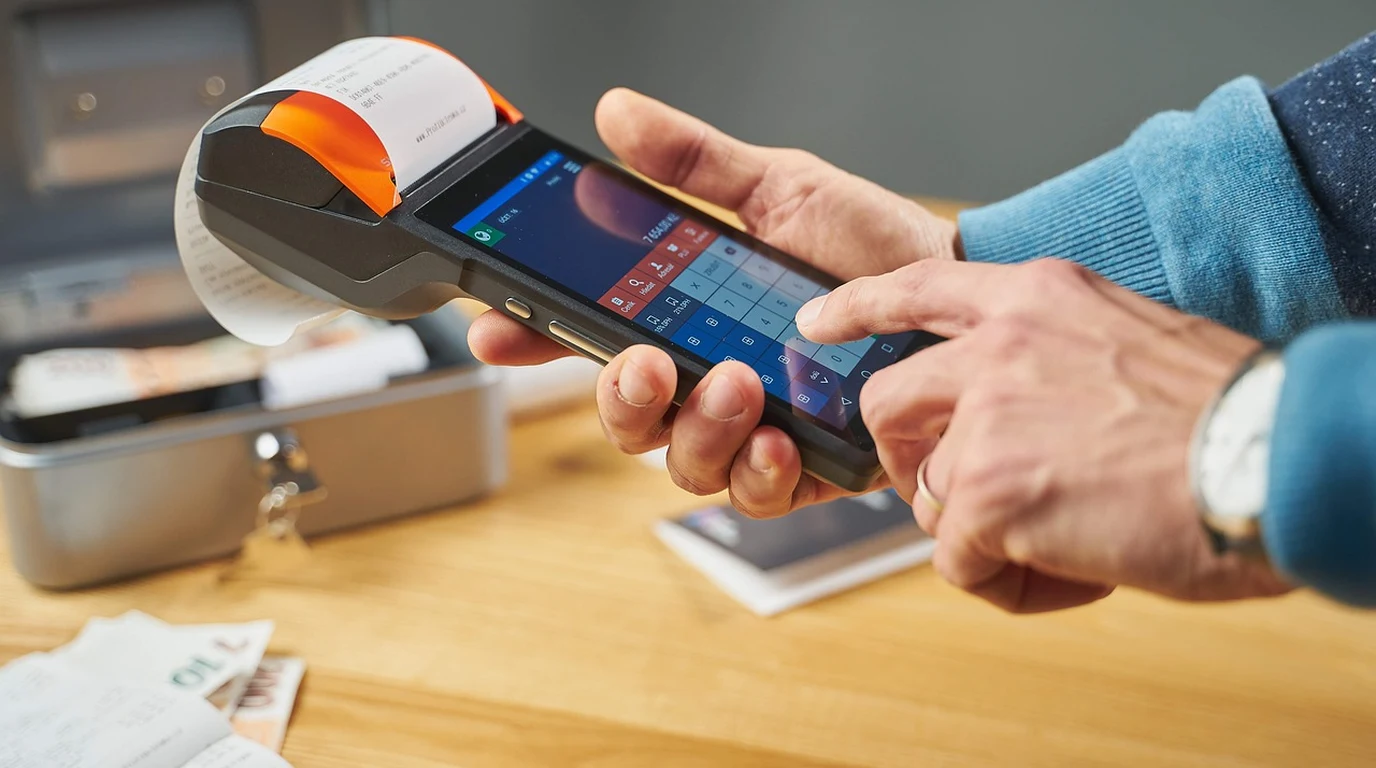
You are standing in line at a busy Canadian grocery store. The conveyor belt is moving, the cashier is scanning items at lightning speed, and you are keeping a watchful eye on the customer-facing display. Suddenly, a block of aged cheddar marked on the shelf display tag for $8.99 registers on the screen at $11.49. You open your mouth to point out the error, but hesitation kicks in. Is it worth holding up the line for a $2.50 difference? Will the cashier just manually override the price to $8.99, or are you actually entitled to get that cheese completely free?
Most Canadian shoppers experience this exact moment of friction every single month. What thousands of consumers fail to realize is that a retail pricing mistake is not just a minor oversight—it triggers a voluntary nationwide legal agreement designed to protect your wallet. Known formally as the Scanner Price Accuracy Code, this agreement enforces a clear financial penalty against participating stores when their electronic checkout systems overcharge you.
Under Canada’s Scanner Price Accuracy Code, if an unscanned item scans at a price higher than the displayed shelf tag or advertisement, you are entitled to receive the item FREE if it costs under $10. If the item costs more than $10, you receive $10 OFF the lowest advertised price.
What Is Canada’s Scanner Price Accuracy Code and How Does It Work?
The Scanner Price Accuracy Code was created in June 2002 to address consumer mistrust surrounding automated Point-of-Sale (POS) barcode systems. Endorsed directly by the Competition Bureau of Canada and administered by the Retail Council of Canada (RCC), the voluntary code sets a strict operational standard: electronic price scanners must reflect the physical price displayed on store shelves, signs, or promotional flyers.
The core mechanics of the code are straightforward, but they rely on specific pricing thresholds that every Canadian shopper should memorize:
- Items Priced Under $10.00: If the correct shelf or advertised price of an item is under $10.00 and the scanner registers a higher price at checkout, the merchant must give you that single item for free ($0.00).
- Items Priced Over $10.00: If the correct shelf or advertised price of an item is $10.00 or higher and the scanner registers a higher price, the merchant must adjust the price to the lower advertised figure and deduct an additional $10.00 off that correct price.
- Multiple Identical Items: If you bring five identical cans of soup to the register and the shelf tag says $2.50 but they scan at $3.25, the Scanner Code applies only to the first item (making it 100% free). The remaining four identical items must be price-adjusted down to the correct shelf price of $2.50 each. You do not receive five free cans.
It is vital to understand what triggers the code: the item must scan higher than the advertised price. If an item scans lower than the shelf tag, the code does not apply (though you naturally benefit from the lower price). Furthermore, if the register scans an item at the exact price listed on the shelf tag, but you simply misread the tag, no remedy is owed.
Which Canadian Retailers Are Bound by the Scanner Price Accuracy Code?
A common misconception is that the Scanner Price Accuracy Code is a mandatory federal law applying to every single store in Canada. Outside of Quebec—which enforces statutory pricing protections through provincial law—the code is a voluntary policy framework. However, because virtually every major national supermarket, pharmacy, and big-box chain belongs to the Retail Council of Canada, the vast majority of retail locations you visit every week are legally and contractually committed to honoring it.
Participating retail banners in Canada include:
- Loblaw Companies Limited: Loblaws, Real Canadian Superstore, No Frills, Shoppers Drug Mart, Zehrs, Fortinos, Your Independent Grocer, Valu-mart, Extra Foods, and Maxi.
- Sobeys Inc.: Sobeys, Safeway, FreshCo, Foodland, Chalo! FreshCo, Thrifty Foods, and Lawtons Drugs.
- Metro Inc.: Metro, Food Basics, Super C, and Jean Coutu locations across Ontario and Atlantic Canada.
- Walmart Canada: All Supercentre and standard retail store formats nationwide.
- Costco Wholesale Canada: All warehouse locations across Canada.
- Canadian Tire Corporation: Participating corporate and dealer-owned stores, as well as affiliated banners like Mark’s.
- Giant Tiger Stores: All corporate and franchise locations nationwide.
- Home Hardware & RONA: Participating dealer locations across Canada.
To confirm whether an individual retail branch participates in the program, look at the store entrances or the customer service counters. Participating merchants display a distinct yellow-and-blue decal reading “Scanner Price Accuracy: Voluntary Code Enforced.” If a retailer displays this sticker, their management and frontline staff are bound by the code’s rules.
What Fine-Print Exceptions Can Block You From Getting an Item Free?
Retailers are not obligated to grant you a free item in every pricing dispute. To prevent abuse and clarify operational boundaries, the Retail Council of Canada established specific exclusions. Understanding these fine-print rules protects you from arguing invalid claims while ensuring you remain firm when you are genuinely in the right.
The code does not apply in the following scenarios:
- Individually Sticker-Priced Goods: If a price tag is physically stuck directly onto the individual item itself (common in clearance bins or small specialty shops) rather than displayed on a shelf edge, peg hook, or flyer, the code does not apply. In this case, the store is simply required to honor the lower price on the physical sticker.
- Prescription Drugs and Directly Regulated Products: Behind-the-counter pharmaceuticals, prescription medications, and state-regulated items (such as tobacco or government-controlled alcohol in certain provinces) are exempt from the $10 free bonus.
- Custom-Weighed Goods and Service Products: Items sold by weight without a standard printed shelf barcode (e.g., custom deli cuts or bulk candy measured at the register scale) fall outside scanner code rules.
- Clear Expiration Dates on Promotional Signage: If a promotional display sign or shelf tag explicitly lists a sale end date (e.g., “Sale ends Tuesday, Oct 12”) and you purchase the item on Wednesday, Oct 13, the store is not obligated to offer the item for free. They may choose to honor the old price as a customer service gesture, but the Scanner Code cannot be forcibly invoked.
The table below breaks down real-world scenarios to illustrate exactly when the code applies, how the math works, and what cashier pushback you can expect to navigate.
| Item & Scenario | Shelf Tag vs. Scanned Price | Correct Final Math | Code Enforcement | Common Store Pushback |
|---|---|---|---|---|
| Single Box of Cereal Under $10 shelf price |
Shelf: $5.99 Scanned: $7.49 |
$0.00 (100% Free) |
Fully Covered | “I’ll just price-override it to $5.99 for you.” |
| Small Appliance Over $10 shelf price |
Shelf: $45.00 Scanned: $52.00 |
$35.00 ($45 lower price minus $10) |
Fully Covered | “We can match $45, but we don’t give extra discounts.” |
| Four Identical Cans of Coffee Under $10 shelf price |
Shelf: $8.00 each Scanned: $9.50 each |
Can 1: $0.00 Cans 2–4: $8.00 each (Total: $24.00) |
Covered (1st item only) | “The code means all 4 items become $8.00, none are free.” |
| Clearance Shirt Individual sticker on product |
Sticker: $14.00 Scanned: $18.00 |
$14.00 (No additional $10 off) |
Exempt (Sticker Tag) | N/A (Store must honor sticker price of $14.00). |
| Kitchen Blender (in Quebec) Mandatory Provincial Law |
Shelf: $80.00 Scanned: $95.00 |
$70.00 ($80 lower price minus $10) |
Mandatory Statutory Law | “Policy is optional.” (False in QC: legally mandatory). |
How Do You Claim Your $10 Discount at Checkout Without Making a Scene?
The biggest challenge consumers face is not understanding the rules—it is dealing with cashiers or front-end staff who have never been trained on the policy. When an error occurs, cashiers routinely perform a standard manual price override down to the lower shelf tag price, completely ignoring the $10 penalty rule. If you don’t speak up, you leave money on the table.
Here is your exact step-by-step resolution playbook to claim your rightful discount calmly, professionally, and authoritatively.
Step 1: Catch the Error at the Register Screen or Audit Your Receipt
Keep your eyes on the register terminal as items are swiped. If an item scans higher than expected, let the cashier finish scanning all your items. You can choose to raise the issue immediately before paying, or you can complete the transaction, step over to the Customer Service Desk, and review your itemized receipt.
Step 2: Use Precise, Neutral Terminology
Avoid using vague phrases like “This item is wrong, can I get a deal?” Instead, use clear, authoritative language that signals to store staff that you understand retail compliance. Say directly:
“This item scanned at $8.50, but the shelf tag is listed at $6.99. Since this store participates in the Scanner Price Accuracy Code, I’d like to claim this under the $10 Free Rule.”
Step 3: Handle Cashier Pushback Direct and Calmly
If the cashier responds by saying, “I can change the price to $6.99 for you, but we don’t give items away,” do not get defensive. Empathy and calm firmness are your best tools. Reply with:
“I appreciate you overriding the price to $6.99, but under the Retail Council of Canada policy posted at your entrance, any non-stickered item under $10 that scans high is free. Could you please check with your front-end manager or supervisor?”
Step 4: Request a Front-End Floor Verification
If the price error is disputed, the cashier or a customer service lead will send a staff member to verify the shelf tag. Offer to walk back to the aisle with them or show them a clear, unedited photo of the shelf tag taken on your smartphone (make sure the photo captures both the advertised price and the 6-to-12 digit SKU/UPC barcode number on the shelf label to prove it matches your item).
Step 5: Escalate Non-Compliance to Corporate or the RCC Hotline
If a store manager flatly refuses to apply the code despite visible program stickers on the front door, do not cause a disruption. Pay for your order (or leave the disputed item), ensure you keep your itemized receipt, and take a photo of the shelf label. You can then submit a formal complaint directly to the Retail Council of Canada by calling their toll-free Scanner Price Accuracy Line at 1-866-488-8557 or reporting the store online through the RCC portal. Retailers face internal audits and corporate penalties when reported for code violations.
Why Is Quebec’s Scanner Law Different From the Rest of Canada?
If you live or shop in Quebec, your pricing rights are even stronger. In the nine other Canadian provinces and three territories, the Scanner Price Accuracy Code is a voluntary self-regulatory agreement. In Quebec, however, price accuracy is codified directly into provincial law under the Quebec Consumer Protection Act (LPC) and strictly regulated by the Office de la protection du consommateur (OPC).
Under Quebec’s legal framework (specifically the Merchants’ Price Labeling and Accurate Pricing Policy):
- Stores that opt out of placing individual price stickers on every single item in the store must sign onto the legal pricing accuracy policy by law.
- If an item scans at a price higher than the shelf display price, the merchant must give the item to the consumer for free if it costs $10.00 or less.
- If the item costs more than $10.00, the merchant must correct the price to the displayed lower price and give the consumer a mandatory $10.00 discount.
Because it is a statutory legal requirement in Quebec rather than a voluntary retail pledge, store managers who fail to honor the rule face severe fines from provincial enforcement officers. As a result, cashier compliance in Quebec stores is among the highest in North America.
Maximized Savings: Turn Checkout Errors into Consumer Confidence
The Scanner Price Accuracy Code exists for one clear reason: to incentivize major retailers to keep their shelf prices accurate and prevent silent overcharging at the checkout counter. Thousands of dollars in pricing errors slip past Canadian consumers every single day simply because shoppers assume barcode systems are foolproof or feel too awkward to raise the issue.
By saving this guide, watching register totals, and referencing the simple $10 rule during your weekly shopping trips, you protect your household budget while holding major retailers accountable to their public promises.
Frequently Asked Questions
Does the Scanner Price Accuracy Code apply to online grocery pickup or home delivery orders?
No. The Scanner Price Accuracy Code applies strictly to physical in-store retail transactions where physical shelf labels, promotional signs, or printed store flyers are displayed alongside point-of-sale scanners. E-commerce platforms, mobile apps, and online pickup orders fall under separate corporate pricing policies and terms of service.
What happens if a store manager refuses to honor the $10 Free Rule?
If a participating store manager refuses to honor the code, keep your itemized receipt, take a photo of the shelf price tag showing the barcode SKU, and call the Retail Council of Canada (RCC) Scanner Price Accuracy hotline at 1-866-488-8557. You can also file a complaint through the RCC website or submit a misleading representation complaint to the federal Competition Bureau.
Is the $10 discount calculated off the wrong scanned price or the correct lower shelf price?
The $10 discount is always deducted off the lower, correct advertised shelf price—never the higher incorrect scanned price. For example, if a frying pan is marked $30 on the shelf label but scans at $42, the merchant must adjust the base price down to $30 and then subtract $10, making your final price $20.
Does the code apply if an item is placed in the wrong shelf location by another customer?
No. The code only applies when the physical shelf price label or sign correctly matches the product’s description, brand, and UPC/SKU code. If a customer accidentally abandons a higher-priced item on a shelf hook marked for a cheaper product
Consumer rights advocacy spans from assertively protecting household tenancy to challenging cashier overcharges. For scanning error refunds, read our guide on Ontario LTB Rent Arrears: N4 Notice Defense Timelines.