
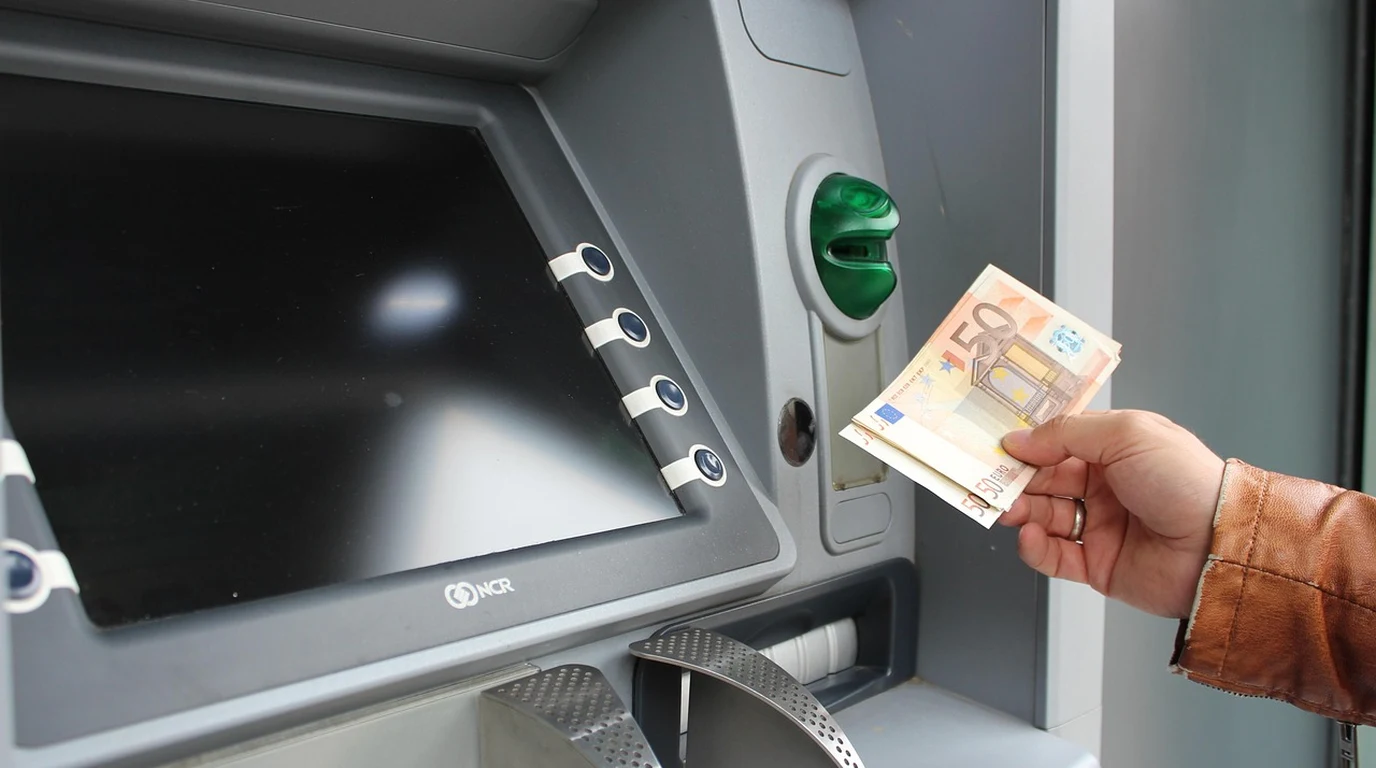
Picture this: It’s a Friday night, you’re standing in a dimly lit convenience store or a crowded bar, and you desperately need a twenty-dollar bill. You pull out your TD Access Card, slide it into the machine, press past the alarming warning screens, and withdraw a single twenty. A few days later, you log into your TD app to check your balance, and a quiet financial gut punch hits you: that $20 withdrawal actually cost you nearly $30. You stare at your phone screen wondering how a simple cash transaction managed to drain your account with stealth-like precision.
You aren’t imagining things, and you aren’t alone. Canada’s ATM landscape—specifically outside of the Big Five banking ecosystem—is an expensive minefield designed to quietly harvest fees from unwary consumers. If you’ve ever wondered what happens when you step outside the comfortable green-branded bubble of TD Bank to pull out cash, you are about to get a masterclass in how every single transaction is intercepted, taxed, and sliced up by multiple financial institutions.
Yes, using your TD bank card at a non-TD ATM triggers multiple fees. You will typically face TD’s out-of-network fee ($2.00 to $3.50 unless you hold a high-tier chequing account), an Interac network routing fee, and an independent operator convenience surcharge ($2.50 to $5.50+), potentially costing up to $9.00 total for a single withdrawal.
Why Does Using a Non-TD ATM Cost So Much Money?
To understand why withdrawing your own money feels like being mugged by an algorithm, you have to look under the hood of the Canadian interbank network. When you swipe or tap a debit card at an automated teller machine that doesn’t belong to your issuing bank, you aren’t just moving paper currency around. You are initiating a complex, multi-party data exchange across a shared national infrastructure.
The sticker shock comes from the “triple-dip” fee structure that dominates independent ATM networks in Canada. Unlike the United States, where surcharge disclosure laws have evolved somewhat haphazardly, the Canadian market relies on clear on-screen warnings—yet those warnings often arrive too late in the user journey, right after you’ve already committed to the transaction out of social pressure or urgent necessity.
Let’s break down the mechanics of the three distinct financial tolls extracted every time you use a non-TD machine:
- The Issuer Fee (TD’s Out-of-Network Toll): TD Bank charges you for the “privilege” of using an ATM infrastructure that they didn’t build or maintain. Unless you are holding one of their premium tier-one chequing accounts that explicitly waives external ATM usage, TD charges anywhere from $2.00 to $3.50 per domestic non-TD withdrawal.
- The Interac Network Access Fee: Interac is the invisible highway connecting your bank to independent machines. While consumers rarely see this broken out as a separate line item on consumer statements anymore—it is usually bundled directly into the issuer fee—it represents the switching cost that allows TD to talk to a private machine operating in a gas station in rural Saskatchewan.
- The Operator Convenience Surcharge: This is the wild west of ATM pricing. Independent white-label operators—companies like VersaBank, NoteMachine, or independent cash-loading services—set their own convenience fees. In high-traffic, low-competition zones like dive bars, convenience stores, cannabis dispensaries, music festivals, and casinos, this surcharge routinely ranges from $2.50 to $5.50, and sometimes creeps even higher.
Add these layers together, and the math becomes genuinely predatory for small-dollar transactions. If you withdraw $20 from an independent machine while holding a standard TD student or entry-level account, a $3.00 TD fee combined with a $4.50 operator surcharge means you are paying a 37.5% transaction penalty just to access your own liquid capital.
How Do the Big Five Canadian Banks Compare on ATM Fees?
It isn’t just TD that penalizes you for stepping outside the family. Canada’s major chartered banks operate on remarkably similar fee schedules, using out-of-network charges both to discourage customers from using rival infrastructure and to drive adoption of their highest-tier, highest-fee monthly banking packages.
When evaluating these costs, it’s vital to look past the base transaction fee and examine how monthly account maintenance fees interact with fee-waiver perks. Often, a customer paying $30 a month for an elite chequing account is simply prepaying for the right to make free ATM withdrawals—whether they actually use that volume or not.
| Bank Issuer | Standard Interac ATM Fee (Domestic) | US / International ATM Fee | Account Tier Waiver Threshold |
|---|---|---|---|
| TD Bank | $2.00 – $3.50 per txn | $5.00 + 2.5% FX markup | All-Inclusive Banking Plan ($29.95/mo or min. balance waiver) |
| Royal Bank of Canada (RBC) | $2.00 – $3.00 per txn | $5.00 + 2.5% FX markup | VIP Banking ($30.00/mo or min. balance waiver) |
| Bank of Montreal (BMO) | $2.00 – $3.00 per txn | $5.00 + 2.5% FX markup | Primary Chequing / Premium Plan ($30.00/mo) |
| Scotiabank | $2.00 – $3.00 per txn | $5.00 + 2.5% FX markup | Preferred Package ($16.95/mo) / Ultimate Package |
| Canadian Imperial Bank of Commerce (CIBC) | $2.00 – $3.00 per txn | $5.00 + 2.5% FX markup | Smart Plus Account ($30.00/mo or min. balance waiver) |
Notice a common thread? Every single one of these institutions charges baseline out-of-network fees unless you maintain a substantial minimum balance—usually between $4,000 and $6,000 parked dead in a zero-interest chequing account. When you calculate the opportunity cost of locking up $5,000 in a checking account yielding 0% interest versus investing it, paying a la carte ATM fees occasionally can actually be cheaper than paying the hidden opportunity cost of maintaining a premium tier balance solely for fee waivers.
What Is the Hidden Danger of Independent White-Label ATMs?
The real financial traps in the Canadian cash economy aren’t bank-owned machines; they are the independent, neon-lit white-label ATMs planted in semi-captive environments. These machines are owned by private operators who generate 100% of their revenue from convenience surcharges, creating an aggressive incentive to maximize fees while minimizing transparency.
When you approach a white-label ATM, several psychological and technical factors conspire against your wallet:
- Buried Fee Disclosures: While Canadian regulations and Interac operating rules mandate that the machine must display the surcharge fee on-screen before the transaction is finalized, operators often use low-contrast text, confusing button layouts, or multi-step prompt screens that obscure the true cost until you are a click away from completion.
- Dynamic Currency Conversion (DCC) Scams: If you are using a foreign card at a Canadian white-label machine—or conversely, a Canadian card abroad—these machines frequently attempt to trick you into accepting “Dynamic Currency Conversion.” They offer to process the transaction in your home currency while applying an astronomical proprietary exchange rate markup that can silently steal 8% to 12% of your withdrawal value.
- Hardware and Skimming Vulnerabilities: Because white-label ATMs are frequently placed in unsupervised locations like convenience store entryways or nightclub corridors, they are statistically more vulnerable to physical tampering, deep-insert skimmers, and wireless pin-pad overlays. Using your TD card at a sketchy independent machine doesn’t just cost you $5 in fees; it exposes your account credentials to compromised hardware.
- No Recourse for Dispensing Errors: If a bank-branded ATM jams, short-changes you, or fails to dispense cash while debiting your account, resolving the dispute with TD is relatively straightforward. If an independent white-label machine malfunctions, you are often forced to deal with an obscure third-party service provider whose customer support phone number leads to an endless automated loop.
How Can You Completely Bypass Canadian ATM Fees?
If you refuse to let financial institutions siphon your hard-earned cash just for touching paper currency, you have several powerful architectural alternatives. Escaping the ATM fee trap requires shifting your banking habits toward zero-fee cooperative networks and digital-first alternatives.
The most powerful weapon in the Canadian consumer’s arsenal against ATM fees is THE EXCHANGE Network. Comprising hundreds of credit unions, caisses populaires, and select banks across Canada (such as Laurentian Bank and Manulife Bank), THE EXCHANGE Network allows cooperative banking members—and crucially, customers of digital banks partnered with them—to use thousands of ATMs nationwide with zero operator surcharges.
Furthermore, digital-first institutions like Simplii Financial (backed by CIBC) and Tangerine (backed by Scotiabank) provide profound structural relief:
- Simplii Financial: Customers get fee-free access to all CIBC branded ATMs across Canada. Because CIBC has one of the largest physical ATM footprints in the country, finding a surcharge-free machine is rarely difficult in urban and suburban centers.
- Tangerine: Customers enjoy free access to Scotiabank’s massive nationwide network of ABMs, plus access to the expansive Global ATM Alliance when traveling internationally, completely bypassing foreign network withdrawal penalties.
- Credit Union Membership: If you bank with a credit union belonging to THE EXCHANGE, you can use almost any other participating credit union’s ATM in the country without paying a dime in network or operator fees.
Beyond network-hopping, the ultimate strategy is simply reducing your velocity of cash consumption. With Canada rapidly approaching a cashless transactional baseline where tap-to-pay, digital wallets, and Interac e-Transfers dominate 95% of everyday commerce, the actual necessity of carrying physical paper currency has plummeted to near zero.
What Is the Actionable Playbook for Managing Cash Without Paying Fees?
When you find yourself needing cash and staring down an expensive white-label ATM, stop and execute this four-step tactical playbook to protect your money:
- Audit Your Immediate Footprint Before Pulling Out Your Card: Never default to the nearest machine. Take 30 seconds to open your mobile banking map or check the locator tool for your issuer (or a partner network like CIBC for Simplii users). Walking two blocks further to a designated home-bank or partner ATM instantly eliminates $3 to $6 in avoidable surcharges.
- Leverage Point-of-Sale (POS) Cash-Back: If you are already making a purchase at a grocery store, pharmacy, or major retailer (like Loblaws, Shoppers Drug Mart, or Metro), ask the cashier for cash-back on your debit purchase. Most Canadian grocery and retail chains permit cash-back increments of $20 to $100 on Interac debit transactions completely free of operator surcharges or issuer penalties.
- Consolidate Your Cash Needs: If you know you will need physical currency throughout the month for farmers’ markets, cash-only restaurants, or tipping, make one single larger withdrawal at your home bank’s ATM rather than making multiple small, fee-laden $20 withdrawals at independent convenience store machines.
- Evaluate Your Monthly Account Package Realistically: If you routinely find yourself paying $15 to $20 a month in out-of-network ATM fees and miscellaneous transaction charges, run the math on upgrading to an all-inclusive chequing tier or switching to a digital-first institution with no-fee ATM policies. Often, consolidating your banking fees into a single predictable line item is far cheaper than death by a thousand paper cuts.
Frequently Asked Questions
If I use my TD debit card at a non-TD bank ATM (like RBC or BMO), will I be charged twice?
Yes. You will be charged TD’s domestic out-of-network fee (typically $2.00 to $3.50, unless waived by your account tier) PLUS the host bank’s specific ATM convenience surcharge, which is generally around $1.50 to $3.00 for non-customers.
Do digital banks like Simplii or Tangerine charge fees at TD ATMs?
Yes. If you use a Simplii Financial card at a TD-branded ATM, TD will charge its standard operator convenience fee, and Simplii may apply out-of-network charges depending on the specifics of your account. Simplii users must stick to CIBC ATMs, and Tangerine users must stick to Scotiabank ATMs to guarantee zero fees.
Why do white-label ATMs charge such high convenience fees?
Independent ATM operators do not earn revenue from retail banking relationships, deposits, or lending products. Their entire business model relies on monetizing the physical hardware installation, cash-transport logistics, and processing overhead directly through the convenience surcharge levied on the consumer at the moment of withdrawal.
Can I avoid ATM fees when traveling internationally with a Canadian bank card?
Standard Canadian bank cards incur both a flat international ATM fee (usually $5.00) and a 2.5% foreign exchange currency markup. To avoid this, utilize specialized multi-currency travel cards, fintech accounts with zero foreign transaction fees, or banks participating in international alliance networks like the Global ATM Alliance.
Hidden utility and telecom billing surcharges drain monthly finances just like white-label banking fees. For ATM fee breakdowns, review our guide on CCTS Complaint Escalation: Telecom Dispute Resolution.