
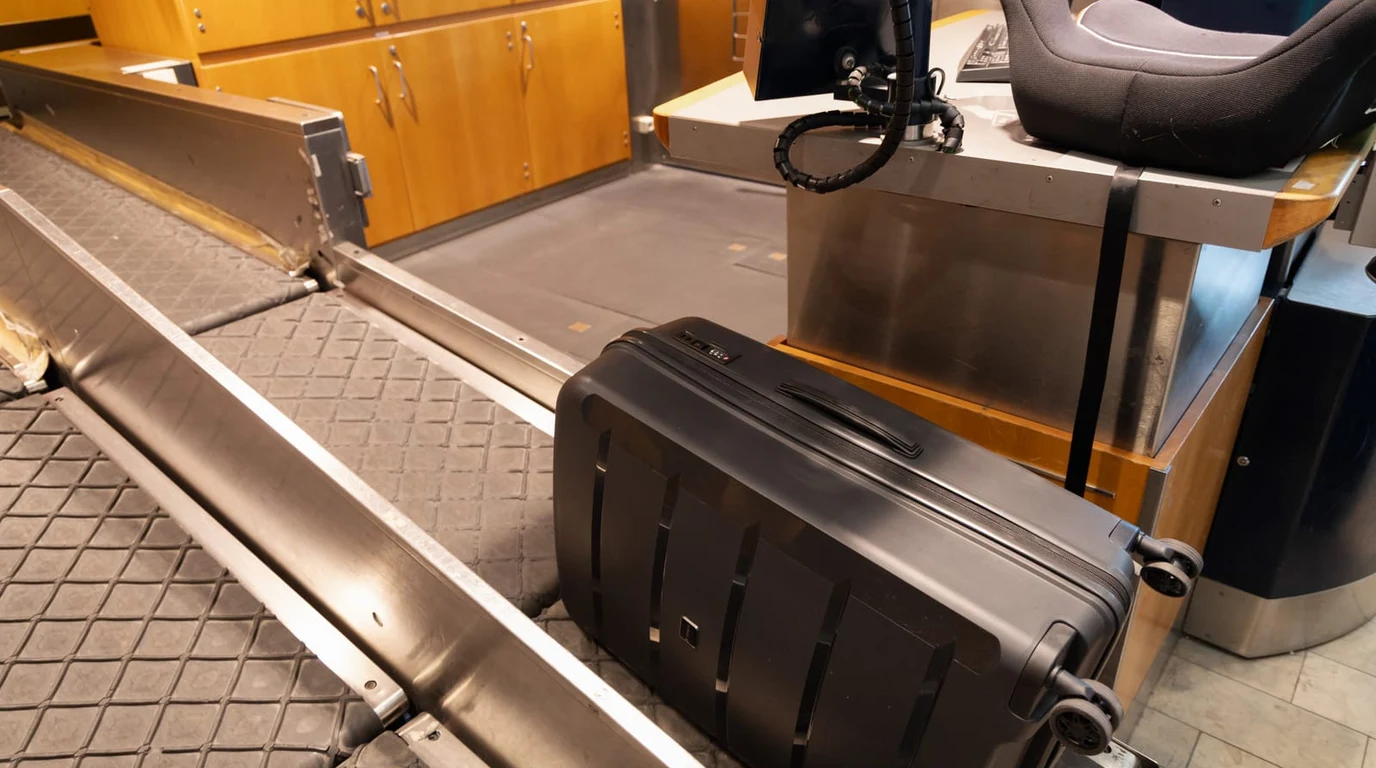
You’re standing at the baggage carousel, watching the crowd thin out. The mechanical hum of the belt feels louder as the last few suitcases—none of them yours—trundle past. Your heart sinks. It isn’t just about the nylon bag; it’s about the wedding suit you need for tomorrow, the specialized hiking boots for your West Coast Trail trek, or the essential medication tucked into a side pocket. You feel vulnerable, frustrated, and, frankly, ignored by the gate agents who seem more interested in their shift change than your missing life.
I’ve been in those shoes, and I’ve spent years helping Canadians navigate the bureaucratic maze of airline liability. Here is the reality: the airline is not doing you a “favour” by looking for your bag. They are operating under a strict international and domestic legal framework that dictates exactly how much they owe you for your trouble. You aren’t a victim; you are a creditor.
Direct Practical Verdict:
Under the Montreal Convention and Canada’s APPR, airlines are liable for up to approximately $2,350 CAD (1,288 SDRs) for lost, delayed, or damaged baggage. You must file a Property Irregularity Report immediately at the airport and submit written claims within 7 days for damage or 21 days for delay expenses to secure your legal right to reimbursement.
How Much Can I Actually Get for Lost Luggage in Canada?
When we talk about “caps,” we are talking about the maximum amount an airline is legally required to pay you. In the world of aviation law, we don’t use simple dollars and cents initially. We use “Special Drawing Rights” (SDRs). Think of an SDR as a “global currency” managed by the International Monetary Fund. Under the Montreal Convention—which governs international travel—and the Canadian Air Passenger Protection Regulations (APPR)—which mirrors these rules for domestic flights—the liability limit is currently set at **1,288 SDRs**. Because the value of an SDR fluctuates based on a basket of global currencies, the Canadian dollar equivalent changes daily. Usually, this sits between **$2,300 and $2,450 CAD**. This is a per-passenger limit, not a per-bag limit. If you and your spouse are traveling together and the airline loses one massive suitcase containing both your belongings, you are technically entitled to claim up to the limit for each passenger, provided you can prove the contents belonged to both of you. However, here is where most people trip up: this is a *liability ceiling*, not a flat-rate payout. If the airline loses a bag containing $500 worth of clothes, they owe you $500, not $2,350. You must be prepared to substantiate the value of what was lost.What Are the Strict Deadlines for Filing a Baggage Claim?
The biggest “gotcha” in the airline industry isn’t the fine print on your ticket; it’s the clock. The law provides very narrow windows to assert your rights. If you miss these windows, your claim is legally dead, and even the most sympathetic judge in Canada cannot resurrect it. There are two distinct steps you must take. First is the **Property Irregularity Report (PIR)**. This is the piece of paper you get at the airport baggage desk. Do not leave the airport without it. Even if the agent tells you to “just file it online at home,” stay put. The PIR is your proof that the incident occurred. Second is the **Formal Written Claim**. Many travelers think the PIR *is* the claim. It isn’t. The PIR is just a notice of the problem. You must follow up with a formal written demand for compensation (usually via the airline’s website or a registered letter) within the following statutory timelines:| Issue Type | Airport Action (PIR) | Written Claim Deadline | Max Liability (Approx) | Required Evidence |
|---|---|---|---|---|
| Damaged Baggage | Immediate / At Carousel | 7 Days from receipt | ~$2,350 CAD | Photos, repair quotes |
| Delayed Baggage | Immediate / At Carousel | 21 Days from receipt | ~$2,350 CAD | Itemized receipts |
| Lost Baggage | Immediate / At Carousel | After 21 days (Status change) | ~$2,350 CAD | Inventory of contents |
| Domestic (Small Carrier) | Immediate / At Carousel | Varies by Tariff | ~$2,350 CAD (APPR) | PIR + Receipts |
Can I Buy New Clothes if the Airline Loses My Bag?
This is the most common question I get. If your bag is delayed, the airline is legally required to reimburse you for “reasonable interim expenses.” What is “reasonable”? This is where common sense and the law intersect. If you are a businessman and your suit is in the missing bag, buying a replacement suit to attend your scheduled meetings is reasonable. If you are on a beach vacation and buy a $2,000 tuxedo “just in case,” the airline (and the Canadian Transportation Agency) will likely deny that claim. The rule of thumb is: **Replace what you need to maintain your life and health for the duration of the delay.** * Toiletries and basic hygiene products? Yes. * Underwear and socks? Yes. * A change of clothes suitable for your destination’s climate? Yes. * Specialized gear (e.g., a car seat for a baby or a CPAP machine)? Absolutely. **Crucial Tip:** Keep every single receipt. The airline will not reimburse you based on a bank statement or a “rough estimate.” They need the itemized paper or digital receipt. Also, remember that you are expected to mitigate your losses. Don’t buy a week’s worth of clothes if the airline tells you the bag will be delivered in four hours.What Happens if the Airline Denies My Baggage Claim?
Airlines are notorious for using “internal policies” to try and override federal law. You might hear an agent say, “We only reimburse $50 per day for expenses,” or “We don’t cover jewelry or electronics.” Under the APPR and the Montreal Convention, these internal policies are often legally unenforceable if they provide less protection than the statutory minimums. If an airline denies your claim or offers you a “travel voucher” instead of cash, you have three main paths for escalation: 1. **The Formal Demand Letter:** Send a clear, professional letter to the airline’s legal or customer relations department. State the facts, cite the Montreal Convention (for international) or APPR (for domestic), and provide a deadline (usually 30 days) for payment. 2. **The Canadian Transportation Agency (CTA):** You can file a dispute with the CTA. It is a free process, but be warned: the backlog is significant. It can take 18 months or more to get a resolution. 3. **Small Claims Court:** In many Canadian provinces, this is the “nuclear option” that actually works. It costs a small filing fee, but airlines often settle the moment they receive a court summons because it costs them more to send a lawyer to court than it does to simply pay your $1,500 claim.The Actionable Playbook: Your 4:00 PM Resolution Checklist
If you are reading this while standing in an airport or sitting in a hotel room without your luggage, follow these steps in this exact order. 1. **File the PIR Before Leaving:** Go to the baggage service counter. Get a Property Irregularity Report. Ensure the description of your bag is accurate. Get a physical copy and a file reference number (e.g., YYZAC12345). 2. **Document the Condition:** If your bag arrived damaged, take high-resolution photos of the damage, the luggage tag, and the brand of the suitcase. 3. **Spend Conservatively but Necessarily:** Buy what you need to get through the next 24-48 hours. Keep every receipt in a dedicated envelope or scan them immediately into your phone. 4. **The 21-Day Rule:** If your bag is missing for more than 21 days, it is legally considered “lost.” At this point, you are no longer claiming “interim expenses”; you are claiming the full value of the bag and its contents up to the 1,288 SDR limit. 5. **Submit the Written Claim:** Within 7 days (for damage) or 21 days (for delay/loss), go to the airline’s website and find their “Baggage Claim” portal. Upload your PIR, your receipts, and a list of items. 6. **The “Inventory of Contents”:** For lost bags, create a spreadsheet. List the item, the approximate date of purchase, and the price. You don’t need receipts for a 3-year-old t-shirt, but for high-value items, any proof of purchase (credit card statements, old emails) helps immensely. 7. **Follow Up Weekly:** Do not let the claim go cold. Set a calendar reminder to email the airline every 7 days for an update.Why You Should Never Accept a Travel Voucher
Airlines love offering vouchers. They cost the airline almost nothing and ensure you spend more money with them in the future. However, the law requires them to pay you in **cash (or cheque/e-transfer)** for baggage claims. Unless the voucher is for significantly more than the cash value of your claim—and you actually plan on flying with that airline again soon—insist on a monetary settlement. A voucher doesn’t pay for the new suit you had to buy; cash does.Final Thoughts from the Mentor
The system is designed to reward the persistent. Airlines count on 90% of passengers giving up after the first “no.” When you cite the 1,288 SDR limit and show them a folder full of itemized receipts and a PIR filed within minutes of the carousel stopping, you move from the “annoying passenger” pile to the “legal liability” pile. That is where you want to be. Stay calm, stay documented, and don’t let them off the hook. You paid for a service—the safe delivery of your property—and the airline failed to provide it. The law is on your side.Frequently Asked Questions
Is there a different limit for domestic flights within Canada? No. While international flights are governed by the Montreal Convention, the Canadian Air Passenger Protection Regulations (APPR) have adopted the same liability limit (1,288 SDRs) for domestic flights operated by large and small carriers. Does the airline have to refund my baggage fees if my bag is lost? Yes. Under the APPR, if your bag is lost or delayed, the airline must refund any baggage fees you paid for that specific bag. This is in addition to the compensation for the contents and interim expenses. What if my bag is damaged but the contents are fine? The airline is still liable. They must either pay for the repair of the suitcase or, if it is beyond repair, provide a replacement of similar value (minus reasonable depreciation). You must report this damage within 7 days of receiving the bag. Are electronics and jewelry covered in checked bags? Technically, yes, up to the SDR limit. However, most airlines’ “tariffs” (their contract with you) advise against packing valuables in checked luggage. While the Montreal Convention generally overrides these exclusions, it is always safer to carry high-value items in your carry-on.
Airline Passenger Rights & Statutory Compensation Caps
Navigating Canadian travel disruptions requires knowing the precise statutory compensation limits established under federal regulations. Review our guide on Canada Flight Delay Compensation: APPR Rules & Loopholes.