
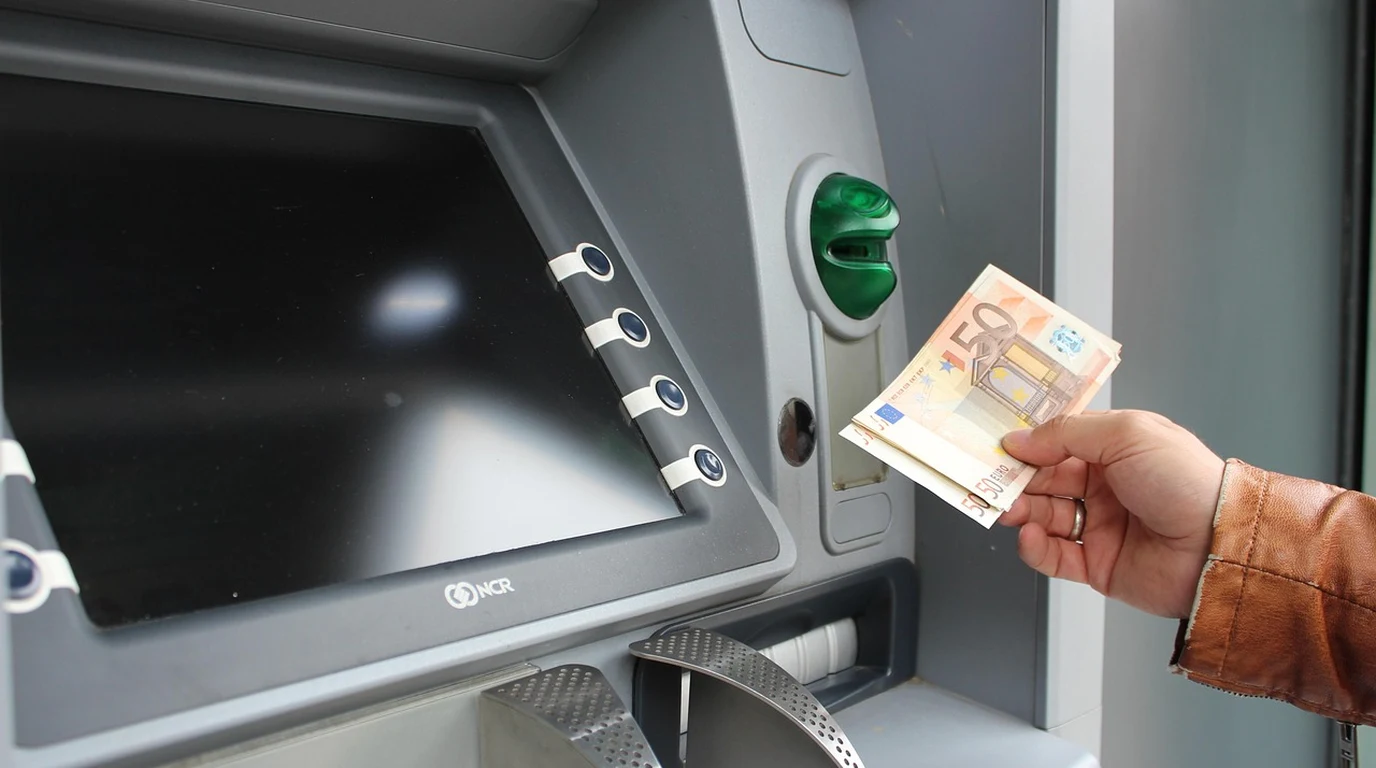
You’re standing in a dimly lit convenience store or a bustling gas station, and you need twenty dollars. You insert your card into the beige, slightly dusty “white-label” ATM tucked in the corner. Before the machine spits out your cash, a pixelated screen informs you there is a $4.00 “convenience fee.” You hit “Accept” because you’re in a rush. What you don’t see—at least not until you check your banking app the next morning—is the additional $2.00 “Interac Access Fee” your own bank tacked on for the privilege of using a competitor’s network. That twenty-dollar bill just cost you six dollars in fees. In the world of Canadian personal finance, this is the “triple-fee trap,” and it is one of the most efficient ways to erode your hard-earned savings without even realizing it.
We’ve all been there. It feels like a small tax on modern life, but for the average Canadian, these fees can quietly add up to hundreds of dollars a year. It’s frustrating because it feels unavoidable, especially when you’re far from your “home” bank branch. But here’s the truth: the ATM landscape in Canada is a complex web of legacy infrastructure, private profit-seeking, and hidden network agreements. Understanding how these fees are structured isn’t just about saving a few loonies; it’s about taking back control of your liquidity. Let’s sit down and pull back the curtain on how these machines actually work, why the fees are so high, and how you can navigate the system so you never have to pay for your own money again.
## Are digital banks like Tangerine or Wealthsimple better for ATM access?
The short answer is yes, but the *way* they are better differs significantly.
**Tangerine** (owned by Scotiabank) and **Simplii Financial** (owned by CIBC) use a “piggyback” model. Because they are owned by major banks, their customers get free access to the parent bank’s massive ATM network. If you have a Tangerine card, every Scotiabank ATM in Canada is “your” ATM. This is a fantastic deal for people who want no-fee banking but still want the security of a major bank’s infrastructure.
**Wealthsimple** and **EQ Bank** have taken a more radical, consumer-friendly approach. They don’t own any ATMs. Instead of building expensive physical infrastructure, they’ve decided to simply pay the fees for you. When you use a Wealthsimple Cash card at a white-label ATM that charges a $3.50 surcharge, Wealthsimple detects that surcharge and deposits $3.50 back into your account (usually within a few days, up to a $5 limit). This effectively turns every single ATM in Canada—from the one in the dive bar to the one at the airport—into a free machine for you.
## What is the “Exchange Network” and why should you care?
If you bank with a Credit Union, National Bank, or HSBC (now part of RBC, but historically an Exchange member), you have access to one of Canada’s best-kept secrets: **The Exchange Network**.
The Exchange is a coalition of financial institutions that have agreed to never charge each other’s customers a surcharge. If you are a member of a small credit union in British Columbia, you can use a National Bank ATM in Montreal or a Vancity ATM in Vancouver without paying a single cent in fees.
There are over 3,300 ATMs in the Exchange Network across Canada. Many of these are located in convenient spots like Shell gas stations or 7-Eleven stores. If your bank’s logo is on the back of your card next to a small “Exchange” symbol, you should never be paying for cash at a white-label machine.
## Can I get cash back at a grocery store to avoid ATM fees?
This is the ultimate “pro-tip” for the cost-conscious Canadian. Most major grocery chains (Loblaws, Real Canadian Superstore, Sobeys, Metro) and some pharmacies (London Drugs) offer a “cashback” service at the checkout.
When you pay for your groceries with your debit card, the cashier will ask, “Would you like any cashback?” You can request $20, $40, or sometimes up to $100. This transaction is processed as a “Point of Sale” (POS) purchase, not an ATM withdrawal.
Because it’s a POS purchase, your bank doesn’t charge an Interac Access Fee, and the store doesn’t charge a surcharge. You are essentially getting a free ATM withdrawal while buying your milk and eggs. The only catch? You usually have to buy something, even if it’s just a pack of gum. But a $1.25 pack of gum is still cheaper than a $6.00 ATM fee.
## Why do some ATMs charge more than others?
You might notice that an ATM at a local community center charges $2.00, while the one at the Casino or a music festival charges $5.00 or even $7.00. This is “predatory convenience” pricing.
The owners of these machines know their audience. If you are at a festival where the food trucks only take cash, you are a “captive customer.” You have no choice but to pay the fee. These companies pay high “placement fees” to the venue owners to be the exclusive provider of cash, and they pass that cost onto you.
Furthermore, the cost of “servicing” an ATM in a high-traffic or remote area is higher. If an armored car has to fight through festival traffic to refill a machine every four hours, that operational cost is baked into the surcharge.
## How to spot an ATM “Skimmer” and protect your cash
While we’re talking about white-label machines, we have to talk about security. Because these machines are often in unmonitored areas, they are prime targets for “skimming”—where thieves attach a device over the card slot to steal your data.
Before you insert your card into any non-bank ATM, give the card reader a firm tug. If it feels loose or looks like it’s made of a different plastic than the rest of the machine, walk away. Also, always cover your hand when entering your PIN. Even if a skimmer gets your card data, they can’t do much without the PIN, which is often captured by a tiny hidden camera pointed at the keypad.
## The Actionable Playbook: How to Never Pay an ATM Fee Again
If you’re tired of seeing $2.00 and $3.00 charges eating your balance, follow this step-by-step implementation guide to “fee-proof” your life.
1. **Audit Your Current Account:** Look at your last three months of bank statements. Total up every “Interac Fee” and “Surcharge.” If that number is higher than $10, you need a new strategy.
2. **Switch to a Hybrid Model:** Keep your Big Five account if you must (for mortgages or complexity), but open a **Wealthsimple Cash** or **EQ Bank** account. Move $200 of “walking around money” into this account. Use this card exclusively for ATM withdrawals. Since they reimburse the fees, you no longer have to hunt for a specific bank branch.
3. **Download the “Exchange Network” App:** If you are with a Credit Union or National Bank, download the Exchange ATM locator app. It will use your GPS to show you the nearest surcharge-free machine, often hidden inside a nearby pharmacy or gas station.
4. **Master the Grocery Store Cashback:** Make it a habit to grab $60 in cashback every time you do your weekly grocery run. Keep this cash in a safe spot at home. This “home ATM” ensures you always have cash for the barber, the farmers’ market, or the pizza delivery guy without needing a machine.
5. **Leverage Mobile Wallets:** Many people use ATMs because they forgot their wallet. By adding your debit card to Apple Pay or Google Pay, you can pay at 95% of Canadian retailers without needing physical cash. Even some ATMs now allow “contactless” withdrawals using your phone, though this is mostly limited to the bank’s own customers.
6. **Check for “Global ATM Alliance” Logos:** If you are a Scotiabank customer traveling abroad, look for Bank of America (USA), Barclays (UK), or BNP Paribas (France). You can use their ATMs without the typical $5.00 international surcharge.
## The Future of Cash in Canada
We are moving toward a “cash-light” society, but we are not “cashless” yet. Small businesses still prefer cash to avoid the 2-3% credit card processing fees, and in many rural parts of Canada, cash is still king.
The banks know this, which is why ATM fees haven’t gone away—they’ve actually increased. As the number of physical bank branches declines, the “convenience” of an ATM becomes more valuable, and the banks are pricing it accordingly. By choosing a financial partner that prioritizes your access over their own fee revenue, you’re not just saving a few dollars; you’re voting with your wallet for a fairer banking system.
### Frequently Asked Questions
**Does Tangerine charge for using Scotiabank ATMs?**
No. Tangerine is a subsidiary of Scotiabank. Tangerine clients can use any Scotiabank ATM in Canada for free to withdraw cash, check balances, or change their PIN.
**Why did I get charged a fee even though the ATM said “No Surcharge”?**
Even if the ATM operator doesn’t charge a surcharge, your own bank may still charge an “Interac Access Fee” (usually $1.50–$2.00) for using a machine that doesn’t belong to them. Check your bank’s fee schedule for “Non-Bank ATM Withdrawals.”
**Is there a limit to how much Wealthsimple will reimburse in ATM fees?**
Wealthsimple currently reimburses standard ATM surcharges up to $5 per transaction. If you use a predatory ATM that charges $10 (rare, but possible in some casinos), you would be responsible for the remaining $5.
**Can I use my credit card at an ATM to avoid fees?**
No! This is a massive mistake. Using a credit card at an ATM is considered a “Cash Advance.” You will be charged a high fee (usually $5 or more) *and* interest starts accruing immediately at a very high rate (often 22.99%+), with no grace period. Always use a debit card for ATMs.
Direct Practical Verdict:
## Why does a $20 withdrawal cost me $26 in Canada?
To defeat the fee, you have to understand the fee. Most Canadians think of an ATM fee as a single transaction cost. In reality, when you use an ATM that doesn’t belong to your bank, you are often triggering three distinct charges.
First, there is the **Surcharge (Convenience Fee)**. This is the fee displayed on the ATM screen. It goes directly to the owner of the machine—whether that’s a private company like DirectCash or another bank like TD. This fee typically ranges from $2.00 to $5.00.
Second, there is the **Interac Access Fee**. This is a fee your own bank charges you for “leaving” their network. When you use a competitor’s ATM, your bank has to pay Interac a small fee to process the transaction, and they pass that cost (plus a healthy profit margin) onto you. This is usually between $1.50 and $3.00.
Third, and most insidious, is the **Account Tier Penalty**. If you are on a basic banking plan with a limited number of monthly transactions (e.g., 12 transactions per month), that ATM withdrawal counts as one of them. If you’ve already hit your limit, your bank might charge you an additional $1.25 “excess transaction fee.”
When you add these up, a single withdrawal at a “white-label” machine in a bar or festival can easily cost you $7.00. If you do this once a week, you are handing over $364 a year to the banking gods for absolutely no added value.
## What is the difference between a Bank ATM and a White-Label machine?
Not all ATMs are created equal. In Canada, we generally categorize them into two camps: Chartered Bank ATMs and Independent (White-Label) ATMs.
**Chartered Bank ATMs** are the ones you see at RBC, Scotiabank, or BMO branches. These machines are connected directly to the bank’s core systems. If you are a client of that bank, using these machines is almost always free. If you are *not* a client, these banks will charge you a surcharge, but it is often lower than the private machines, and the machines are generally better maintained and more secure.
**White-Label ATMs** are the independent machines found in gas stations, convenience stores, and casinos. They are owned by private companies (ISOs or Independent Sales Organizations). These companies have to pay for the machine, the electricity, the internet connection, and the “cash loading” service (the armored car that brings the money). Because they don’t make money on your monthly banking fees, their only source of revenue is the surcharge. This is why white-label machines almost always have the highest fees in the country.
## How do the Big Five banks compare on ATM fees?
If you are banking with one of the “Big Five” (RBC, TD, BMO, Scotiabank, CIBC), you are essentially tethered to their specific footprint. While they offer the most machines, they also have some of the most rigid fee structures for “off-network” usage.
The following table breaks down the typical fee landscape for the major players in Canada. Note that “Premium” accounts often waive some of these fees, but those accounts usually require a high minimum balance (often $4,000 to $6,000) to avoid a monthly account fee.
To eliminate ATM fees, use your own bank’s machines or join a credit union/digital bank like Tangerine or EQ Bank that utilizes the “Exchange Network.” For ultimate flexibility, Wealthsimple’s Cash account is the gold standard, as it proactively reimburses third-party ATM surcharges up to $5 per withdrawal, effectively making every ATM in Canada free to use.
| Financial Institution | Own-ATM Fee | Interac Access Fee (Competitor ATM) | Network Partnerships | Best For… |
|---|---|---|---|---|
| RBC Royal Bank | $0 | $2.00 | None | Wide physical branch access. |
| TD Canada Trust | $0 | $2.00 | None | Longer branch hours for in-person help. |
| Scotiabank | $0 | $2.00 | Global ATM Alliance | International travelers (Barclays, BoA, etc). |
| Tangerine | $0 | $1.50 | Scotiabank Network | No-fee banking with Big 5 ATM access. |
| EQ Bank | $0 | $0 (Reimbursed) | Any Canadian ATM | High interest + fee-free withdrawals. |
| Wealthsimple | $0 | $0 (Reimbursed) | Any Canadian ATM | The “Use Any ATM” freedom. |
Canadian Financial Transaction Rights & Checkout Fees
Retail checkout surcharges and payment terminal fees add hidden costs to everyday household transactions. Explore our report on banking fees in Canada Credit Card Surcharges: Legal Fees & Exceptions.