
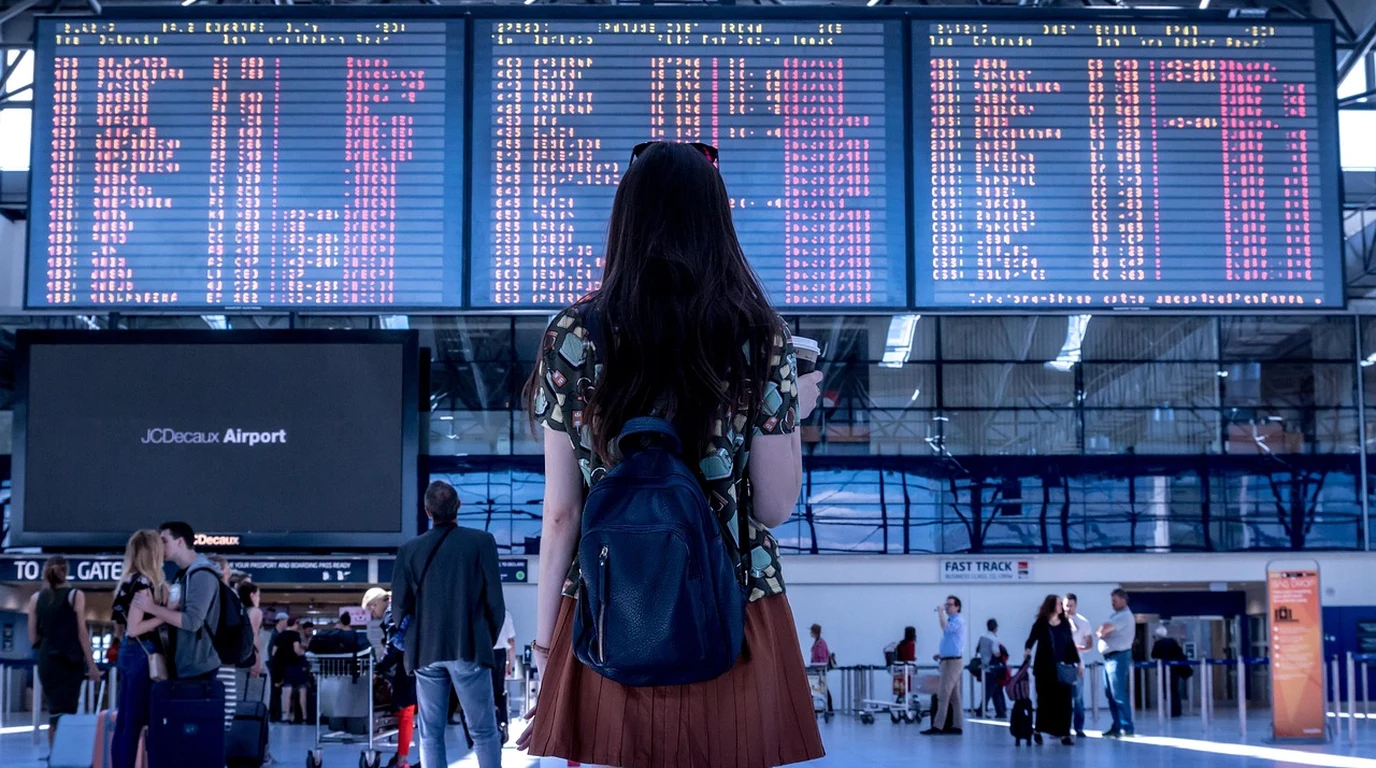
You’re sitting at Gate 52, the stale airport air is thinning, and your phone just buzzed with the third notification of the afternoon: your flight is delayed another two hours. Then comes the announcement—the one delivered in that practiced, neutral tone—blaming “technical issues” or “unscheduled maintenance” for the delay. You know what happens next. You’ll file a claim for the $1,000 you’re legally owed under Canada’s Air Passenger Protection Regulations (APPR), and three weeks later, you’ll receive a templated email stating that because the delay was “required for safety purposes,” no compensation is due. It feels like being gaslit by a multi-billion dollar corporation.
I’ve spent years deconstructing these denials, and here is the hard truth: Canadian airlines have turned the “safety loophole” into a standard operating procedure. They are betting that you won’t ask for the maintenance logs, that you don’t know the latest Canadian Transportation Agency (CTA) precedents, and that you’ll go away quietly after a $50 flight voucher. We’re going to change that today. This isn’t just about knowing your rights; it’s about demanding the “extraordinary proof” the law requires them to provide.
Direct Practical Verdict:
To win a Canadian flight delay claim, you must challenge the “safety” excuse by demanding contemporaneous evidence. Under CTA precedents, airlines bear the full burden of proof. If they cannot provide specific maintenance logs or crew schedules proving the event was unforeseeable and unavoidable, they must pay up to $1,000 CAD per passenger.
Why is my flight delay claim being denied for “safety” reasons?
The “Safety Loophole” is the single most exploited phrase in Canadian aviation. Under the APPR, airlines are exempt from paying compensation if a delay is “required for safety purposes.” On the surface, this sounds reasonable—we all want the plane to be safe. However, carriers like Air Canada and WestJet have historically used this as a blanket shield for routine operational failures. Here is the nuance the airlines don’t want you to catch: routine maintenance is not a safety exemption. If a part wears out through normal use, that is an inherent part of running an airline. It is foreseeable. In the landmark *Lareau v. WestJet* decision, the CTA clarified that for a technical problem to exempt an airline from compensation, the airline must prove the problem was unexpected and that it could not have been prevented through regular maintenance. When an airline sends you a rejection citing “safety,” they are often hiding behind a lack of transparency. They are essentially saying, “Trust us, it was a safety issue.” But the law says “Show us.” The burden of proof is not on you to prove they are lying; the burden is entirely on the airline to prove the delay was truly outside their control. If they can’t produce the specific log entry showing a “hidden defect” or an “extraordinary event” (like a bird strike or lightning), they owe you money.How much compensation am I actually owed for a flight delay in Canada?
The amount of money you are owed depends on two factors: the length of the delay at your final destination and the size of the airline. Large carriers (Air Canada, WestJet, Flair, Sunwing) pay significantly more than small carriers. The “Costly Trap” most passengers fall into is accepting the first offer. Airlines may offer you a “goodwill gesture” of a $200 voucher. If you accept this and sign a waiver, you are likely forfeiting your right to the $1,000 cash you are legally entitled to. Always check your delay duration against the official APPR tiers before responding to any airline offer.| Delay at Destination | Large Airline (CAD) | Small Airline (CAD) | Airline Defense Tactic | The “Extraordinary” Counter |
|---|---|---|---|---|
| 3–6 Hours | $400 | $125 | “Unscheduled Maintenance” | Demand maintenance logs proving the defect was “hidden.” |
| 6–9 Hours | $700 | $250 | “Crew Constraints” | Crew shortages are usually “within carrier control.” |
| 9+ Hours | $1,000 | $500 | “Safety-Related Staffing” | Airlines must prove they had no backup crew available. |
| Cancellation | Up to $1,000 | Up to $500 | “Weather in another city” | Knock-on effects are only valid for one subsequent flight. |
What evidence does an airline need to provide to deny my claim?
This is where the “Extraordinary Proof” comes in. In the past, an airline could simply say “it was weather” and the case was closed. Not anymore. Federal Court of Appeal rulings have reinforced that the airline is the only party with access to the evidence, and therefore, they must produce it. If an airline claims a delay was for safety, they must provide: 1. Contemporaneous Evidence: This means records created at the time of the delay, not a summary written by a lawyer three months later. 2. Maintenance Logs: Specific entries showing what part failed, when it was last inspected, and why the failure was “unforeseeable.” 3. Detailed Weather Reports: If they claim weather, they need to show METAR reports for the specific departure and arrival times, proving that conditions were below safe operating minima. 4. Network Impact Analysis: If they claim a “knock-on” effect (e.g., the plane was late because of weather on a previous flight), they must prove they took all reasonable measures to find a replacement aircraft. If you are filing a dispute through the CTA or Small Claims Court, your primary argument should be: *”The carrier has failed to meet its evidentiary burden under the APPR to prove the delay was outside its control or required for safety purposes.”*Can an airline deny compensation because of “crew shortages”?
For a long time, airlines tried to categorize crew shortages as “safety issues” because flying without a full crew is, technically, unsafe. However, the CTA has been very clear: staffing is an operational matter within the airline’s control. If a pilot calls in sick or a crew reaches their maximum duty hours, that is a business problem for the airline to solve. They are expected to have “reserve” crews. The only time a crew shortage is a valid excuse is if it was caused by something truly extraordinary—like a sudden, massive labor strike or a weather event that physically prevented all crews from reaching the airport. If they just “ran out of pilots,” they owe you $1,000.The Actionable Playbook: How to win your $1,000 claim
If your flight is delayed or cancelled, follow this exact sequence. Do not skip steps. 1. The “Evidence Grab” (At the Airport): * Take a screenshot of the flight status in the airline’s app. * Photograph the departure board showing the delay. * Record any announcements made by gate agents. If they say “we’re waiting for a pilot,” that is gold. * Ask the gate agent for a “Statement of Delay” or a written reason. They are legally required to provide updates every 30 minutes. 2. The 48-Hour Rule: * Wait 48 hours after you arrive at your destination. This allows the airline’s internal systems to update. * Submit your claim through the airline’s official portal. Keep it brief: “My flight [Number] on [Date] was delayed [X] hours. Under APPR, I am requesting $1,000 CAD in compensation.” 3. The “Rejection Rebuttal”: * When they send the “Safety/Technical” rejection, do not panic. Reply with: *”I am formally requesting the contemporaneous maintenance logs and the specific reason why this technical issue was unforeseeable and outside the carrier’s control, as per the CTA’s decision in Lareau v. WestJet. Without this evidence, your denial is a breach of the APPR.”* 4. The Formal CTA Dispute or Small Claims: * If they still refuse, you have two paths. The CTA is free but currently has a massive backlog (up to 2 years). * Small Claims Court is often faster and more effective. In many provinces, you can file online for a small fee. Airlines often settle the moment they receive a court summons because it costs them more to send a lawyer to court than to just pay you the $1,000.Copy-Paste: The “Extraordinary Proof” Demand Letter
Use this template if your initial claim is denied.
To: [Airline Name] Claims Department
Re: Claim [Reference Number]

I am writing to formally dispute your denial of my compensation claim for flight [Flight Number] on [Date].

Your response cites "safety purposes" as the reason for the delay. However, under the Air Passenger Protection Regulations (APPR) and established Canadian Transportation Agency (CTA) jurisprudence, the burden of proof lies entirely with the carrier to demonstrate that the delay was truly outside its control.

Specifically, I am requesting:
1. The contemporaneous maintenance logs detailing the specific mechanical failure.
2. Evidence proving this failure was not discoverable during routine maintenance.
3. Documentation of the "reasonable measures" taken to mitigate the delay (e.g., attempts to charter a replacement aircraft or rebook on a competitor).

Failure to provide this extraordinary proof constitutes a violation of your obligations under the APPR. If this claim is not settled within 15 days, I will proceed with a formal complaint to the CTA and/or initiate an action in Provincial Small Claims Court, where I will also seek recovery of all filing fees.

Regards,
[Your Name]
How do I take an airline to Small Claims Court in Canada?
If the CTA backlog is too long, Small Claims is your “nuclear option.” In provinces like Ontario (Small Claims Court) or British Columbia (Civil Resolution Tribunal), the process is designed for people without lawyers. When you file, your “Statement of Claim” should be simple. You aren’t suing for “emotional distress.” You are suing for a “Debt Owed Under Statute.” The statute is the Air Passenger Protection Regulations. You state the facts: I had a contract to fly, the flight was delayed 9+ hours, the airline failed to prove a safety exemption, therefore they owe me $1,000. Most airlines use a “cost-benefit” analysis. If they lose in Small Claims, it doesn’t set a national precedent like a CTA ruling does. They would rather pay you $1,000 and a $100 filing fee than pay a lawyer $300/hour to fight you in a basement courtroom.Frequently Asked Questions
What if the airline offers me a voucher instead of cash? You are legally entitled to cash (or a cheque/e-transfer). You do not have to accept a voucher. If you choose to accept a voucher, it must be for a higher value than the cash compensation and it must never expire. Does the APPR apply if I am flying from Canada to the US? Yes. The APPR applies to all flights to, from, and within Canada, including connecting flights. If you are flying from Toronto to New York on a Canadian or American carrier, you are covered. How long do I have to file a claim in Canada? You have up to one year from the date of the flight to file a claim with the airline under the APPR. If you are going to Small Claims Court, the limitation period is generally two years in most provinces. Can I claim expenses like hotels and meals in addition to the $1,000? Yes. These are “Standards of Treatment.” If your delay is over 2 hours, the airline must provide food and drink. If it’s overnight, they must provide a hotel and transportation. These are separate from the $1,000 compensation for your lost time.
Air Passenger Compensation & Extraordinary Circumstance Disputes
Asserting consumer rights at the grocery checkout builds the same advocacy discipline needed when confronting airlines. For APPR payout rules, read our guide on FreshCo vs Walmart Price Match: Canadian Ad Match Rules.