
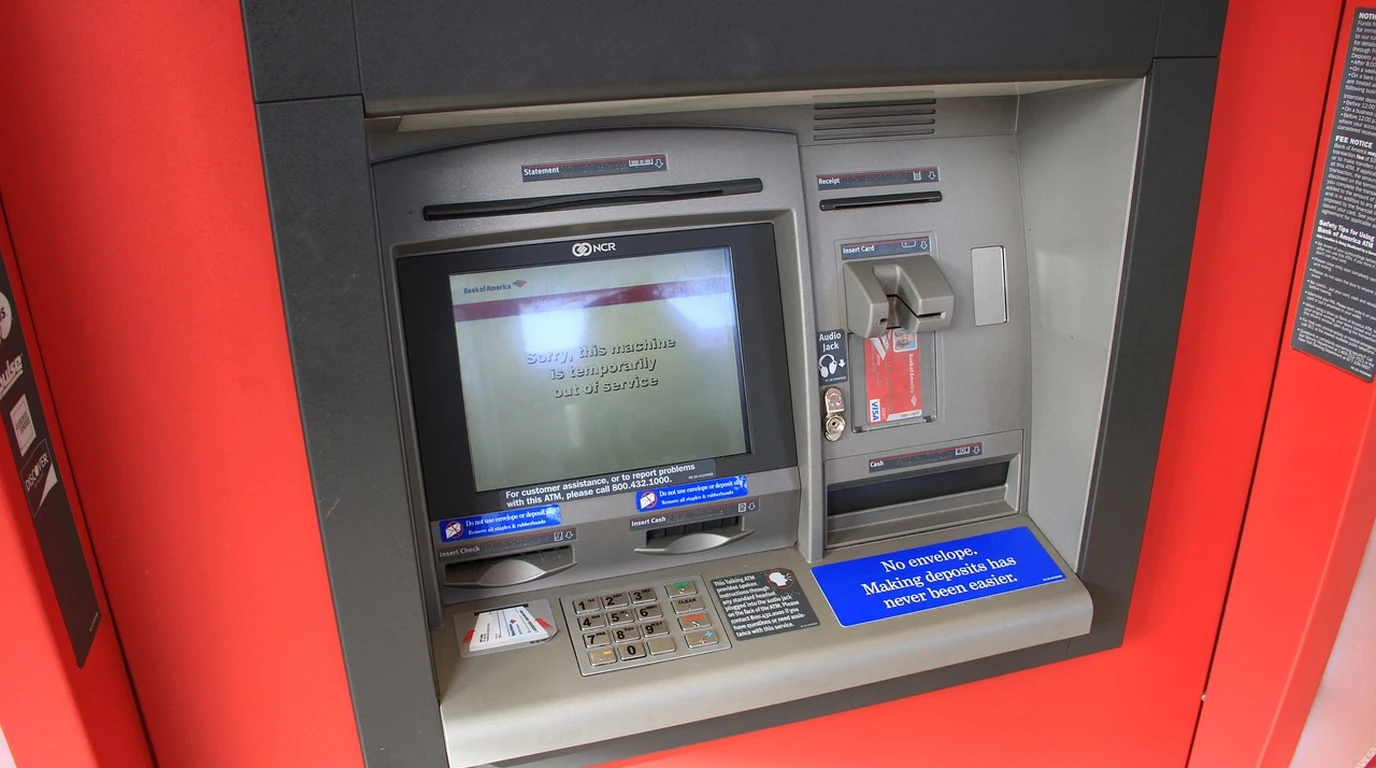
You’ve been there. We all have. You’re out, maybe grabbing a coffee, or perhaps you’re at a local market, and suddenly you realize you need cash. Your bank’s ATM isn’t nearby, so you spot a generic, often brightly lit, machine in a convenience store or a bar. You insert your card, punch in your PIN, and just before you confirm the withdrawal, a screen pops up, flashing a fee. You sigh, maybe even curse under your breath, and hit ‘accept’ because you really need that cash. Then, a few days later, you check your statement and notice not one, but two fees for that single transaction. It feels like a financial ambush, a frustrating double-dip into your hard-earned money, and it leaves you wondering: are these charges even legal? Is there any protection against this seemingly endless stream of nickel-and-diming?
The anxiety, the confusion, the sheer annoyance of these hidden costs are real. They erode trust and chip away at your financial peace of mind, especially when every dollar counts. You deserve clarity, and more importantly, you deserve a playbook to navigate these waters without constantly feeling like you’re being taken advantage of. Let’s cut through the noise and get you the definitive answer you’re looking for.
Yes, if you use your TD Bank card at a non-TD ATM in Canada, you will almost certainly be charged two distinct fees: a non-network fee from TD Bank and a convenience surcharge from the ATM operator. Canadian regulations mandate on-screen disclosure, allowing you to cancel without charge, but these double fees are standard practice.
Why Does My Bank Charge Me to Use Another Bank’s ATM in Canada? Understanding the “Double-Dip”
That feeling of being hit with two fees for one simple transaction isn’t just a feeling; it’s a very real, very common occurrence known as the “double-dip.” It’s the core of what most consumers get wrong or simply don’t fully understand about Canadian ATM fees. When you use your debit card at an ATM that isn’t owned or operated by your own financial institution, you’re entering a two-tiered fee structure, and both tiers are designed to extract a charge.
Let’s break down these two distinct charges:
- Your Home Bank’s Non-Network Fee: This is the fee charged by your own bank (e.g., TD Bank, RBC, Scotiabank) for using an ATM outside of their proprietary network. Think of it as an “interchange” fee or a “convenience” fee that your bank levies because they have to process a transaction that originated from another institution’s machine. This fee typically ranges from $1.50 to $3.00, depending on your bank and the specific account package you hold. Some premium bank accounts might waive this fee, but for most standard chequing accounts, it’s a given.
- The ATM Operator’s Surcharge (Convenience Fee): This is the fee charged by the owner of the ATM itself. This could be another major chartered bank (like using your TD card at an RBC ATM), or more commonly, a private “white-label” ATM found in a corner store, gas station, or entertainment venue. This fee is for the “convenience” of using their machine and covers their operational costs, maintenance, and profit margin. These surcharges tend to be higher than your home bank’s fee, typically ranging from $3.00 to $5.50, and sometimes even more in remote or high-demand locations.
So, when you use your TD card at a non-TD ATM, you’re not just paying the machine’s owner; you’re also paying TD for the privilege of going “off-network.” This is why a single $20 withdrawal can easily cost you an additional $5 to $8 in fees, a significant percentage of the amount you’re actually withdrawing. This system is entirely legal and is a standard part of the Canadian banking landscape, but understanding its mechanics is the first step to avoiding its bite.
Are Private “White-Label” ATMs More Expensive Than Chartered Bank ATMs?
Absolutely, and this is where a significant portion of the “costly trap” lies. While both types of non-network ATMs will trigger the double-dip fee structure (your bank’s fee + the ATM operator’s fee), the surcharge levied by private, “white-label” ATMs is almost invariably higher than what you’d encounter at an ATM owned by another major chartered bank (like RBC, BMO, CIBC, Scotiabank, or National Bank).
Chartered banks, while still charging a surcharge for non-customers, often keep these fees somewhat competitive with each other, typically in the $3.00 to $4.00 range. They have vast networks and often view these surcharges as a secondary revenue stream, not their primary business model. Their main goal is to serve their own customers and attract new ones.
Private “white-label” ATMs, on the other hand, are often operated by independent companies whose sole business is to provide ATM access and generate revenue through transaction fees. They don’t have a customer base to maintain or other banking services to offer. Their profitability hinges almost entirely on the surcharges they collect. This often leads them to set higher fees, sometimes reaching $4.50, $5.00, or even $5.50 per transaction. These machines are strategically placed in high-traffic areas where people are likely to need cash urgently and may not have access to their own bank’s ATM – think bars, casinos, convenience stores, and event venues. The convenience factor is what they capitalize on, and they price it accordingly.
The lack of branding from a major financial institution is your first clue. If you don’t see a familiar bank logo, assume it’s a private operator, and brace yourself for a potentially higher surcharge.
| ATM Type & Operator | Typical Home Bank Non-Network Fee (Your Bank) | Typical ATM Operator Surcharge (Machine Owner) | Total Estimated Cost Per Transaction | Key Considerations & Nuances |
|---|---|---|---|---|
| Your Bank’s ATM (e.g., TD card at TD ATM) | $0.00 (Included in account package or pay-per-use) | $0.00 | $0.00 – $1.50 (if pay-per-use) | The ideal scenario. No “double-dip.” Fees are either free with your account or a single, low transaction fee. |
| Another Chartered Bank’s ATM (e.g., TD card at RBC ATM) | $1.50 – $3.00 (from your bank) | $3.00 – $4.00 (from RBC) | $4.50 – $7.00 | The “double-dip” begins. Your bank charges you, and the other bank charges you. Surcharges are generally lower than private ATMs. |
| Private “White-Label” ATM (e.g., TD card at a convenience store ATM) | $1.50 – $3.00 (from your bank) | $3.50 – $5.50+ (from private operator) | $5.00 – $8.50+ | Highest potential fees. These operators rely solely on surcharges for profit. Often found in high-demand, non-bank locations. |
| Credit Union “Ding-Free” Network ATM (e.g., TD card at a CU ATM) | $1.50 – $3.00 (from your bank) | $0.00 (if you are a member of a participating CU) | $1.50 – $3.00 (for non-CU members) | For credit union members, this is a fee-free network. For bank customers, you still pay your bank’s non-network fee, but avoid the operator surcharge. |
| Cash Back at Point-of-Sale (e.g., grocery store checkout) | $0.00 (often included in debit transactions) | $0.00 | $0.00 | The ultimate fee-free cash solution. Requires a purchase, but avoids all ATM charges. Limited by store policies. |
What Are My Rights? Understanding FCAC’s Mandatory On-Screen Fee Disclosure Rules
While the “double-dip” is a reality, you’re not entirely without protection. The Financial Consumer Agency of Canada (FCAC) plays a crucial role in ensuring transparency around ATM fees. Their regulations mandate that all ATM operators in Canada, regardless of whether they are a chartered bank or a private entity, must clearly disclose any convenience surcharges on-screen before you commit to the transaction.
This isn’t just a small print disclosure; it must be prominent and explicit. The screen should clearly state the exact dollar amount of the surcharge the ATM operator intends to charge you. Crucially, after this disclosure, the ATM must provide you with a clear option to cancel the transaction without incurring any charge. This means you can see the fee, decide it’s too high, and walk away without losing a cent.
What the FCAC Rules Mean for You:
- No Surprise Surcharges: You should never be surprised by an ATM operator’s surcharge on your statement if you paid attention to the screen. The fee must be shown to you upfront.
- The Power to Decline: This is your most important protection. If the fee is too steep, or if you simply don’t want to pay it, you have the right to cancel the transaction immediately. The machine cannot proceed with the withdrawal and charge you the fee if you choose to cancel at this stage.
- Your Bank’s Fee is Separate: It’s important to remember that the FCAC disclosure rules primarily cover the ATM operator’s surcharge. Your home bank’s non-network fee will not be displayed on the non-network ATM’s screen. That fee is governed by your agreement with your own bank and will only appear on your bank statement. This is a key point of confusion for many consumers, as they only see one fee disclosed and then get hit with another later.
So, while the FCAC rules provide a vital layer of transparency for one part of the double-dip, they don’t eliminate the double-dip itself. They empower you to make an informed decision about the ATM operator’s fee, but you still need to be aware of your own bank’s policies regarding off-network transactions.
How Can I Avoid ATM Fees in Canada? Your Actionable Playbook for Fee-Free Cash
Now that we’ve demystified the “double-dip” and clarified your rights, let’s get to the practical solutions. Avoiding ATM fees in Canada is entirely possible with a bit of planning and strategic thinking. Here’s your step-by-step playbook to keep more of your money where it belongs: in your pocket.
1. Know Your Account Package & Your Bank’s Network
This is the foundational step. Many Canadians are on basic chequing accounts that charge for every transaction, or they have a package with a limited number of free transactions. Others might have premium accounts that offer unlimited free transactions, including non-network ATM withdrawals. You need to know where you stand.
- Review Your Bank’s Fee Schedule: Log into your online banking or check your monthly statement. Look for sections detailing “ATM withdrawal (non-proprietary)” or “Interac withdrawal (other financial institution).” Note the fee amount.
- Understand Your Account Tier: Does your account package offer any free non-network ATM transactions per month? If not, consider if upgrading to a slightly higher-tier account (which might have a higher monthly fee but waives ATM charges) could save you money in the long run, especially if you frequently use non-network ATMs.
- Locate Your Bank’s ATMs: Before you leave home, or if you know you’ll need cash, use your bank’s mobile app or website to find the nearest proprietary ATM. Most major banks have extensive networks, and a quick search can save you significant fees.
2. Embrace Cash Back at Point-of-Sale (POS)
This is arguably the most effective and universally available strategy for avoiding ATM fees. Many grocery stores, pharmacies, and other retailers offer “cash back” when you make a debit purchase. You simply tell the cashier you’d like, for example, $20 cash back, and that amount is added to your purchase total and then given to you in cash. The beauty of this method:
- Zero Fees: In almost all cases, there is no additional fee for getting cash back at the point of sale. It’s treated as part of your debit transaction, which is often free or part of your monthly transaction limit.
- Convenience: You’re likely already making a purchase at these locations, so it’s a seamless way to get cash without a separate trip to an ATM.
- Availability: Major retailers like Loblaws, Sobeys, Metro, Shoppers Drug Mart, Walmart, and many others consistently offer this service.
Pro Tip: Always ask if cash back is available and what the maximum amount is. Some stores have limits (e.g., $100 or $200 per transaction).
3. Explore the Credit Union “Ding-Free” Network
If you’re a member of a Canadian credit union, you have access to a powerful fee-avoidance network. The “Ding-Free” network is a collaborative effort among thousands of credit union ATMs across Canada. If you use your credit union debit card at any ATM displaying the “Ding-Free” logo (or often, simply another credit union’s ATM), you will not be charged the ATM operator’s surcharge.
- For Credit Union Members: This is a game-changer. You get surcharge-free access to a vast network of ATMs, often more extensive than any single chartered bank.
- For Chartered Bank Customers: While you won’t pay the ATM operator’s surcharge at a Ding-Free ATM, you will still likely incur your own bank’s non-network fee. However, this still cuts your potential fees in half, as you avoid the typically higher operator surcharge. It’s a good fallback if you can’t find your own bank’s ATM and cash back isn’t an option.
Check the Ding-Free website or your credit union’s app to find participating ATMs near you.
4. Plan Ahead for Your Cash Needs
The most expensive ATM withdrawals are often those made out of desperation or urgency. A little foresight can save you a lot of money.
- Withdraw Larger Amounts Less Often: If you know you’ll need cash for the week, make one larger withdrawal from your own bank’s ATM instead of several smaller ones from various non-network machines. This minimizes the number of times you’re exposed to fees.
- Keep a Small Emergency Stash: Having $20 or $50 tucked away in your wallet or at home can prevent those urgent, fee-laden ATM trips.
- Anticipate Cash-Only Situations: Are you going to a farmers’ market, a small local shop, or an event that might be cash-only? Plan to get cash beforehand from a fee-free source.
5. Utilize Digital Payment Alternatives
In today’s increasingly cashless society, the need for physical cash is diminishing. Leverage digital payment options whenever possible:
- Debit and Credit Cards: Most places accept direct debit or credit card payments. Use these for purchases to avoid needing cash altogether.
- Mobile Wallets: Apple Pay, Google Pay, and Samsung Pay allow you to make tap payments with your smartphone or smartwatch, linking directly to your debit or credit cards. This is often more secure and convenient than carrying physical cards or cash.
- Interac e-Transfer: For person-to-person payments, Interac e-Transfer is a fast, secure, and often free way to send money directly from your bank account to someone else’s, eliminating the need for cash.
6. Consider a Bank Account with Unlimited Transactions or ATM Fee Waivers
If you find yourself frequently paying ATM fees despite your best efforts, it might be time to re-evaluate your banking package. Many banks offer tiered accounts:
- Unlimited Transaction Accounts: These typically come with a higher monthly fee (e.g., $15-$30), but they often include unlimited debit transactions, unlimited Interac e-Transfers, and sometimes even a certain number of free non-network ATM withdrawals per month, or even a full waiver of all ATM fees (both your bank’s and the operator’s, up to a certain limit).
- Student or Senior Accounts: If you qualify, these accounts often come with reduced or waived monthly fees and more generous transaction limits, including ATM withdrawals.
Do the math: if you’re paying $10-$15 a month in ATM fees, upgrading to an account with a $16 monthly fee that waives all those charges could actually save you money and provide greater peace of mind.
By understanding the mechanics of Canadian ATM fees and proactively implementing these strategies, you can significantly reduce, if not entirely eliminate, the frustrating “double-dip” charges. It’s about being informed, planning ahead, and making smart choices that empower your financial well-being.
Frequently Asked Questions
Navigating the world of ATM fees can be confusing, but armed with the right information, you can make smarter choices. Here are some common questions Canadians have about ATM charges.
Unjustified service fees and contract modifications affect mobile connectivity and retail banking alike. For Interac surcharge protections, examine CCTS Telecom Complaints: Bill Dispute Rights Canada.