
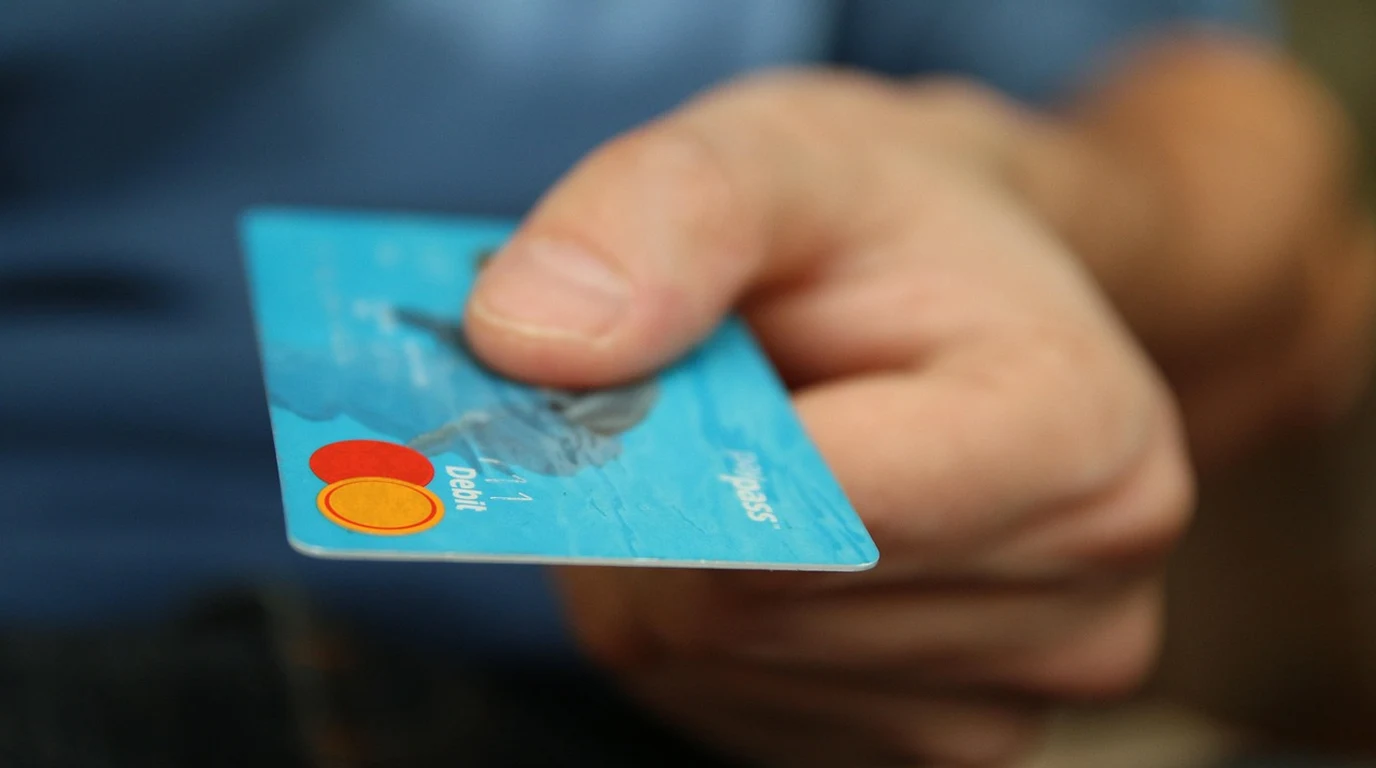
You’re standing in the checkout line at the grocery store, the belt is moving, and you swipe your card. *Declined.* You try again. *Declined.* You open your banking app, heart hammering against your ribs, only to find a balance of $4.12 where your mortgage payment used to be. The transaction history shows a string of ATM withdrawals in a city you haven’t visited in five years. In that moment, the “Zero Liability” stickers you’ve seen on bank doors feel like a very thin shield against a very cold wind.
There is a specific kind of panic that comes with debit card fraud that credit card fraud simply cannot replicate. When your credit card is compromised, the bank’s money is gone, and you’re just fighting over a line of credit. When your debit card is skimmed, your money is gone. Your rent money, your grocery budget, and your emergency fund have vanished into the digital ether. The bank will investigate, sure, but while they do, your bills don’t stop coming.
I’ve sat across the table from dozens of Canadians who were told by their banks that because a PIN was used, the loss was their fault. They were treated like suspects in their own victimization. We’re going to end that confusion today. You need to know exactly where the bank’s responsibility ends and yours begins, because the “Zero Liability” promise has more fine print than a pharmaceutical commercial.
Direct Practical Verdict:
Canadian debit fraud is covered by the Interac Zero Liability Policy and the Canadian Code of Practice for Consumer Debit Card Services. You are protected only if you haven’t contributed to the fraud through “gross negligence”—such as writing your PIN on the card or using your birthdate. Unlike credit cards, you are out-of-pocket during the 10-to-30-day investigation.
Is my money actually protected if my debit card is skimmed?
The short answer is yes, but the long answer is “it depends on your behavior.” In Canada, debit card protections aren’t actually enshrined in federal law in the same way they are in some other jurisdictions. Instead, we rely on a “voluntary” framework called the Canadian Code of Practice for Consumer Debit Card Services. While it’s technically voluntary, every major bank and credit union in the country has signed onto it, and the Financial Consumer Agency of Canada (FCAC) monitors their compliance. Under this Code, and the specific Interac Zero Liability Policy, you are not liable for losses resulting from circumstances beyond your control. This includes technical errors, system malfunctions, or “unauthorized transactions” where it can be proven you didn’t contribute to the loss. However, there is a massive gulf between “not liable” and “getting your money back quickly.” When you report credit card fraud, the disputed amount is usually frozen or removed from your statement immediately. With debit fraud, the money is already gone. The bank has the right to investigate for up to 10 business days (and often longer for complex cases) before they decide whether to reimburse you. During that window, you are the one bearing the financial burden of the theft.Why is debit card fraud more dangerous than credit card fraud?
Most consumers treat their debit and credit cards as interchangeable plastic. From a liability standpoint, that is a dangerous mistake. The “costly trap” here is the assumption that the protections are identical. They aren’t. When a fraudster uses your credit card, they are essentially stealing the bank’s money. The bank is highly motivated to get it back, and the law (specifically the Bank Act) provides a robust framework for dispute resolution. More importantly, your cash flow remains intact. With debit fraud, the thief has accessed a direct pipe to your liquid assets. If your claim is denied—which happens more often than the banks like to admit—you aren’t just losing a credit limit; you’re losing the ability to pay for your life. The bank’s default stance during a PIN-based transaction investigation is often one of skepticism. If the “correct” PIN was used, the bank’s system assumes you either performed the transaction, gave your card to someone else, or were “grossly negligent” with your security.| Feature | Credit Card Fraud | Debit Card Fraud | The “Catch” |
|---|---|---|---|
| Immediate Impact | Temporary hold on credit line. | Cash is instantly removed from account. | You may miss rent/mortgage payments. |
| Investigation Period | Bank’s money is at stake. | Your money is at stake. | Banks can take 10-30 days to refund. |
| Liability Standard | Strictly limited (usually $0-$50). | Conditional on “Reasonable Care.” | PIN usage creates a presumption of guilt. |
| PIN Protection | Secondary (Signature/Chip). | Primary security layer. | Writing down your PIN voids all protection. |
What counts as “gross negligence” in the eyes of a Canadian bank?
This is the battlefield where most fraud claims are won or lost. The Canadian Code of Practice states that you are liable if you “contribute” to the unauthorized use of your card. To a bank investigator, “contribution” is a very broad term. If you want to keep your Zero Liability protection intact, you must avoid these four specific traps: 1. The “Birthday” PIN: Using your birthdate, your phone number, or your street address as your PIN is considered a failure to protect your security. If a thief steals your wallet and finds your ID, then successfully guesses your PIN because it’s your birthday, the bank will likely deny your claim. 2. The “Post-it” Note: Writing your PIN on the back of the card, or on a slip of paper kept in your wallet, is the most common reason for claim denial. Banks argue that you essentially gave the thief the keys to the vault. 3. The “Friendly” Fraud: If you give your card and PIN to your child, your spouse, or a friend to pick up groceries, you have officially waived your Zero Liability protection for any future transactions. Once you share that PIN, the bank considers the card compromised by your own hand. 4. The Reporting Delay: Most bank agreements require you to report a lost or stolen card “immediately.” If your card goes missing on Tuesday and you don’t report it until Friday, the bank can hold you liable for all transactions that occurred in that window.How do I fight a bank that refuses to refund my stolen money?
If the bank sends you a letter stating that “the correct PIN was used, therefore we are denying your claim,” do not accept that as the final word. This is a standard opening gambit in the dispute process. They are hoping you’ll go away. You need to understand that the burden of proof is technically on the bank to show that you were negligent, but in practice, you have to prove you weren’t. This requires a systematic escalation. First, ask for the “investigation report.” Banks are often hesitant to share this, but you have a right to see the evidence they are using to deny your claim. Are they claiming the card was physically present? Are they claiming the PIN was entered correctly on the first try (which might suggest a skimmer/camera combo rather than you telling someone the PIN)? Second, look for “shoulder surfing” evidence. If the fraud happened at an ATM, ask the bank to review the footage. If they won’t show it to you, tell them you are filing a police report and the police will require that footage. Often, the mere mention of a formal police file makes the bank’s internal “risk” department take a second look at the claim.The Actionable Playbook: Your 4:00 PM Resolution
If you discover fraud on your account today, do not panic. Follow this exact sequence to maximize your chances of a full reimbursement. 1. The Instant Freeze: Use your banking app to “Lock” or “Freeze” the card immediately. If you can’t find the setting, call the 1-800 number on the back of the card (or from the bank’s official website) and report it stolen. Do not say “I think I lost it.” Say “My account has been compromised by unauthorized transactions.” 2. Document the Timeline: Write down exactly when you last used the card, where you were, and when you first noticed the missing funds. This timeline is your primary weapon. 3. File a Police Report: Banks rarely take a fraud claim seriously without a file number from local law enforcement. You can usually do this online for “theft under $5,000.” This creates a legal record that you are asserting, under penalty of law, that you did not authorize these transactions. 4. The Formal Written Dispute: Don’t just talk to a teller. Send a formal letter or secure message through your banking portal. State clearly: “I am invoking my rights under the Canadian Code of Practice for Consumer Debit Card Services and the Interac Zero Liability Policy. I did not authorize these transactions, I did not share my PIN, and I have exercised reasonable care in protecting my card.” 5. Escalate to the Ombudsman: If the bank denies your claim, ask for a “Letter of Finality.” Once you have this, you can take your case to the Ombudsman for Banking Services and Investments (OBSI). They are an independent body that settles disputes between consumers and banks. They have the power to recommend the bank pay you back if they find the bank’s investigation was flawed. 6. Notify the FCAC: While the Financial Consumer Agency of Canada doesn’t resolve individual disputes, they track “compliance issues.” Telling the bank you are filing a report with the FCAC signals that you know the regulatory landscape and aren’t an easy target.How to prevent debit fraud from happening again?
The best way to deal with debit card liability is to never have to test it. Here is how I manage my own accounts to ensure a skimmer never ruins my month: * The “Two-Account” Strategy: Keep only a small amount of “walking around money” in the account linked to your debit card. Keep your actual savings and bill-payment money in a separate account that is not accessible via the “Chequing” or “Savings” buttons at an ATM. * Use “Tap” Whenever Possible: Interac Flash (tap) is actually more secure than inserting your card and entering a PIN. Tap uses short-range wireless technology that is much harder to “skim” than the physical chip-and-pin process, and it has built-in spending limits that prevent a total drain of your account. * Set Up Transaction Alerts: Every major Canadian bank allows you to set up push notifications or emails for every transaction over $0.01. If a thief hits your account at 3:00 AM, you’ll know at 3:01 AM, allowing you to kill the card before the second withdrawal happens. Debit card fraud is a violation of your hard work and your security. The banks have built a system that prioritizes their convenience over your protection, but by understanding the “Code of Practice” and the “Zero Liability” nuances, you can force the system to work for you. Stay vigilant, keep your PIN in your head (and nowhere else), and never be afraid to escalate a claim. It’s your money—fight for it.Frequently Asked Questions
Can the bank refuse to refund me if I used a simple PIN? Yes. If the bank can prove you used an easily guessable PIN like your birthdate or “1234,” they can argue you were “grossly negligent” and deny your claim under the Canadian Code of Practice. How long does a bank have to investigate debit fraud in Canada? Most banks adhere to a 10-business-day window for an initial investigation, though they can extend this if they notify you. Unlike credit cards, they are not required to give you a “provisional credit” while they investigate. What is the Interac Zero Liability Policy? It is a commitment that you will not be held responsible for unauthorized transactions. However, it only applies if you have protected your PIN, reported the loss immediately, and didn’t contribute to the fraud. What should I do if the bank’s internal ombudsman rejects my appeal? Your next step is the Ombudsman for Banking Services and Investments (OBSI). They are a free, independent service that investigates consumer complaints against financial institutions.
Canadian Debit Card Fraud & Zero-Liability Statutory Codes
Asserting your legal rights protects your household sanctuary just like challenging unauthorized bank account debits. For debit card rights, read our guide on Landlord Entry Notice in Ontario: 24-Hour Law & Privacy.