
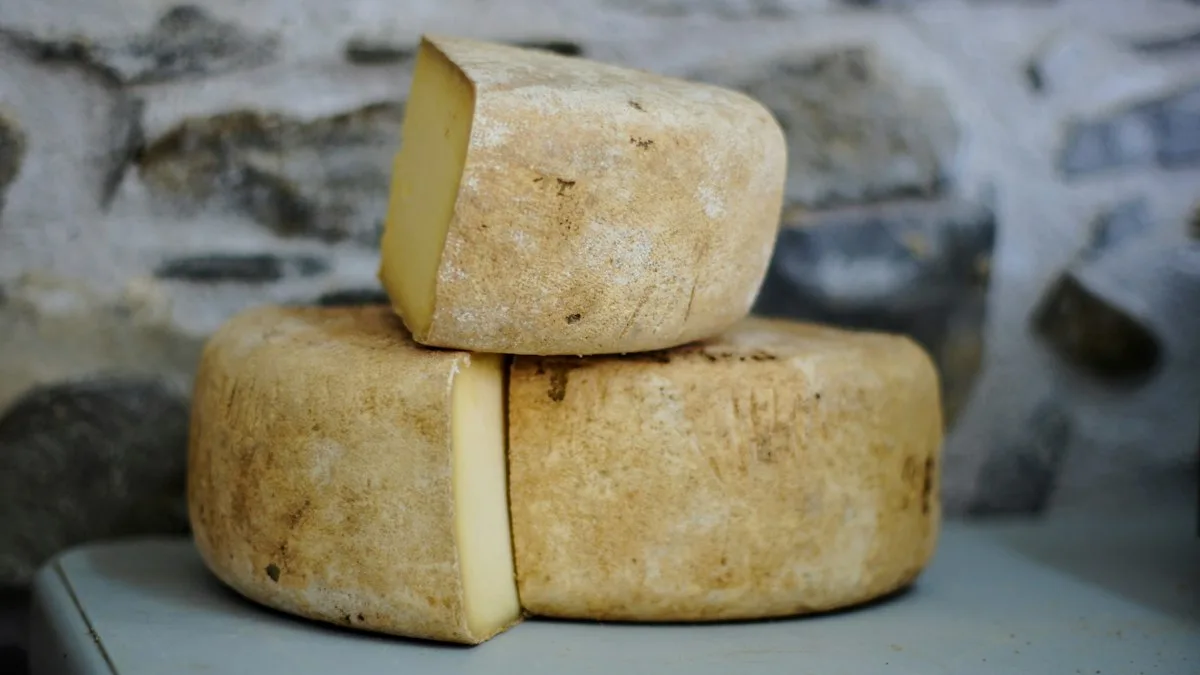
Walk into a supermarket in Buffalo, New York, or Seattle, Washington, and you can purchase a standard two-pound block of sharp cheddar cheese for approximately $5.99 to $7.49 USD. Drive 45 minutes north across the Canadian border into Niagara Falls, Ontario, or Vancouver, British Columbia, walk into a major Canadian grocer, and that exact same volume of everyday domestic cheddar will set you back anywhere from $16.50 to $22.99 CAD.
For millions of Canadian families, dairy pricing is a relentless, visceral source of financial frustration. Whether it is butter hovering near $8.50 a pound, a modest wheel of brie commanding $14.00, or a simple pizza night costing 35% more in cheese toppings alone, Canadians pay some of the highest retail prices for dairy products anywhere in the industrialized world. When consumers ask why dairy is so punishingly expensive, retail managers often offer vague, hand-waving explanations about inflation, transportation fuel spikes, and cold Canadian winters.
The truth is far more structural, deliberate, and mathematically engineered. Canadian dairy prices are not set by free-market supply and demand. They are the direct result of a federally protected, multi-billion-dollar economic cartel system known as Supply Management (Gestion de l’offre). Governed by the Canadian Dairy Commission (CDC) and shielded from foreign competition by staggering tariffs exceeding 245% to 300%, Canada’s dairy framework is an institutional fortress. This masterclass forensic audit dissects the statutory pricing formulas, audits farm-gate quota asset valuations, exposes supermarket retail margin stacking, and breaks down the true economics of Canadian grocery carts.
- The Supply Management Mechanism: Canada strictly controls dairy pricing through three interlocking statutory pillars: production quotas that limit how much milk dairy farmers are legally allowed to produce, guaranteed minimum farm-gate prices set annually by the Canadian Dairy Commission, and massive import tariffs (245% to 300%) that make foreign cheese legally and economically unviable.
- The Quota Asset Bubble: In Canada, a dairy farmer cannot legally milk a cow without owning a “quota.” A single quota unit (the right to produce one kilogram of butterfat per day) trades between $24,000 and $30,000 CAD. A modest 100-cow Canadian dairy farm carries $2.5 to $3 million in quota debt alone, which must be serviced through artificially inflated retail milk prices.
- Retail Oligopoly Margin Stacking: While the farm-gate price paid to farmers for raw industrial milk accounts for approximately $3.80 per kilogram of cheese, Canadian supermarket chains (Loblaw, Metro, Sobeys) mark up retail specialty and packaged cheese by 45% to 65%, stacking corporate profit margins directly on top of statutory price floors.
- The Cross-Border Cheese Smuggling Reality: Cross-border grocery shopping in US border towns (Bellingham, Buffalo, Ogdensburg) saves Canadian households over 55% on dairy, leading the Canada Border Services Agency (CBSA) to strictly enforce dairy import limits of $20 CAD per traveler to protect domestic supply-managed markets.
What is Supply Management and How Does It Dictate Canadian Dairy Prices?
To grasp why dairy pricing defies standard economic gravity in Canada, one must travel back to the late 1960s. Prior to supply management, Canadian dairy farming was subject to severe boom-and-bust agricultural cycles. During spring and summer, cows produced surplus milk, flooding the market and causing farm-gate milk prices to collapse, driving family farms into bankruptcy. In winter, milk production dropped, causing prices to spike for consumers.
In 1970, under Prime Minister Pierre Trudeau, the federal government enacted the Canadian Dairy Commission Act, establishing a centralized national planning system. The objective was straightforward: stabilize rural farming communities by guaranteeing that Canadian dairy farmers earned a predictable, profitable return on their labor and capital investment, completely insulating them from global commodity price volatility.
The system rests upon three rigid structural pillars:
- Production Planning (The Quota System): National milk demand is estimated down to the exact hectolitre by bureaucratic planners. Each province is allocated a production quota, which provincial marketing boards (such as the Dairy Farmers of Ontario or Les Producteurs de lait du Québec) subdivide among licensed farmers. It is a strict criminal offense for a farmer to sell or donate milk exceeding their assigned quota. If a farm produces surplus milk, it must literally be dumped down the drain.
- Administered Farm-Gate Pricing: Every autumn, the Canadian Dairy Commission conducts an internal “Cost of Production” survey. Based on this survey, the commission mandates the exact wholesale price processors (such as Saputo, Agropur, and Parmalat) must pay farmers for raw milk. Because the formula accounts for feed, fuel, fertilizer, and guaranteed farmer income, farm-gate prices almost never decrease; they ratchet upward year after year regardless of macroeconomic consumer distress.
- Prohibitive Tariff-Rate Quotas (Border Protection): If foreign dairy could freely enter Canada, the entire system would collapse overnight because American, New Zealand, and European dairy is vastly cheaper. To seal the market, Canada imposes Tariff-Rate Quotas (TRQs). A tiny sliver of foreign cheese is allowed in under duty-free trade quotas negotiated under CUSMA and CETA; the moment imports exceed that tiny threshold, Canada slaps punitive tariffs ranging from 245.5% on cheese to 298.5% on butter, effectively making foreign commercial retail imports illegal.
The Statutory Quota Trap: Why Canadian Dairy Farms are Multi-Million-Dollar Monopolies
The most controversial and least understood dimension of Canadian dairy economics is the financialization of Milk Production Quotas.
When supply management was inaugurated in 1970, quotas were handed out to existing farmers for free based on historical production. Over the past five decades, however, these production rights morphed into tradable financial assets with staggering valuations. Because it is illegal to produce milk without a quota, anyone wishing to start a dairy farm or expand an existing herd must purchase quota units from retiring farmers through provincial board exchanges.
The table below benchmarks quota valuations, herd capital requirements, and farm-gate production economics across Canadian provinces:
| Province / Marketing Board | Quota Price Cap (per kg/day) | Quota Cost per Cow (~1.2 kg) | Quota Capital for 100 Cows | Economic Impact on Consumer Retail Prices |
|---|---|---|---|---|
| Ontario (DFO) | $24,000 (Capped by Board) | ~$28,800 per cow | $2,880,000 CAD | Enormous debt servicing built into milk pricing |
| Quebec (PLQ) | $24,000 (Capped by Board) | ~$28,800 per cow | $2,880,000 CAD | Protects small family farms; keeps cheese prices rigid |
| Alberta (Alberta Milk) | ~$30,000 (Market Driven) | ~$36,000 per cow | $3,600,000 CAD | Highest barrier to entry in Western Canada |
| British Columbia (BC Milk) | ~$32,500 (Market Driven) | ~$39,000 per cow | $3,900,000 CAD | Extremely high land + quota costs inflate lower mainland retail |
Consider the staggering mathematical reality revealed above. Before a young Canadian farmer can purchase a single dairy cow, buy an acre of farmland, or construct a milking parlor, they must pay roughly $30,000 just for the paper license to milk that individual cow. For an average commercial dairy herd of 100 cows, the farmer must service nearly $3 million in bank debt strictly for quota licenses.
This creates an unbreakable political and financial lock-in. Canadian chartered banks hold billions of dollars in agricultural loans secured directly against the paper value of these quotas. If the Canadian government were to dismantle supply management and open the border to free-market international trade, quota asset values would collapse to zero overnight, triggering catastrophic agricultural loan defaults across the Canadian banking sector. As a result, every federal political party—Liberal, Conservative, and NDP—unanimously protects supply management to preserve bank balance sheets, passing the entire bill down to everyday grocery shoppers.
Retail Margin Stacking: How Supermarkets Double Down on Price Floors
While the Canadian Dairy Commission and farm quotas establish an unyielding high floor, they are not the sole culprits behind $18 blocks of cheddar. The second major engine of price inflation is supermarket margin expansion.
In Canada, three corporate giants—Loblaw Companies Ltd., Empire Company (Sobeys, Safeway), and Metro Inc.—control over 62% of the entire national retail grocery market. When food retail is an oligopoly, grocers do not compete on aggressive price discounting; they practice price matching and margin preservation.
Here is how the wholesale-to-retail price ladder operates on a typical 400g block of Canadian medium cheddar:
1. Farm-Gate Raw Milk Cost (Paid to Farmer): $1.85 (20.5%)
2. Industrial Processing, Aging & Packaging (Saputo): $1.95 (21.7%)
3. Wholesale Distribution & Cold-Chain Freight: $0.75 ( 8.3%)
4. Supermarket Wholesale Acquisition Cost: $4.55 (50.5%)
5. Supermarket Gross Retail Margin (Loblaw / Metro): $4.44 (49.5%)
Final Checkout Register Price: $8.99 CAD
As demonstrated in our forensic cost breakdown, nearly half of the retail sticker price you pay for cheese goes directly into the gross retail profit margins of the supermarket chain. Because grocers know that consumers have zero access to cheap foreign cheese alternatives due to 300% border tariffs, they have total pricing power. There is no competitor to undercut them with a $3.00 block of imported European gouda. The statutory supply management system acts as a protective cartel shield not just for farmers, but for supermarket corporate profits.
The Cross-Border Factor: What Canadian Shoppers Need to Know
Because Canadian dairy prices are so artificially inflated, hundreds of thousands of Canadians living within driving distance of the US border engage in regular grocery runs to US border towns like Bellingham, WA, Grand Forks, ND, Niagara Falls, NY, and Plattsburgh, NY.
However, many Canadians run afoul of the Canada Border Services Agency (CBSA) because they do not understand the strict statutory limits on dairy importation:
- The $20 CAD Dairy Exemption Limit: Under the Canadian Customs Tariff, a Canadian resident returning from a trip of less than 24 hours is permitted to bring in up to $20 CAD of dairy products duty-free. If you exceed $20 in cheese or butter on a same-day shopping trip, CBSA officers have the legal authority to seize the surplus dairy or assess punitive tariffs of 245.5% on the overage.
- Personal Exemption Windows (48 Hours+): If you stay in the US for more than 48 hours, your personal duty-free exemption climbs to $800 CAD per traveler. However, dairy products still remain strictly constrained by commercial quantity thresholds. You cannot legally transport commercial cases of cheese intended for resale without an official Canadian import quota license.
- Always Declare Honestly: Never attempt to conceal cheese or butter beneath car seats or trunk liners. CBSA officers specifically target grocery cross-border shoppers. Failing to declare food products results in an immediate $1,300 fine, vehicle seizure, and permanent enrollment in secondary inspection flags for five years.
The 4:00 PM Actionable Implementation Playbook
To reduce your household dairy expenditure and legally navigate Canada’s high-cost dairy landscape today, execute this 4-step consumer strategy:
- Buy Warehouse Club Dairy in Bulk (Costco Canada): Costco Canada operates on a strict 14% maximum gross margin cap across all grocery items, compared to traditional supermarkets that mark up cheese by 45% to 65%. A 1.15 kg block of Kirkland Signature cheddar or mozzarella consistently prices between $14.50 and $16.50, delivering a 35% savings per 100 grams over conventional grocers. Cut the block into thirds, vacuum-seal, and freeze the portions you aren’t using immediately.
- Track “Butter Lock” Sale Cycles (November & Easter): Canadian grocers utilize butter as a seasonal “loss leader” twice a year: during pre-holiday baking season in November/December and before Easter weekend. When butter drops to $4.99 per pound, purchase 10 to 15 blocks. Butter freezes exceptionally well for up to 12 months with zero degradation in fat emulsion or flavor.
- Avoid Pre-Shredded & Sliced Cheese: Pre-shredded cheese packages carry an outrageous 40% convenience premium over solid blocks, and manufacturers coat the shreds in cellulose powder and potato starch to prevent clumping, which prevents smooth melting. Buy solid blocks and shred your own in 60 seconds with a box grater or food processor.
- Leverage Independent Ethnic Grocers & Deli Wholesalers: Independent Mediterranean, Italian, and Middle Eastern grocery markets frequently source bulk imported feta, halloumi, and aged parmesan through specialized CETA European import tariff allocations. Their unit prices on authentic imported cheeses routinely undercut domestic supermarket packaged brands by $3 to $5 per pound.
Canadian dairy prices are not an accident of nature; they are a multi-billion-dollar legal construct designed to protect farm quota asset values and supermarket profit margins at the direct expense of household grocery budgets. Until federal policy makers reform supply management, you cannot change the system—but you can defeat it at the checkout counter. Buy bulk at warehouse clubs, freeze seasonal butter sales, grate your own cheese, and refuse to pay the retail oligopoly convenience tax.