
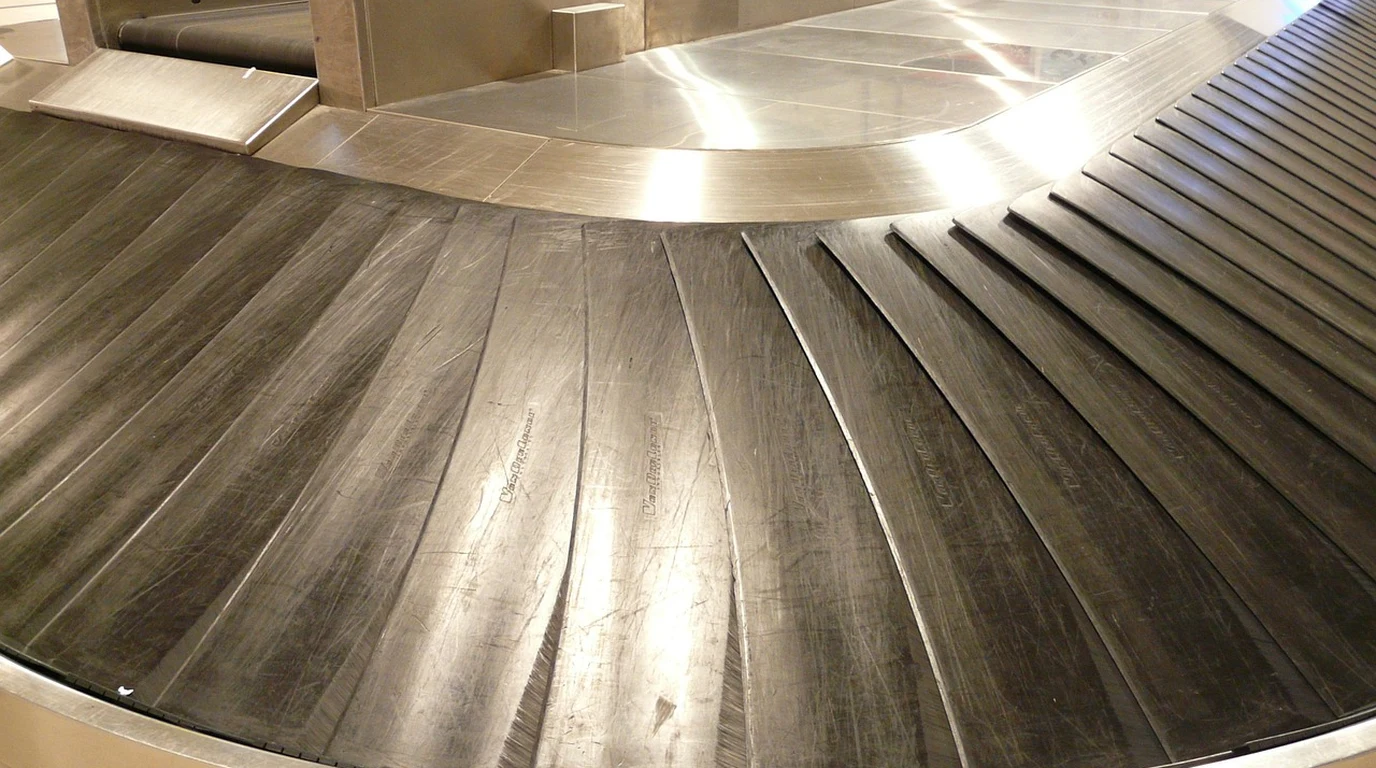
You’re standing at the baggage carousel at Pearson, Trudeau, or Vancouver International. The crowd thins. The mechanical hum of the belt feels louder as the last few suitcases—none of them yours—tumble out. Then, the belt stops. That sinking feeling in your gut isn’t just about the lost clothes or the missing toothbrush; it’s the sudden, jarring realization that your plans have just been hijacked by a logistical failure.
I’ve been there, and I’ve helped thousands of Canadians navigate this exact moment. Most travelers assume they are at the mercy of the airline’s “goodwill” or a $50 voucher offered by a tired agent at the service desk. That is a myth that costs passengers millions of dollars every year. In reality, you are protected by a powerful framework of international law and domestic regulations that entitle you to significant financial recourse. Whether your bag is shredded, delayed for three days, or gone forever, the law doesn’t ask the airline if they want to pay you; it mandates that they must compensate you for the damages caused by their failure.
The frustration you feel is valid, but let’s turn that heat into light. We are going to move past the “customer service” scripts and look directly at the statutory requirements that Air Canada, WestJet, and every other carrier operating in Canada must follow. You aren’t begging for a favor; you are collecting a debt.
Under the Montreal Convention and Canada’s APPR, airlines are liable for up to approximately $2,400 CAD (1,288 SDR) for lost, delayed, or damaged baggage. To secure this, you must file a Property Irregularity Report (PIR) at the airport immediately and submit a formal written claim within 7 days for damage or 21 days for delay.
How much can I actually claim for lost or delayed luggage in Canada?
The number you need to burn into your brain is 1,288 Special Drawing Rights (SDR). Because the Montreal Convention is an international treaty, it doesn’t use a single currency like the Canadian Dollar. Instead, it uses SDRs—a “basket” of global currencies maintained by the International Monetary Fund.
As of late 2023 and into 2024, 1,288 SDRs fluctuates around the $2,350 to $2,450 CAD mark. This is the maximum liability limit per passenger, not per bag. If you and your spouse are traveling together and both your bags are lost, your household limit is effectively double that amount, provided you can prove the value of the contents.
It is a common misconception that this is a “flat fee” payout. If the airline loses your bag containing three t-shirts and a pair of jeans, you aren’t getting $2,400. You are entitled to the actual value of the items lost, or the actual cost of the items you had to buy because your bag was delayed. However, the burden of proof is often more flexible than the airlines want you to believe. While receipts are gold, they are not the only form of evidence the Canadian Transportation Agency (CTA) accepts.
Under the Air Passenger Protection Regulations (APPR), which came into full force in 2019, these international standards were codified into Canadian law. This means that for any flight to, from, or within Canada, these rules are the “floor,” not the ceiling. Even if an airline’s internal policy says they only pay $50 per day for “essentials,” the law says they must pay for all reasonable expenses up to that $2,400 limit. If you are in London for a business meeting and your suit is in the lost bag, a $50 voucher won’t buy you a new blazer. The law understands this; the airline’s “policy” often chooses to ignore it.
What is the difference between the Montreal Convention and the APPR?
Navigating the legal landscape of Canadian aviation requires understanding two overlapping sets of rules. Think of the Montreal Convention as the foundation and the APPR as the Canadian renovation that made the rules easier to enforce domestically.
The Montreal Convention (1999) is the big stick. It is an international treaty signed by over 130 countries. It dictates that the carrier is liable for damage sustained in case of destruction or loss of, or of damage to, checked baggage. Crucially, it establishes “strict liability.” You don’t have to prove the airline was negligent; you only have to prove the bag was in their care when the damage or loss occurred.
The Air Passenger Protection Regulations (APPR) took the Montreal Convention’s standards and applied them directly to Canadian domestic travel while adding specific consumer-friendly enforcement mechanisms. Before the APPR, domestic flights were governed by the airline’s domestic “tariff”—a dense legal contract that often favored the airline. The APPR leveled the playing field by aligning domestic rules with the Montreal Convention.
The most significant addition under the APPR is the mandatory refund of baggage fees. Under Section 24 of the APPR, if your bag is delayed or lost, the airline must refund the fee you paid to check that bag in the first place. That’s separate from your expense claim. If they charged you $35 for the bag, you get that $35 back automatically, on top of any compensation for the items you had to buy while waiting for it.
Why do 80% of baggage claims get rejected by Canadian airlines?
Most claims fail not because the airline is “evil,” but because the passenger missed a technical deadline or failed to preserve evidence. Airlines deal with millions of bags; their systems are designed to process claims based on strict binary criteria. If you fail one check, the computer spits out a rejection.
| Issue Type | Deadline (PIR) | Deadline (Written Claim) | Max Liability | Key Requirement |
|---|---|---|---|---|
| Damaged Baggage | Immediate (at airport) | 7 Days | ~ $2,400 CAD | Photos of damage & tags |
| Delayed Baggage | Immediate (at airport) | 21 Days | ~ $2,400 CAD | Itemized interim receipts |
| Lost Baggage | After 21 days | As soon as possible | ~ $2,400 CAD | Inventory of contents |
| Baggage Fees | N/A | With main claim | Full Refund | Proof of fee payment |
The most dangerous trap is the 7-day damage rule. If you get home, unpack, and discover your zipper is broken or the shell of your suitcase is cracked, you have exactly seven days from the date you received the bag to submit a formal written claim. If you miss that window by even one hour, your legal rights evaporate completely under Article 31 of the Montreal Convention.
What counts as a “reasonable expense” for delayed luggage?
This is where the mentor-to-student advice becomes critical. Airlines love to use the word “essential” to intimidate passengers into buying the bare minimum. They want you to think that “essential” means a $5 toothbrush and a pair of gym socks. That is not what the law says.
The legal standard under both the Montreal Convention and Canadian jurisprudence is reasonableness. Reasonableness is evaluated based on the specific circumstances of your trip:
- The Purpose of the Trip: If you flew to Calgary for a corporate conference and your suits are in the missing bag, purchasing a business suit, dress shoes, and appropriate shirts is completely reasonable. If you flew to Banff for a ski trip, renting ski equipment and purchasing warm outerwear is reasonable.
- The Length of the Delay: If your bag is delayed for 12 hours while you are in a hotel room overnight, buying three sets of clothes is likely unreasonable. If your bag is missing for four days, buying multiple changes of clothes, toiletries, and necessary charging cables is entirely justifiable.
- Mitigation of Damages: You cannot use a baggage delay as an excuse to go on an unrestrained luxury shopping spree at Holt Renfrew unless your original luggage contained equivalent luxury items and you had an immediate need for them. The CTA expects you to act in good faith.
Crucial Pro-Tip: Do not wait for the airline to “authorize” your purchases. Airline call centers will often tell passengers, “We haven’t approved your expenses yet.” You do not need their prior approval. Buy what you reasonably need to continue your life or your business, keep every itemized receipt, and submit them with your claim.
The Actionable Playbook: Your Step-by-Step Resolution
If you are reading this while standing in an airport or sitting in a hotel room with no luggage, here is the exact chronological sequence you must execute to protect your rights:
Step 1: The Property Irregularity Report (PIR)
Before you leave the baggage claim area, find the airline’s baggage desk. Do not let them tell you to “file online from home.” Insist on filing a Property Irregularity Report (PIR) on the spot. Ensure you receive a physical copy or an immediate email confirmation with a reference number (usually a 5-letter, 5-digit alphanumeric code like YVRAC12345). Take a photo of your baggage claim tags (the sticky barcodes on the back of your boarding pass).
Step 2: The “Immediate Needs” Purchase
If you are away from home, go buy what you need to survive the next 48 hours. Keep every single receipt. Request itemized cash register receipts, not just credit card terminal slips. An itemized receipt showing “Toothpaste, $4.99” is undeniable evidence; a slip showing “$45.00 at Shoppers Drug Mart” invites bureaucratic scrutiny.
Step 3: The 21-Day Clock
A bag is legally considered “delayed” for the first 21 days. On the 22nd day, it is legally “lost.” You do not have to wait 21 days to submit an expense claim for items purchased during the delay, but the bag cannot be declared an official total loss until that 21-day mark passes.
Step 4: The Formal Written Claim
This is where most people fail. Within 21 days of receiving your delayed bag (or immediately if it’s declared lost), you must submit a formal claim through the airline’s website and customer relations email:
- Include your PIR file number and flight booking reference.
- Attach high-resolution photos or scans of all itemized receipts.
- Include the formal statutory demand notice below asserting your rights under Article 17/22 of the Montreal Convention and Section 23 of the APPR.
Copy, customize the bracketed fields, and submit via the airline’s online claims portal and customer relations email within 21 days of bag delivery (or 7 days for physical damage).
Step 5: The Refund of Baggage Fees
Under the APPR, if your bag is delayed or lost, the airline must refund any baggage fees you paid. This is in addition to the $2,400 liability limit. Many airlines “forget” to process this automatically, so ensure you explicitly demand your checked bag fee refund in your written claim.
Step 6: Escalation to the CTA
If the airline ignores you, offers a “travel voucher” instead of cash, or denies the claim without justification, escalate the dispute directly to the Canadian Transportation Agency (CTA) through their online dispute resolution portal. You can also file a claim in small claims court, where Canadian judges routinely enforce Montreal Convention liability limits strictly against commercial carriers.
How do I calculate the value of “lost” items?
When a bag is officially lost (after 21 days), the airline will ask for an inventory. This is a psychological test. Most people list a few things from memory and end up undervaluing their property. Sit down with a blank spreadsheet. Go through your trip day by day. Remember what you packed: chargers, toiletries, shoes, winter coats, luggage itself (the suitcase costs money too!).
Airlines will attempt to apply aggressive depreciation (often 10% to 20% per year). While some depreciation is legally permissible, they cannot reduce the value of essential, functioning items to zero. If you don’t have receipts for clothes you bought three years ago, provide credit card statements, photos of you wearing the items, or links to current retail replacement costs.
What about high-value items and “Special Declarations”?
If you are traveling with items worth more than $2,400—say, professional camera gear or high-end sporting equipment—the standard liability limit will not protect you. You have two legal options:
- Special Declaration of Interest: Under Article 22(2) of the Montreal Convention, you can make a formal declaration of value at the check-in desk before departure and pay a supplementary fee. This raises the carrier’s liability limit to the declared amount.
- Private Travel Insurance: Premium credit cards often provide supplementary baggage insurance (typically $1,000 to $2,500 on top of the airline’s liability). Ensure you check your card’s certificate of insurance before departure.
Can the airline refuse to pay if they say the delay was “outside their control”?
This is a major point of confusion. For flight delays (the plane itself being late), airlines can avoid paying cash compensation if the delay was caused by weather or safety issues. This exception does NOT easily apply to baggage.
Under the Montreal Convention, an airline is only excused from baggage liability if they prove that they took all measures that could reasonably be required to avoid the damage, or that it was impossible to take such measures. This is an extraordinarily high legal bar. “The weather was bad” is rarely a valid excuse for losing a bag that was already in the sorting facility. If the plane flew, the bag should have flown. If the bag was misrouted or left behind, that is an internal operational failure, not an act of God.
Frequently Asked Questions
While the regulations don’t specify a strict “payout clock,” the CTA expects airlines to process and settle claims within 30 days. If you haven’t received a meaningful response or payment within 30 to 45 days of your formal written claim, it is time to escalate to the CTA or file in provincial small claims court.
You are entitled to cash, cheque, or direct electronic transfer. Under the APPR and Montreal Convention, compensation for statutory damages must be paid in monetary form. You can choose to accept a voucher only if they offer you a significantly higher sum and you freely agree to it, but the carrier cannot force you to accept travel credit.
Yes. Canada has adopted Montreal Convention standards into domestic law through the Carriage by Air Act and the APPR. Whether you are flying between Toronto and Vancouver or Montreal and Paris, the liability limit of 1,288 SDR (approximately $2,400 CAD) applies equally.
You have exactly 7 days from the date of receipt to submit a formal written claim. Take high-resolution photos of the damage, the baggage tags, and your boarding pass immediately. Submit your claim via the airline’s official baggage portal and email customer relations before the 7-day statutory deadline expires.
The bottom line is this: The airline industry relies on the fact that most passengers will give up after the first automated denial. They count on you being too busy or too frustrated to follow the 21-day paper trail. But statutory law is remarkably clear, and the $2,400 Montreal Convention limit is a decisive tool for consumer justice. Keep your receipts, respect your statutory filing deadlines, and demand what you are legally owed.
Flight arrival delay compensation works alongside statutory claims for delayed or damaged baggage. Read our comprehensive guide on Canadian Flight Delay Compensation: APPR Rules & Claims.