
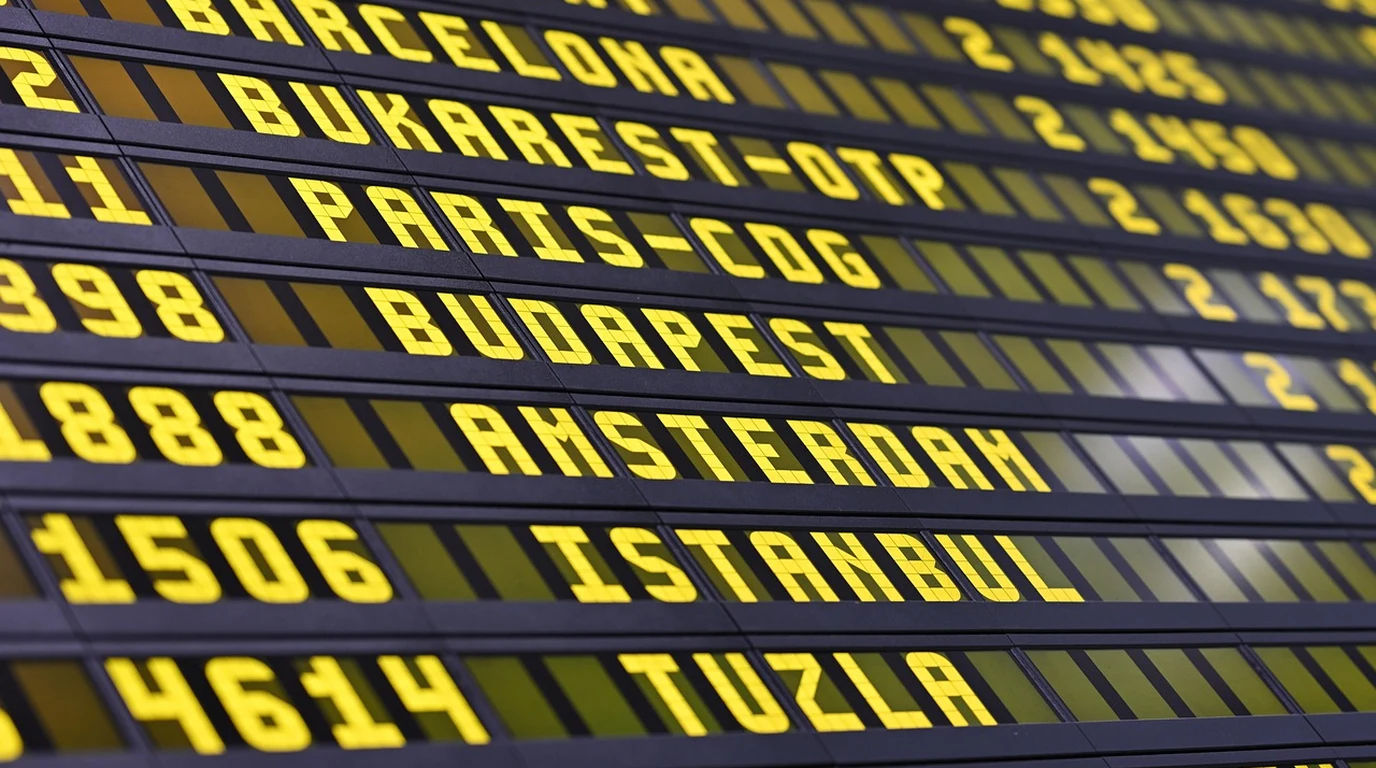
You’re sitting on the cold linoleum floor of Terminal 1 at Pearson, or perhaps you’re pacing the gate at Vancouver International, watching the departure board flip from “Delayed” to “Cancelled.” Your phone pings with a generic apology from the airline, but no mention of your rights. You feel that specific brand of travel-induced helplessness—the sense that a multi-billion dollar corporation has just stolen your time and you have zero recourse.
I’ve been there, and I’ve spent years helping Canadians navigate the labyrinth of the Air Passenger Protection Regulations (APPR). Here is the hard truth: the system is designed to be just frustrating enough that you’ll give up. The airlines count on your exhaustion. They hope you’ll accept a $15 food voucher and a “sorry for the inconvenience” email as a final settlement.
But that’s not what’s going to happen today. We are going to talk about the $1,000 you might be owed, the specific “safety” loopholes the airlines use to dodge those payments, and exactly how you can corner them into paying what the law demands. Grab a coffee, take a breath, and let’s get your money back.
Direct Practical Verdict:
Under Canada’s APPR, large airlines must pay between $400 and $1,000 for delays within their control and not required for safety. If your flight is delayed over three hours for reasons like crew shortages or routine maintenance, you are legally entitled to cash. Always file a written claim within one year to protect your rights.
How Much Compensation Am I Actually Owed Under the APPR?
The Canadian Air Passenger Protection Regulations (APPR) categorize airlines into two groups: Large and Small. If you are flying with Air Canada (including Jazz or Rouge), WestJet, Swoop, or Flair, you are almost certainly dealing with a “Large” carrier. This distinction is vital because the payout tiers are significantly higher for the big players. The compensation is triggered by the length of the delay at your *final destination*, not the departure time. If you leave two hours late but arrive four hours late because you missed a connection, the four-hour mark is what dictates your check. For large airlines, the statutory compensation tiers are: – **3 to 6 hours delay:** $400 CAD – **6 to 9 hours delay:** $700 CAD – **9+ hours delay:** $1,000 CAD Small airlines (like Canadian North or certain regional charters) have lower tiers, usually topping out at $500 for a delay of nine hours or more. Here is the nuance most people miss: this money is *in addition* to the “Standard of Care” the airline must provide while you are waiting. If you are delayed more than two hours, they owe you food and drink in “reasonable quantities” and access to a means of communication (usually free Wi-Fi). If the delay stretches overnight, they must provide a hotel room and transportation to that hotel at no cost to you. Accepting a hotel voucher does not waive your right to the $1,000 cash payout. Never let a gate agent tell you otherwise.Why Do Airlines Keep Claiming My Delay Was for “Safety Reasons”?
This is the “Costly Trap” I mentioned. The APPR divides delays into three buckets: 1. Within the airline’s control (Payable). 2. Within the airline’s control but required for safety (Not payable). 3. Outside the airline’s control, like weather or ATC strikes (Not payable). Airlines have realized that “Safety” is a massive, poorly defined umbrella. For years, they used “crew shortages” as a safety excuse, arguing that flying with an exhausted or incomplete crew would be unsafe. In a landmark 2022 decision, the Canadian Transportation Agency (CTA) clarified that staffing issues are generally *within* the airline’s control and are not a safety loophole. However, carriers still frequently cite “unscheduled maintenance” or “technical issues” to avoid payouts. If a part breaks unexpectedly, they claim it’s a safety issue. If that part broke because they skipped routine maintenance or didn’t have the spare part on hand at a major hub, that is arguably within their control. The burden of proof has recently shifted. As of September 2023, the law assumes the delay is within the airline’s control unless they *prove* otherwise. This is a massive win for you. You no longer have to prove why the plane didn’t fly; they have to prove why they shouldn’t pay you.| Delay Reason | APPR Category | Cash Compensation? | Standard of Care? |
|---|---|---|---|
| Crew Shortage / Scheduling | Within Control | YES ($400-$1,000) | Yes (Food/Wi-Fi/Hotel) |
| Routine Maintenance / Bird Strike | Safety Necessity | No | Yes (Food/Wi-Fi/Hotel) |
| Severe Weather at Origin/Dest. | Outside Control | No | No (Rebooking only) |
| Commercial Overbooking | Within Control | YES (Up to $2,400) | Yes (Immediate) |
| IT System Outage (Airline) | Within Control | YES ($400-$1,000) | Yes (Food/Wi-Fi/Hotel) |
What Evidence Do I Need to Collect at the Airport?
The moment the delay is announced, your “investigation” begins. Do not wait until you get home to start gathering facts. The airline’s story will often change between the gate announcement and the formal claim response. First, **screenshot everything.** Take a picture of the departure board showing the delay. Screenshot the weather app for both your departure and arrival cities. If the sun is shining and other flights are taking off, but yours is delayed for “weather,” you need that visual proof to challenge them later. Second, **record the announcements.** In Canada, you can legally record a conversation as long as one party (you) consents. If a gate agent says, “We’re waiting for a pilot to arrive from another flight,” record it. That is a “Within Control” admission. If they later email you saying it was a “Safety/Mechanical” issue, your recording is the “smoking gun” for the CTA or Small Claims Court. Third, **keep your boarding passes.** Even the digital ones. If you are rebooked, keep the original and the new one. These are your receipts for the time lost. If the airline provides a meal voucher, take a photo of it before you spend it. It serves as an admission that the delay was long enough to trigger the Standard of Care.How Do I File a Claim That Actually Gets Paid?
You have one year from the date of the flight to file a claim. The airline has 30 days to respond. They must either pay you the cash (via e-transfer, cheque, or original payment method) or provide a detailed explanation as to why they believe compensation isn’t owed. When you write your claim, be clinical. Don’t talk about how much you missed your grandmother’s birthday; the law doesn’t care about your feelings, it cares about the clock. **The Winning Formula for a Claim Letter:** 1. **Flight Details:** Date, Flight Number, Booking Reference. 2. **The Timeline:** “Scheduled arrival was 2:00 PM. Actual arrival at the gate was 11:30 PM. Total delay: 9.5 hours.” 3. **The Demand:** “Under the APPR, this delay exceeds 9 hours for a large carrier. I am requesting $1,000 CAD in mandatory compensation.” 4. **The Evidence:** “At the gate, Agent [Name] announced the delay was due to crew scheduling. I have a record of this. Weather was clear at both airports.” If they offer you a travel voucher instead of cash, you have the right to refuse it. The law states they *can* offer vouchers, but they must be of higher value than the cash entitlement and they *cannot* expire. Most importantly, you must agree to the voucher in writing. If you want the cash, stay firm. “I decline the voucher and request the statutory cash compensation as per the APPR.”What Happens If the Airline Rejects My Claim?
This is where most people give up, and it’s exactly what the airlines want. If your claim is rejected, you have two main paths: the Canadian Transportation Agency (CTA) or Small Claims Court. The CTA is the “official” route. It’s free to file a dispute online. The downside? The backlog is staggering. As of 2024, there are over 60,000 complaints in the queue. You might wait two years for a resolution. However, the CTA has become much more aggressive in fining airlines that use the “safety” loophole improperly. The “Pro Move” is often Small Claims Court (or the Civil Resolution Tribunal in BC). It costs a small filing fee (usually $50-$150), but it moves much faster than the CTA. When an airline receives a court summons, they have to send a lawyer or a representative to defend it. Often, for a $1,000 claim, it costs the airline more in legal fees to fight you than to just settle. I have seen countless cases where the airline “suddenly” finds the money the moment a court date is set.The 4:00 PM Resolution: Your Step-by-Step Checklist
If you are standing in an airport right now, or you just got home from a nightmare trip, follow this exact playbook: 1. **Confirm the Arrival Time:** Note the exact time the aircraft door opened at your final destination. This is your “official” arrival time. 2. **Request the “Reason Code”:** Ask the gate agent for the specific reason for the delay. Ask them to print out a “Flight Delay Statement.” They are required to provide this. 3. **Document the Care:** If the delay is over 2 hours, ask for your meal vouchers. If they refuse, buy a reasonable meal and keep the itemized receipt. 4. **Submit the Formal Claim:** Use the airline’s online portal within 48 hours of arriving home. Use the “Winning Formula” mentioned above. 5. **Set a 30-Day Calendar Alert:** If you don’t have a check or a valid rejection in 30 days, escalate. 6. **Escalate to the CTA:** File your complaint atrppa-appr.apps.otc-cta.gc.ca. It takes 15 minutes.
7. **Consider Small Claims:** If the amount is $1,000 and you have clear evidence of a “Within Control” delay, look up your province’s small claims process. It is often the fastest path to a cheque.
The APPR isn’t perfect, but it is a tool. The airlines will continue to use loopholes as long as passengers remain silent. By filing your claim, you aren’t just getting your money back—you’re participating in the pressure campaign that will eventually force these carriers to treat our time with the respect it deserves.
Frequently Asked Questions
**Can I get compensation if the delay was caused by weather in another city?** Generally, no. If the “knock-on” effect is directly caused by weather (e.g., the plane couldn’t fly in from Montreal due to a blizzard), it is considered “Outside Airline Control.” However, if the weather cleared hours ago and they still can’t get a crew to your gate, the delay may have shifted into the “Within Control” category. **Does the APPR apply to international flights?** Yes, as long as the flight is to, from, or within Canada. This includes a flight from London to Toronto on a non-Canadian airline like British Airways. However, you cannot “double dip”—if you claim compensation under Europe’s EU261 rules, you cannot also claim under Canada’s APPR. **What if the airline offers me a voucher at the gate?** You can take it, but be careful. Ensure that by accepting it, you aren’t signing a waiver of your rights to future cash compensation. If the voucher is for $200 and the law says you are owed $1,000, you are losing $800. Always ask: “Does accepting this waive my right to file an APPR claim later?”
Air Passenger Protection Rights & Travel Recourse
Baggage liabilities and flight disruption reimbursements operate under strict federal and international treaties. For flight cancellation compensation rules, review our report on Air Canada Lost Luggage Compensation: APPR Claim Guide.