
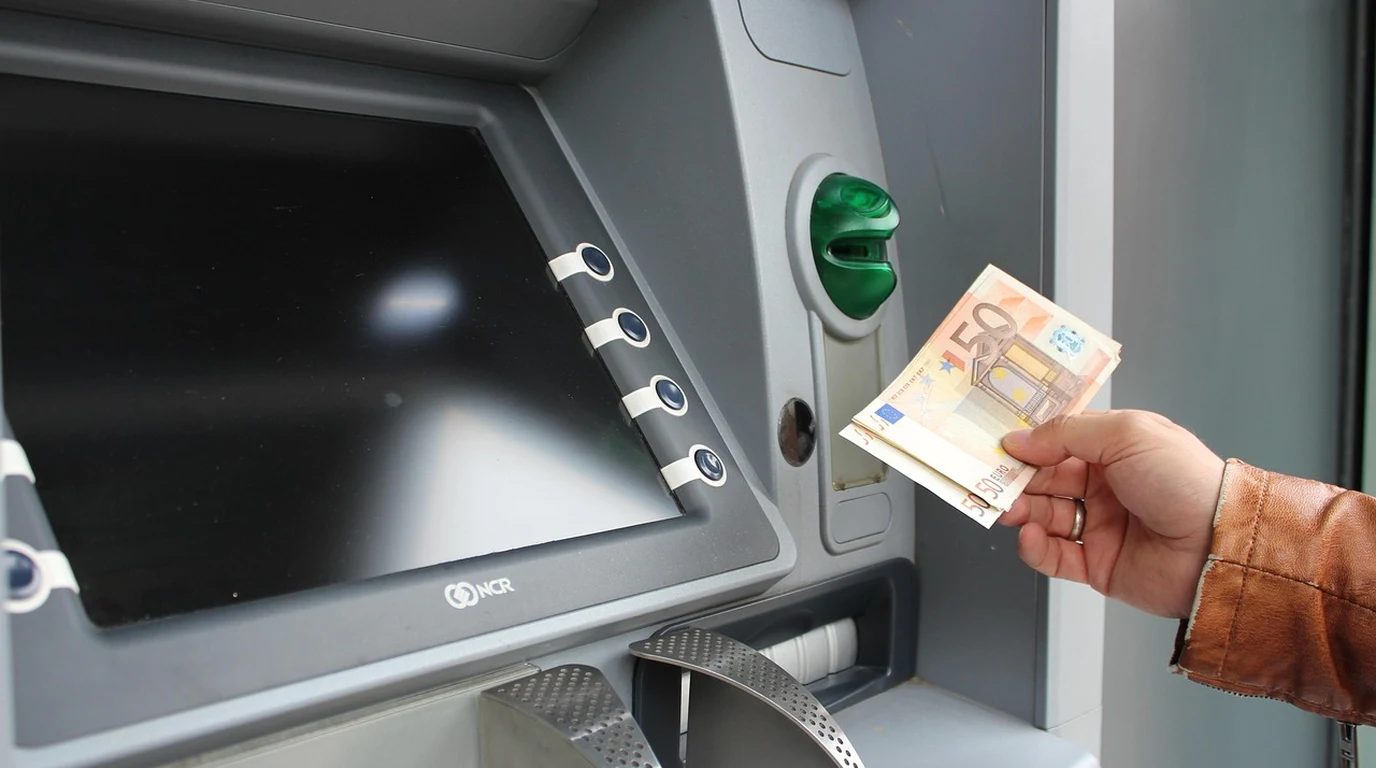
You are standing at the back of a dimly lit convenience store or packed concert venue. You need cash—maybe the venue is cash-only, or you need to tip a valet. You insert your bank card into a freestanding, unbranded grey machine with a flickering neon “CASH” sign. A quick prompt pops up warning you of a $4.50 operator surcharge. You press “Accept,” grab your $20 bill, and head out.
Two days later, you check your mobile banking app. You expect to see a $24.50 deduction. Instead, you see a total debit of $27.50. What happened? You just got hit by the Canadian white-label double-dip: an operator convenience fee stacked directly on top of your own bank’s non-network Interac fee. On a simple $20 withdrawal, you surrendered $7.50 in friction costs—a staggering 37.5% penalty just to access your own liquid currency.
The data reveals a stark reality: pulling cash from an off-network or white-label ATM is one of the single most inefficient consumer transactions in Canada.
## How Can You Avoid Non-Bank ATM Fees Completely in Canada?
You do not have to accept non-bank fees as an inevitable cost of modern living. By making systemic adjustments to how you access physical cash, you can reduce your annual ATM fees to zero.
Here is your step-by-step strategic playbook to eliminate white-label cash traps starting today.
### Step 1: Master the Grocery Store Cash-Back Mechanism
The absolute easiest way to bypass non-bank ATM fees when you need physical currency is taking advantage of Interac Debit cash-back at point-of-sale (POS) terminals.
Major Canadian grocery chains (such as Loblaws, Metro, Sobeys, Real Canadian Superstore), big-box retailers (like Walmart), and pharmacy chains allow you to add cash withdrawals directly to your purchase total when paying via physical chip-and-PIN debit card.
* **How it works:** Purchase a small, essential item (e.g., a pack of gum or a bottle of water for $1.50). When inserting your debit card, the terminal will ask: *”Would you like cash back?”* Select **Yes**, choose your amount ($20, $40, or $60), and enter your PIN.
* **The Math:** You pay $0 in ATM fees, $0 in network fees, and walk away with your cash while receiving a consumable item in exchange for your transaction time.
*Note: Cash-back is strictly limited to direct debit transactions; credit cards do not support POS cash-back.*
### Step 2: Leverage Credit Union “Ding-Free” Networks
If you bank with a credit union rather than a Big Five bank, you have access to one of Canada’s best financial secrets: the ACCULINK network.
Canadian credit unions pooled their resources to create a shared infrastructure footprint. Under the national “Ding-Free” banner, members of participating credit unions can use any other participating credit union’s ATM across the country without paying an operator surcharge or an off-network fee.
* **Action:** Look for the **ACCULINK** or **Ding-Free** logo on ATMs operated by Meridian, Vancity, Servus, Coast Capital, or First Ontario. You get broad cross-country ATM access without network penalties.
### Step 3: Switch to an Account That Reimburses ATM Fees
Several direct online banks in Canada have restructured their debit card products to insulate customers from third-party ATM surcharges.
* **EQ Bank:** The EQ Bank Card operates on the Mastercard network as a prepaid card, but functions like a debit account. EQ Bank reimburses out-of-pocket ATM operator surcharges levied by any Canadian ATM operator within 10 business days, while charging $0 in domestic account fees.
* **Manulife Bank (Everyday Account):** Offers fee-free access to over 3,500 ATMs nationwide via the **THE EXCHANGE Network**, which connects regional banks and credit unions to allow surcharge-free withdrawals.
* **Tangerine / Simplii Financial:** Tangerine customers get fee-free access to the entire Scotiabank national network (over 3,500 ATMs), while Simplii Financial users get free access to the complete CIBC ATM network.
### Step 4: Map Bank Branch Networks Prior to Outings
If you know you are heading into an area dominated by cash-only vendors (such as seasonal farmers markets, food truck rallies, or nightlife districts), plan your cash access before leaving home.
Use your banking institution’s mobile app to locate proprietary branch ATMs along your route. Spending two minutes planning a brief stop at a bank branch ATM prevents panic-driven usage of high-cost white-label machines.
### Step 5: Execute the 5-Second Security Audit
If you find yourself in an emergency where using a white-label ATM is your only realistic option, protect your financial security by completing a quick physical inspection before inserting your card:
1. **Grab the Card Reader:** Firmly pull and wiggle the plastic card insertion slot. Real ATM reader bezels are structurally integrated into the metal housing. If the reader feels loose, sits flush over an underlying plastic edge, or yields to pressure, do not insert your card.
2. **Inspect the Keypad:** Lightly pry at the edges of the numeric keypad. If the keypad feels spongey, unusually raised, or loose, an overlay keylogger may be present.
3. **Look for Pinhole Lenses:** Check the trim above the display screen and adjacent brochure holders for tiny pinhole openings aligned with the keypad.
4. **Cover Your PIN:** Always shield the keypad with your non-dominant hand while keying in your code. Even if a concealed camera captures your card credentials via a deep-insert skimmer, bad actors cannot access your account without your physical PIN.
—
### Frequently Asked Questions
### Can a Canadian merchant force you to use a white-label ATM by being cash-only?
While a merchant has the legal right to choose accepted payment methods (including cash-only policies), they cannot force you to use a specific white-label ATM located inside their establishment. However, merchants frequently host private ATMs to drive additional store revenue through host commission splits. If faced with a cash-only policy, consider using nearby grocery store cash-back options or branch ATMs instead of the merchant’s in-store machine.
### What should I do if a white-label ATM swallows my debit card or dispenses incorrect cash?
First, immediately take a photo of the screen error message and write down the machine’s terminal ID (usually printed on a sticker on the front of the cabinet). Contact the 1-800 support number listed on the physical machine to log the issue with the ISO operator. Second, immediately call your own bank’s customer service line to place a temporary freeze on your debit card and initiate an official Interac transaction dispute for non-dispensation of funds.
### Are credit card cash advances on white-label ATMs worse than debit withdrawals?
Yes, significantly worse. Withdrawing cash from any ATM using a credit card triggers an immediate interest charge (often 22.99% to 27.99% APR) starting the exact second cash is dispensed, with no interest-free grace period. When combined with the ATM operator surcharge ($4.00+), your card issuer’s cash advance fee ($5.00+), and cash advance interest, pulling $40 on a credit card can instantly cost $15 to $20 in immediate fees.
### Does Interac cap the maximum fee a white-label ATM operator can charge?
Interac regulations mandate clear upfront disclosure of operator surcharges on-screen before the transaction is finalized, giving consumers the opportunity to cancel without cost. However, Interac does not legally cap the maximum dollar amount an independent operator can charge as a convenience surcharge. Operators are free to set fees based on local demand, operating costs, and market power.
Direct Practical Verdict:
## Why Are Independent White-Label ATMs Charging Double Fees in Canada?
To understand how independent automated teller machines became financial landmines, you have to peek behind the curtain of Canada’s national payment backbone: the Interac network.
When you use an ATM owned by your primary financial institution (such as RBC, TD, Scotiabank, BMO, or CIBC), your bank authenticates your PIN, verifies your ledger balance, and releases the funds. Because the bank owns both the machine and your account, the internal cost of servicing that transaction is negligible, and it is usually bundled into your monthly account package.
White-label ATMs—privately owned machines operated by Independent Sales Organizations (ISOs) like DirectCash, Cashway, or Access Cash—operate on an entirely different financial model. These machines are installed inside independent retail businesses, gas stations, bars, dispensaries, and hotels. Because the ISO and the store owner receive no monthly subscription fee from you, they generate revenue through a direct convenience surcharge.
Here is how the double-fee stack works behind the scenes:
1. **The ATM Operator Surcharge ($3.00 to $6.00+):** When you request cash, the ISO routes your transaction request across the Interac network. The software prompts you to accept a direct fee. This fee covers the hardware maintenance, cash-in-transit armored car delivery, cellular or dial-up network connection, and a profit split between the ISO and the host merchant.
2. **Your Home Bank’s Non-Network Interac Fee ($1.50 to $3.50):** Here is the fee most Canadians overlook. Because you processed a transaction outside your bank’s proprietary network, your issuing bank charges an “off-network” or “non-bank” Interac access fee. This charge rarely appears on the ATM screen; instead, it is silently debited from your account when the transaction settles at midnight.
“`
[ Your Cash Withdrawal ]
│
├──> 1. Operator Surcharge ($3.00 – $6.00) ──> Paid to Machine Owner & Retailer
│
└──> 2. Off-Network Interac Fee ($1.50 – $3.50) ──> Paid to Your Home Bank
“`
If you draw $20 from a nightclub ATM charging a $5.00 operator surcharge while holding a basic chequing account with a Big Five bank that levies a $3.00 non-network fee, your total cost is $8.00. You spent $28.00 to get $20.00.
Flat fees inflict maximum damage on smaller transactions. While a $7.00 fee on a $500 cash pull represents a modest 1.4% transaction drag, that same fee on a $20 pull represents a 35% wealth destruction event.
## What Are the Hidden Security Risks of Using Private Convenience Store ATMs?
The financial loss from fees is only half the threat. Independent white-label ATMs represent a significantly larger cybersecurity and hardware vulnerability surface than bank-branch ATMs.
Bank-owned ATMs located at physical branches feature heavy surveillance, tamper-evident bezel enclosures, vibration sensors, and 24/7 high-definition security camera coverage. Bank technicians regularly inspect physical card slots for physical anomalies.
Conversely, white-label ATMs in corner stores and nightlife venues present ideal environments for financial fraud due to four systemic vulnerabilities:
### 1. Unmonitored Physical Access
Retail employees working night shifts rarely monitor the physical integrity of a freestanding ATM located in a corner alcove. Sophisticated criminals can install an “overlay skimmer”—a tiny, 3D-printed plastic sheath that clips seamlessly over the real card insert slot—in under five seconds while an accomplice distracts the clerk.
### 2. Deep-Insert Skimmers and Pinhole Cameras
Modern skimming operations no longer rely on bulky, obvious plastic attachments. Criminals utilize ultra-thin “deep-insert” skimmers made of flexible circuit boards pushed deep inside the card reader throat, making them entirely invisible from the outside. Paired with a microscopic pinhole camera disguised as a smoke detector or brochure rack aimed at the keypad, bad actors capture both your card’s magnetic stripe data and your PIN.
### 3. Outdated Operating Systems and Unencrypted Modems
While major Canadian banks have migrated their networks to hardened, secure operating environments, many legacy white-label machines run outdated, embedded versions of Windows CE or Windows Embedded Systems that have missed security updates for years. Furthermore, some legacy independent machines transmit transaction data over unsecured analog phone lines or poorly configured cellular modems, opening the door to man-in-the-middle interception.
### 4. Delayed Fraud Resolution Timelines
If a bank branch machine swallows your card or miscounts your cash, your bank can pull the internal audit trail within 24 to 48 hours. If a private white-label machine experiences a hardware jam or balance discrepancy, resolving the dispute requires cross-institutional coordination between your bank, Interac, and the third-party ISO. This process frequently takes 30 to 60 business days while your funds remain locked.
## How Do ATM Fee Structures Compare Across Canadian Banking Models?
Understanding the complete cost landscape requires comparing how different financial institutions and terminal types handle cash processing. The table below outlines the real-world costs associated with a standard $40 cash withdrawal across major Canadian banking environments.
Non-bank white-label ATMs in Canada subject consumers to a compound double-fee penalty: an operator convenience fee ($3.00–$6.00) plus your home bank’s off-network Interac fee ($1.50–$3.50). Avoid these high-cost cash traps by utilizing fee-free grocery store cash-back options, credit union ACCULINK “Ding-Free” networks, or online bank accounts offering full ATM surcharge rebates.
| ATM Category & Location | Operator Surcharge Range | Home Bank Off-Network Fee | Total Fee Cost ($40 Cash Pull) | Effective Loss Percentage |
|---|---|---|---|---|
| Big Five Own-Bank ATM (e.g., TD card at TD ATM) | $0.00 | $0.00 | $0.00 | 0.0% |
| Competitor Bank ATM (e.g., RBC card at CIBC ATM) | $3.00 – $3.50 | $1.50 – $2.00 | $4.50 – $5.50 | 11.25% – 13.75% |
| Credit Union (ACCULINK Network) (e.g., Vancity card at Meridian ATM) | $0.00 (“Ding-Free”) | $0.00 | $0.00 | 0.0% |
| Standard White-Label ATM (Gas Station / Convenience Store) | $3.00 – $4.50 | $2.00 – $3.00 | $5.00 – $7.50 | 12.5% – 18.75% |
| High-Demand White-Label ATM (Nightclub / Festival / Casino) | $5.00 – $7.00 | $2.00 – $3.50 | $7.00 – $10.50 | 17.5% – 26.25% |
| Rebated Digital Bank Account (e.g., EQ Bank Card at any ATM) | $3.00 – $5.00 (Rebated) | $0.00 | $0.00 (Net) | 0.0% |
Banking Fees & Unfair Transaction Surcharges
Consumer banking fees drain household wealth through subtle, automated transaction surcharges. Read our forensic financial analysis on ATM Fees in Canada: Interac vs White-Label Surcharges.